
Logging Requirements
In order to log this EarthCache, visit the physical pit, which should be located 5-10 m past the interpretative sign on this very topic. Then, message the Cache Owner with answers to the following questions:
1. Measure, to the nearest 10 cm, the four layers that are evident in the geology pit. Provide four separate measurements for each of the layers.
2. In the brown loamy soil layer (Layer 2), you can see a band of quartz pebbles. What is the most likely reason for how these pebbles have been placed?
3. Why is the bottom sandstone (Layer 4) loose and brittle (and not hard)?
4. Are there any fossils present here?
5. Take a photograph of you or your written name inside the geology pit noted at the location. Make sure this is at GZ and contains a pit cross-section. This photograph needs to be attached to your log.
You may log a find to this EarthCache as soon as you message the answers to me. If further information is required, I will message you back seeking clarification of your answers. Logs without answers may have your answers deleted.
Overview
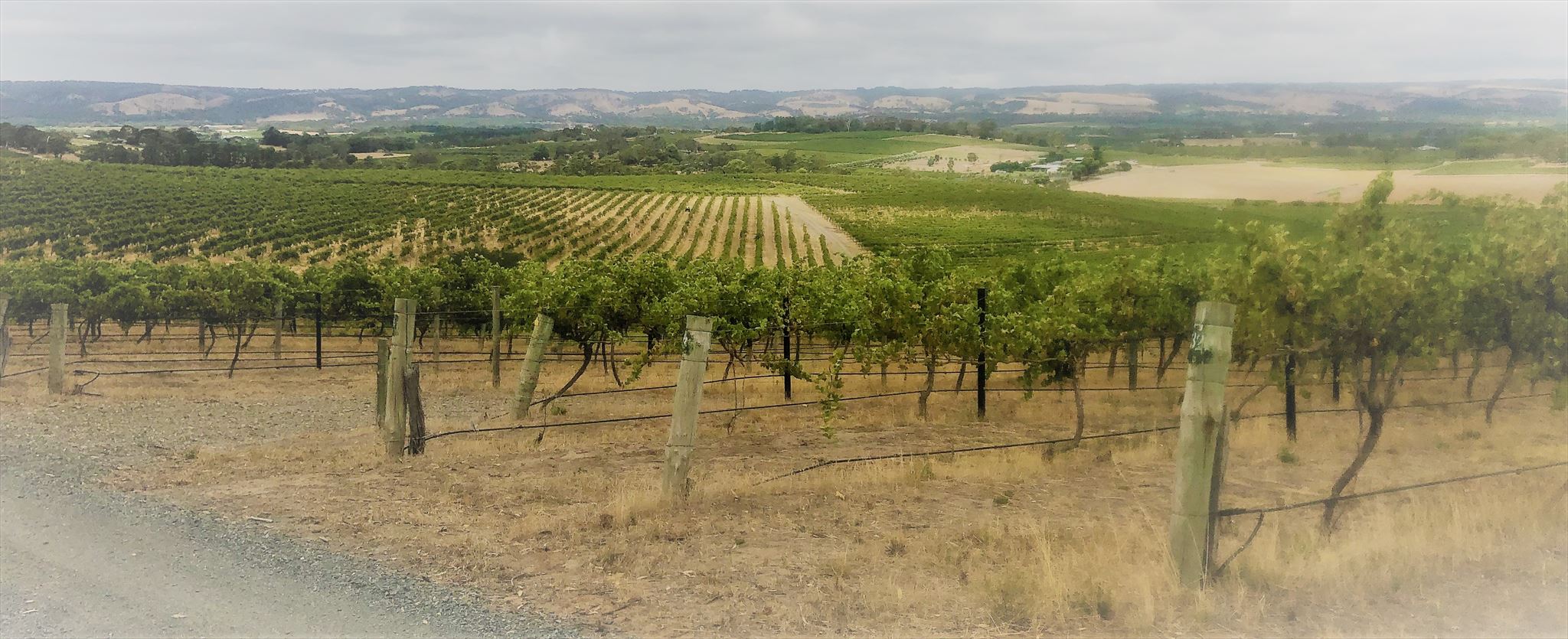
McLaren Vale is one of the most geologically diverse wine regions in the world. More than 40 unique geological layers and strata are present, ranging in age from less than 10,000 years to over 650 million years.
A geology pit has been excavated to showcase McLaren Vale's unique geology, and to highlight the relationship between geology and the region's fine wines.
The Pirramimma Sandstone consists of grey, white and yellow sandstone, siltstone and clays. It is of Pleistocene age (about 2 million years old) and was deposited in an old river channel that extends from Blewitt Springs to the coastline at Aldinga Beach.
The profile exposed in this cutting shows the transition from topsoil to the Pirramimma Sandstone. The profile includes four layers:
- A topsoil horizon of dark brown sandy loam with abundant organic matter;
- A browny loamy soil horizon that includes a layer of quartz pebbles;
- A red brown clay subsoil with a blocky texture that has been penetrated by the roots of numerous plants; and
- Yellow and white sands of the Pirramimma Sandstone at the base of the cutting.
Soils derived from Pirramimma Sandstone can be readily penetrated by vine roots, where they access water, nutrients and other minerals, contributing to the development of unique characters in the wines produced.
References
McLaren Vale Info - Geology of the McLaren Vale Wine Region, https://trade.mclarenvale.info/geology/geology-pits (prior website/document was available at https://mclarenvale.info/images/uploads/GEOLOGY_TWO-PAGER_2017.pdf, but appears to be obsolete as of 10/2022).