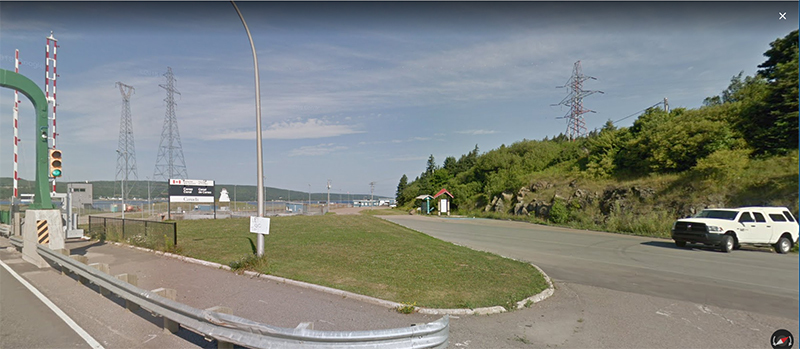
Canal Park
To log this earthcache, please don’t stress about answering the questions. Simply send your best attempts in a private message to me, (the cache owner), and then go ahead and log it as found.
You don’t need to wait for my approval. All attempts will be accepted.
Go ahead and have fun learning! 
- [REQUIRED] Please post a photo in your log of yourself or a personal item at the outcrop to prove you visited the site.
- Describe the texture/appearance, and predominant colour of the rock.
- Which of the two types of rock do you think this is?
Avalonia Fragment
This earthcache will take you to Cape Porcupine Mountain in the small park by the Canso Canal in Port Hastings.
Porcupine Mountain is a prominent hill adjacent to the Strait of Canso in northern mainland Nova Scotia. The northeastern part of the hill, marked by a prominent 150 meter-high scarp known as Cape Porcupine, was quarried for the construction of the Canso Causeway in the 1950s, and continues to be a major source of high quality aggregate for local and worldwide markets. The quarry covers more than 300 hectares and has reserves of more than 270 million tonnes of high-quality granite.
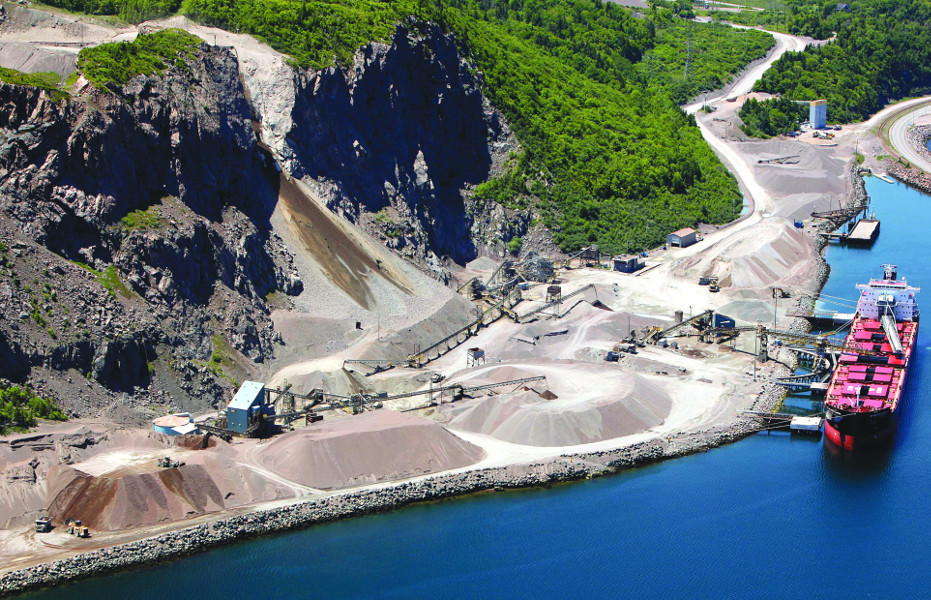
Cape Porcupine Quarry
Porcupine Mountain consists of varied sedimentary, volcanic, and granite rocks which have been collectively termed the Cape Porcupine Complex. These rocks form an inlier surrounded by Carboniferous sedimentary rocks. Cape Porcupine Complex does not correlate in rock types or age with rocks on Cape Breton Island. Cape Porcupine Complex also did not resemble any rocks reported elsewhere in northern mainland Nova Scotia. They are unique in this area.
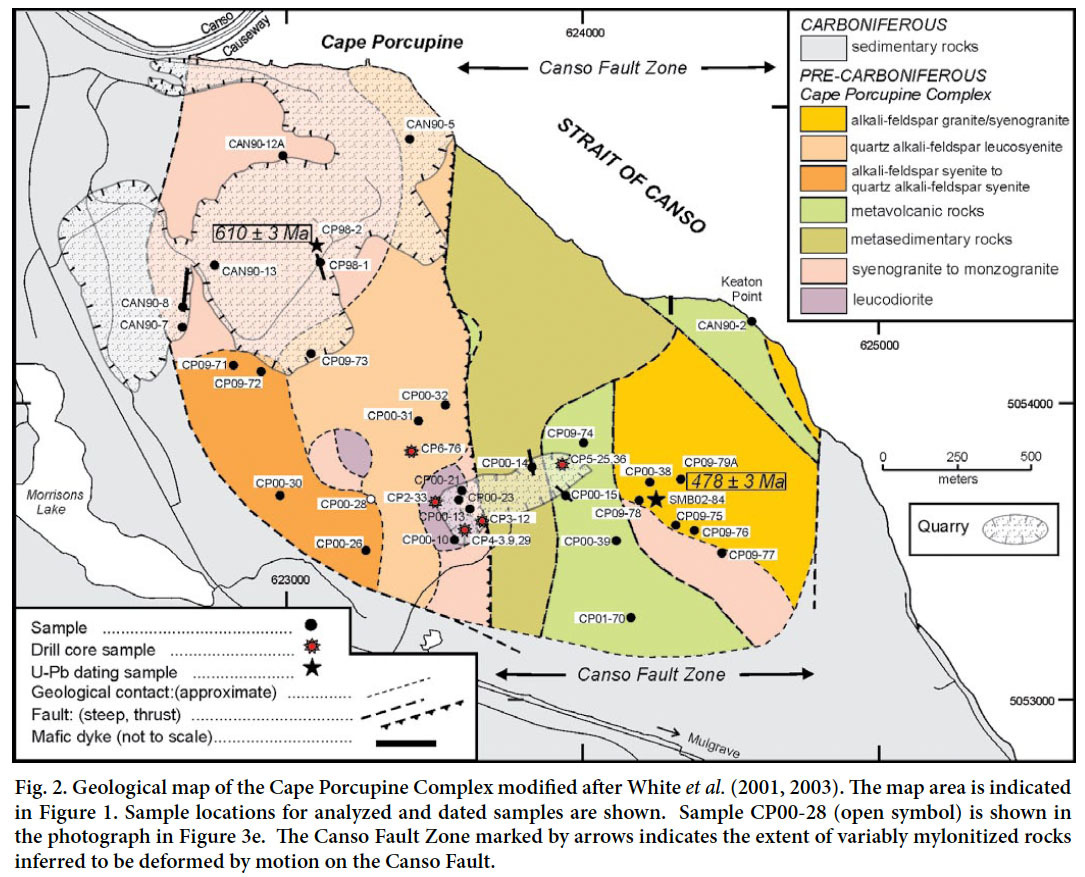
Today, recent mapping has shown the presence of previously unrecognized Ordovician rocks from the Antigonish Highlands. Some of these rocks are similar to the Cape Porcupine Complex. Age and petrological similarities now support a link between the Cape Porcupine Complex and rocks in the Antigonish Highlands. So, Cape Porcupine is an orphan no more.
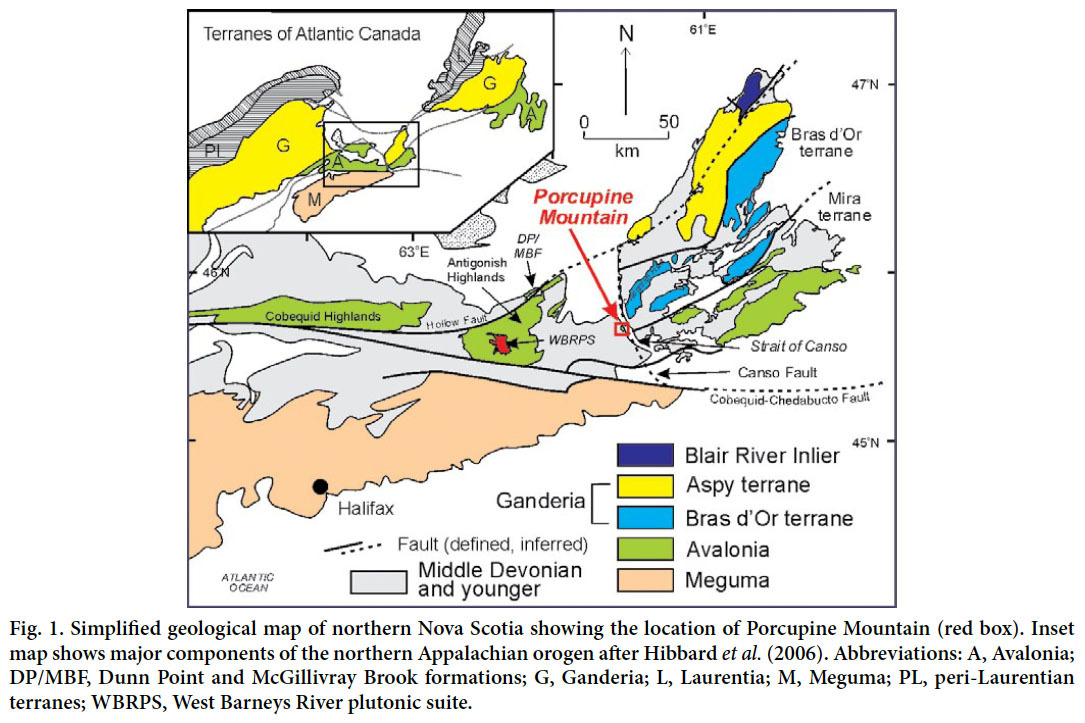
The Antigonish Highlands of northern mainland Nova Scotia and the Mira terrane of southern Cape Breton Island are both part of Avalonia, characterized by Neoproterozoic volcanic, sedimentary, and plutonic rocks overlain by Cambrian-Ordovician mainly sedimentary rocks. (The Cape Porcupine Complex, northern mainland Nova Scotia – no longer a geological orphan. S. M. Barr, C. E. White, J. W.F. Ketchum, 2012.)
Rocks of Cape Porcupine
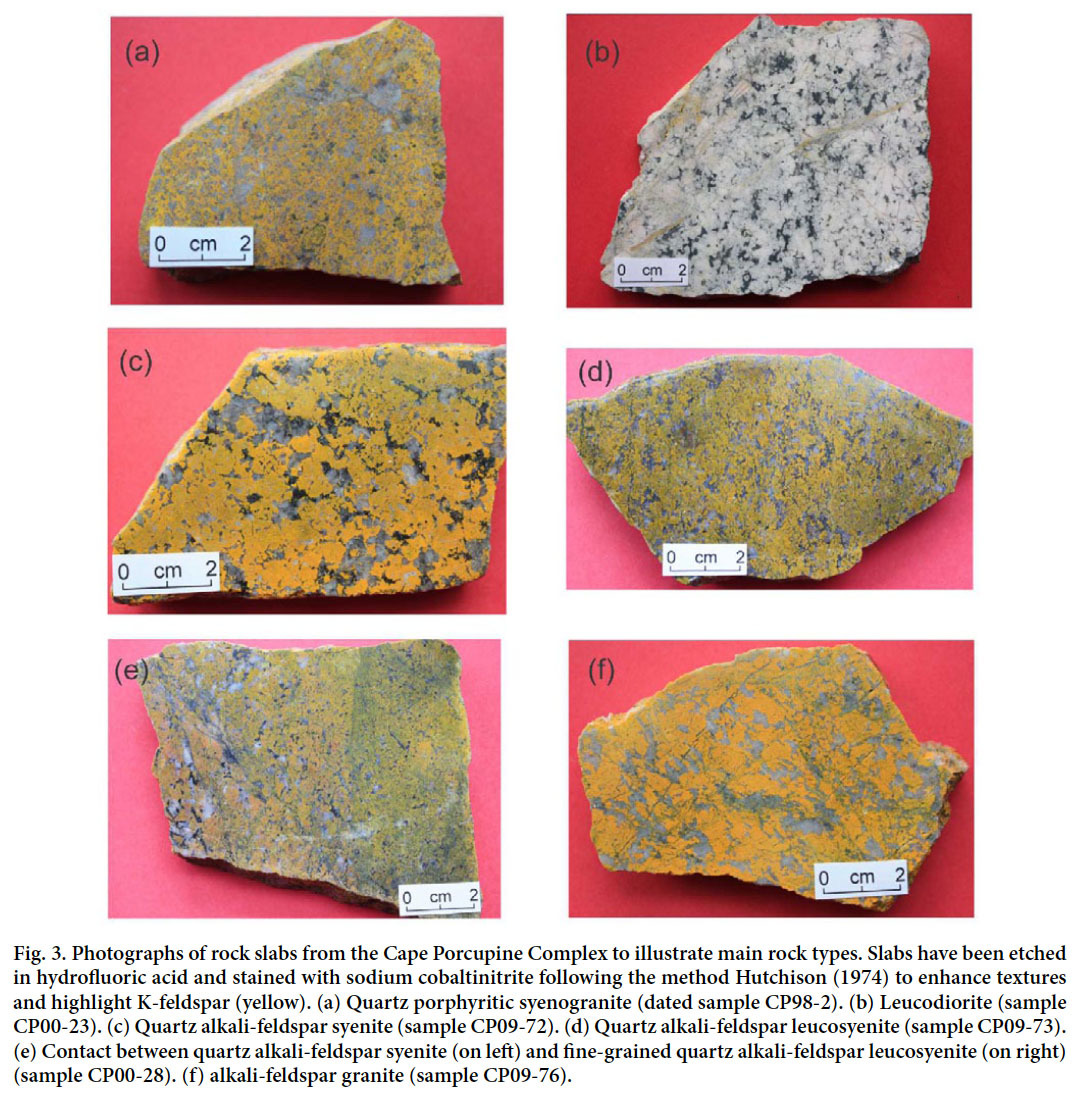
Of the multiple rock types found on Cape Porcupine, two types are quite common: Metasedimentary rock and Metavolcanic rock.
The differences between the two types of rock:
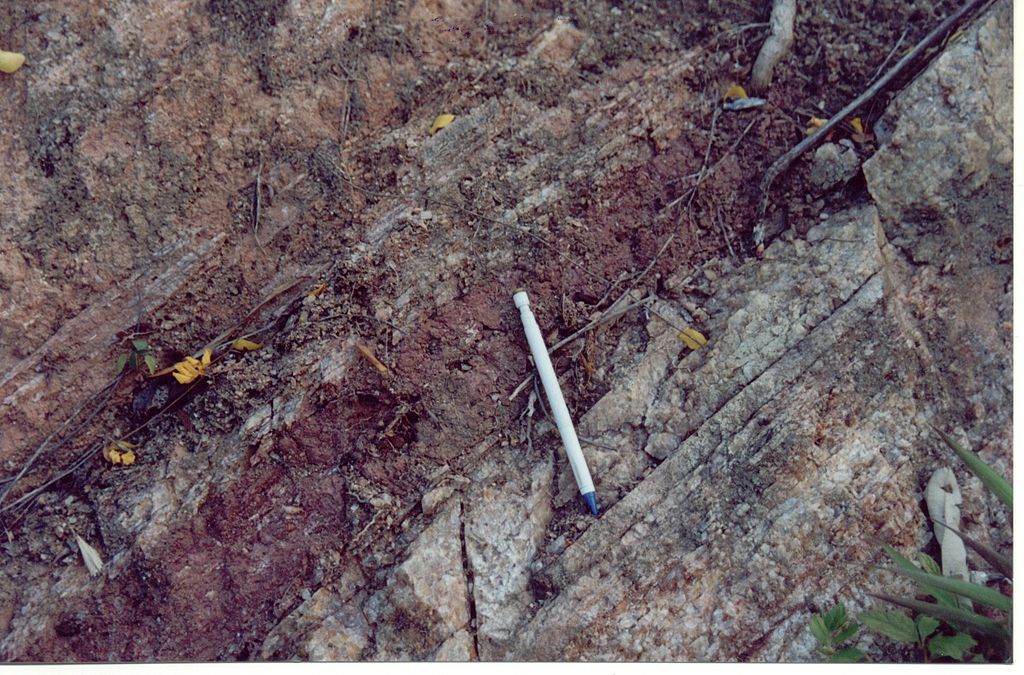
Metasedimentary rock
In geology, metasedimentary rock is a type of metamorphic rock. Such a rock was first formed through the deposition and solidification of sediment. Then, the rock was buried underneath subsequent rock and was subjected to high pressures and temperatures, causing the rock to recrystallize. Metasedimentary rocks occupy the central area of the Cape Porcupine Complex. The metasedimentary rock consists mainly of grey to black, fine-grained siltstone, with thin, light grey, fine-grained lenses.
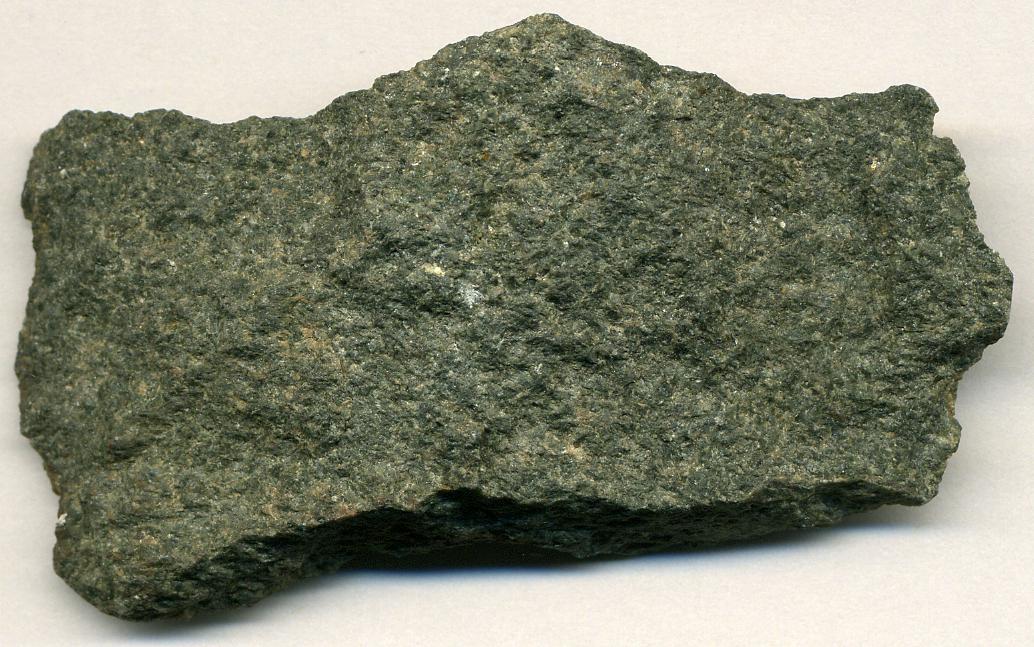
Metavolcanic rock
The metavolcanic rock forms two separate bodies in the eastern part of Porcupine Mountain: one east and the other along the Canso Strait. In geology, metavolcanic rock is a type of metamorphic rock. Such a rock was first produced by a volcano, either as lava or tephra. Then, the rock was buried underneath subsequent rock and was subjected to high pressures and temperatures, causing the rock to recrystallize. Like the metasedimentary rocks, the metavolcanic rocks are strongly foliated and lineated, but metavolcanics rock has elongate quartz crystals. In all areas, the rocks are dominantly grey to dark grey with fine-scale cross-hatch twinning.