In fluid dynamics, a vortex (plural vortices/vortexes) is a region in a fluid in which the flow revolves around an axis line, which may be straight or curved. Vortices form in stirred fluids, and may be observed in smoke rings, whirlpools in the wake of a boat, and the winds surrounding a tropical cyclone, tornado or dust devil.
Vortices are a major component of turbulent flow. The distribution of velocity, vorticity (the curl of the flow velocity), as well as the concept of circulation are used to characterize vortices. In most vortices, the fluid flow velocity is greatest next to its axis and decreases in inverse proportion to the distance from the axis.
In the absence of external forces, viscous friction within the fluid tends to organize the flow into a collection of irrotational vortices, possibly superimposed to larger-scale flows, including larger-scale vortices. Once formed, vortices can move, stretch, twist, and interact in complex ways. A moving vortex carries with it some angular and linear momentum, energy, and mass.
A topic of much interest and debate concerns the direction in which the water in the vortex flows North and South of the equator. Objects not attached to the surface of the earth (water in a sink going down a drain) will create a vortex going the opposite direction. So in the Northern hemisphere, it moves clockwise. In the Southern hemisphere, it moves counter clockwise. On the equator, water goes straight down.
In order to locate the cache container, you will need to solve the following puzzle.
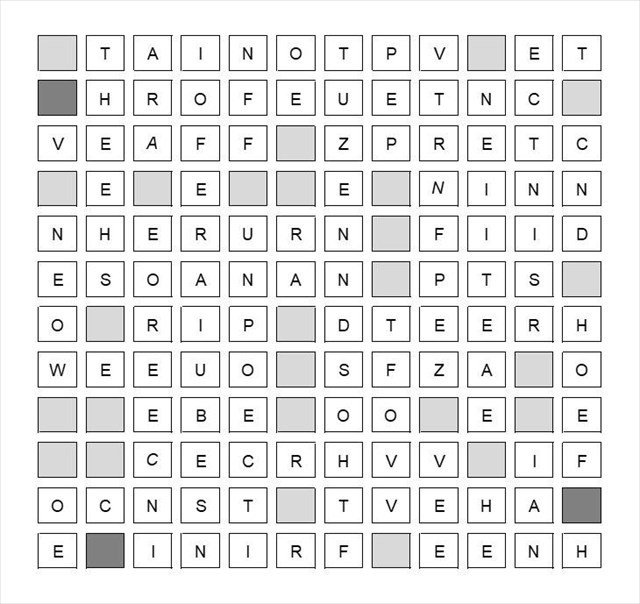
The cache can be found at ...
You can check your answers for this puzzle on GeoChecker.com.