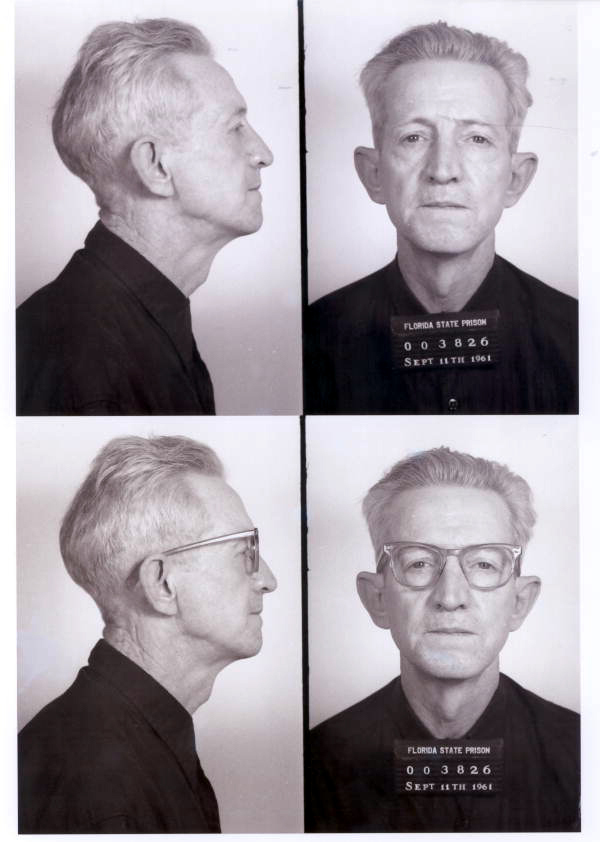
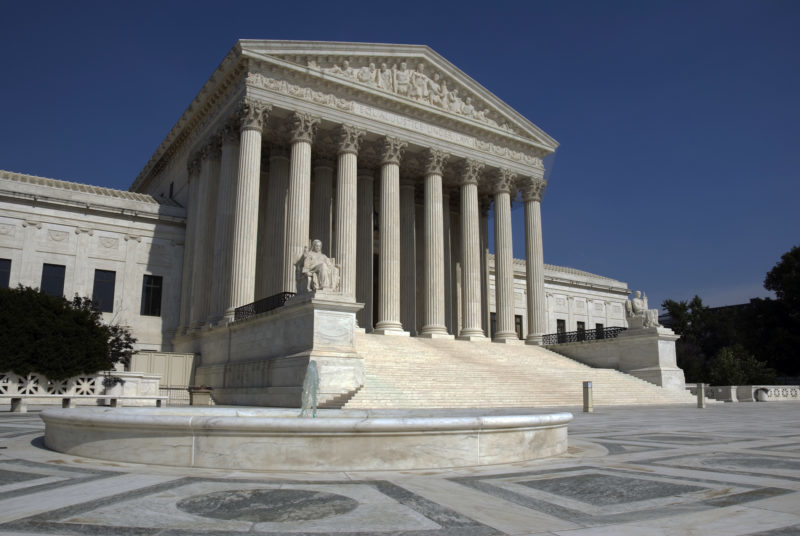
Monday marks a historic day in American legal history. On that same date in 1963 the landmark legal case Gideon v. Wainwright was decided by the United States Supreme Court. Without it I doubt the building you are standing behind would be here. In this case, the Supreme Court unanimously ruled that states are required under the Sixth Amendment of the U.S. Constitution to provide an attorney to defendants in criminal cases who are unable to afford their own attorneys. The case extended the right to counsel, which had been found under the Fifth and Sixth Amendments to impose requirements on the federal government, by imposing those requirements upon the states as well.
Background
In June 1961 Clarence Earl Gideon was charged in Panama City, Florida on suspicion of burglary. Gideon appeared in court alone as he was too poor to afford counsel. Gideon’s request for appointed council was denied by the court. As it was not a capital offense the law at the time had no requirement to do so. Gideon was found guilty and sentenced to five years in state prison. While serving his sentence, and using prison stationary and a pencil, he appealed his case to the United States Supreme Court. He argued that he had been denied counsel and, therefore, his Sixth Amendment rights had been violated. To his case, the Supreme Court assigned future Supreme Court justice Abe Fortas of the law firm Arnold, Fortas & Porter. During oral arguments Fortas argued that no layman could be expected to mount a defense. He pointed out that when legendary litigator Clarence Darrow had been charged with a crime that even he had hired an attorney to handle his case, thus, how could a man without a legal education be expected to defend himself?
Decision
The decision was announced as unanimous in favor of Gideon and that assistance of counsel, if desired by a defendant who could not afford to hire counsel, was a fundamental right under the United States Constitution.
Gideon v. Wainwright was one of a series of Supreme Court decisions that confirmed the right of defendants in criminal proceedings, upon request, to have counsel appointed both during trial and on appeal. In the subsequent cases of Massiah v. United States and Miranda v. Arizona the Supreme Court further extended the rule to apply even during police interrogation.
Due to the ruling over 2,000 individuals were freed in Florida alone, however Gideon himself had to face a second trial in which he was found not guilty.