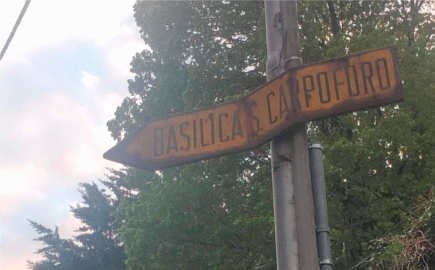
Basilica di San Carpoforo
ITALIANO:
La tradizione vuole che, verso la fine delle persecuzioni dei cristiani nell'Impero romano, un soldato romano di nome Carpoforo, con cinque compagni fuggiti da Milano perché cristiani, subirono il martirio nella località detta Selvetta, sulle pendici orientali del colle Baradello, presso un tempio dedicato al dio Mercurio. Nel V secolo il vescovo Felice fonda la prima cattedrale della città, trasformando il tempio in una chiesa cristiana e dedicandola a Carpoforo. Con lo spostamento della cattedrale in un luogo più vicino alla città, la chiesa di San Carpoforo decadde fino a quando, nel 724 il re dei longobardi Liutprando decise di ristrutturarla e ingrandirla.
Particolarità è il fatto che la facciata non presenta ingressi, dal momento che è addossata alla collina. Alcuni smottamenti l'hanno addirittura interrata per metà della sua grandezza.
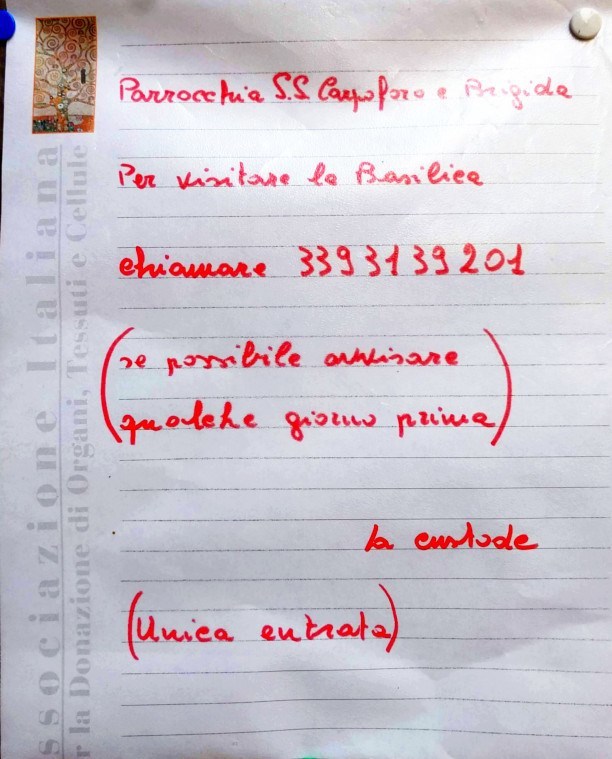
La chiesa non ospita con regolarità funzioni religiose, ma è usata dalla vicina scuola. Per visitare la basilica, un avviso (vedi sotto) posto all'entrata chiede di contattare preventivamente il custode.
ENGLISH:
Towards the end of the Christians persecution in the Roman Empire, a Roman soldier named Carpoforo, with five companions who had fled from Milan because they were Christians, suffered martyrdom in the town called Selvetta, on the eastern side of the Baradello hill, near a temple dedicated to the god Mercury. In the fifth century, bishop Felice founded the city's first cathedral, transforming the temple into a Christian church and dedicating it to Carpoforo. When the cathedral was moved to a place closer to the city, the church of San Carpoforo deteriorated until, in 724, the king of the Longobards Liutprando decided to renovate it and enlarge it.
Peculiarity is the fact that the facade does not have an entrance, since it is facing against the hill. Some landslides have even buried it for half of its size.
The church does not regularly host religious services, but is used by the nearby school. To visit the basilica, a notice (see below) at the entrance asks to contact the caretaker in advance.
FONTE/REFERENCE:
www.spinaverde.it
www.romanicomo.it
www.lombardiabeniculturali.it