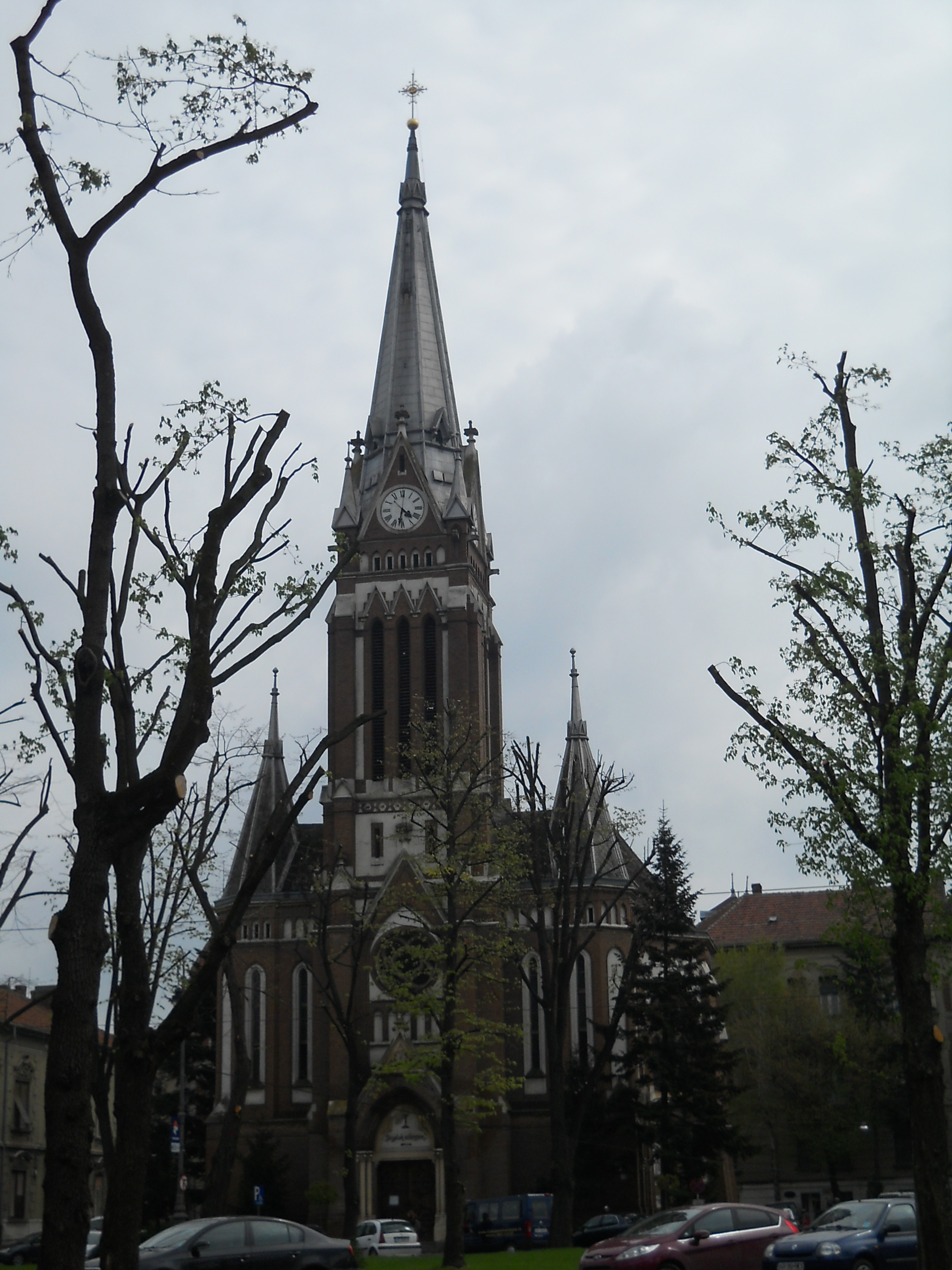
[RO] Biserica Evanghelică Lutherană, purtând pseudonimul „Biserica Roşie” din Arad, a fost concepută de către arhitectul Ludovic Szántay în stil neogotic. Clădirea a fost realizată în decursul anilor 1905-1906 de către constructorul Iosef Frick. Intervenţii mai mici au avut loc între 1981-1982, iar o reabilitare generală în perioada anilor 1992-1994. Biserica Evanghelică Luterană din România a luat ființă după încheierea Marelui Război (1914-1918), constituindu-se din credincioșii evanghelici luterani din regiunile Transilvania și Banat. Aradul, fiind o perioadă de timp oraşul centru al acestui cult, deține o astfel de biserică evanghelică luterană.
Biserica Evanghelică Luterană aparţine stilului neogotic. Atât faţadele cât şi interiorul purtând elemente ale limbajului decorativ neogotic. Amvonul şi altarul bisericii au fost realizate de către renumitul sculptor György Örr din Kosice. Tema picturală a altarului are ca temă „Rugăciunea lui Isus în grădina Ghetsimani”, fiind executată de pictorul I. Umlauf. Tabloul respectiv a fost finalizat încă din perioada anului 1848, fiind adus dintr-o biserică mai veche. Băncile de lemn din biserică au fost realizate de tâmplarul arădean Ferenc Sebessy. Orga electropneumatică, montată în 1928 şi inaugurată la 8 decembrie 1929, a fost concepută de firma Wegenstein şi Fii (unul dintre cei mai importanţi constructori de orgi din Banat în vremea respectivă). Biserica dispune de 13 vitralii, reprezentând figuri ale apostolilor, evangheliştilor, secvenţe din viaţa lui Mântuitorului şi personalităţi marcante ale Reformei, precum ar fi Luther şi Melanchton. Proveniența vitraliilor este Budapesta, mai exact din atelierul lui Jozsef Palka (Retz, 1860 – Budapest, 1952).
[EN] The “Red Church” was designed by architect Szántay Lajos in Neo-Gothic style and built in the centre of Arad, in Luther Square, during the period of 1905-1906 by Iosef Frick. The building was restored between 1992-1994, date marked on a plaque in the lobby. The Romanian Evangelical Lutheran Church came into being at the end of the Great War (1914-1918), its founders being the evangelical lutheran community from the regions of Transylvania and Banat. For a period of time, the city of Arad was the center of this cult and today it owns a beautiful Evangelical Lutheran Church.
The Evangelical Lutheran Church belongs to the neo-gothic style. Both the façades and the interior bear the elements of typical neo-gothic decorative language. The pulpit and the altar of the Church were made by the famous sculptor György Örr from Kosice. The altar painting shows the theme of “Jesus’s prayer in the Garden of Gethsemane” and was completed by painter I. Umlauf in 1848, later on being brought here from an older church. The wooden benches in the Church were manufactured by a local carpenter, Ferenc Sebessy. The electro-pneumatic organ, installed in 1928 and inaugurated on December 8, 1929, was designed by the firm “Wegenstein and Sons” (one of the most important builders of pipe organs in that era). The 13 stained glass windows were made in Budapest, illustrating the initiators (Luther and Melanchton) of church reformation, as well as moments from the life of Jesus Christ.
Sursa: http://www.aradcityguide.ro/