This event will commemorate the 50th anniversary of the launch of Apollo 11.
Come and enjoy a gentle evening of conversation, and enjoyment of the gifts that nature freely provides, at a waterfront park in Oshawa.
There are no lights at the beach area offering an opportunity to watch the stars emerge as darkness comes, and to listen to the water as it transitions from evening into night.
Bring your lawn chair if you wish. Light snacks and prizes will be provided.
 |
|
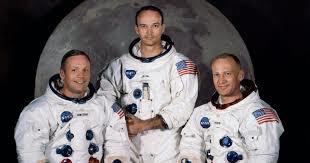
Apollo 11 was the spaceflight that landed the first two people on the Moon. Commander Neil Armstrong and lunar module pilot Buzz Aldrin, while command module pilot Michael Collins flew the command module Columbia alone in lunar orbit while they were on the Moon's surface. |
| |
|
|
|
|
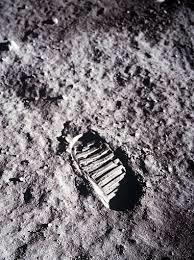
Armstrong and Aldrin spent 21.5 hours on the lunar surface before rejoining Columbia in lunar orbit. Armstrong and Aldrin landed the Apollo Lunar Module Eagle on July 20, 1969, at 20:17 UTC.
Armstrong became the first person to step onto the lunar surface six hours later on July 21 at 02:56:15 UTC; Aldrin joined him 19 minutes later. They spent about two and a quarter hours together outside the spacecraft, and collected 47.5 pounds (21.5 kg) of lunar material to bring back to Earth.
|
| |
|
|
|
|
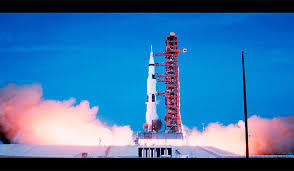
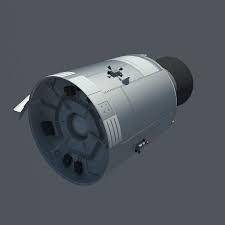
Apollo 11 was launched by a Saturn V rocket from Kennedy Space Center in Florida, on July 16 at 13:32 UTC. The Apollo spacecraft had three parts: |
| |
|
|
|
|
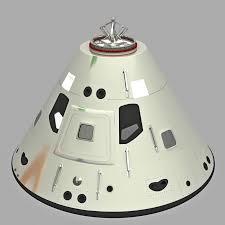
a command module (CM) with a cabin for the three astronauts, and the only part that returned to Earth; |
| |
|
|
|
|
a service module (SM), which supported the command module with propulsion, electrical power, oxygen, and water; |
| |
|
|
|
|
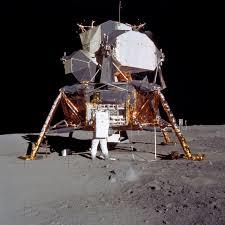
and a lunar module (LM) that had two stages – a descent stage for landing on the Moon, and an ascent stage to place the astronauts back into lunar orbit. |