[ITA]
Questa cache fa parte di una serie dedicata a far conoscere le chiese più o meno note di San Giovanni Lupatoto.
E' abbinata alla bonus cache La Chiesa Nascosta: GC87TDN
La bonus cache è accessibile solo una volta trovate le altre 4. Annotate i numeri che troverete: vi serviranno per scoprire le coordinate finali della Chiesa Nascosta.
SORIO
Attenzione per raggiungere la chiesa vera e propria seguire il Waypoint inserito nel listing. Ti consigliamo di cuore di non fermarti a GZ ma di raggiungere la chiesetta vera e propria. Sono solo due passi
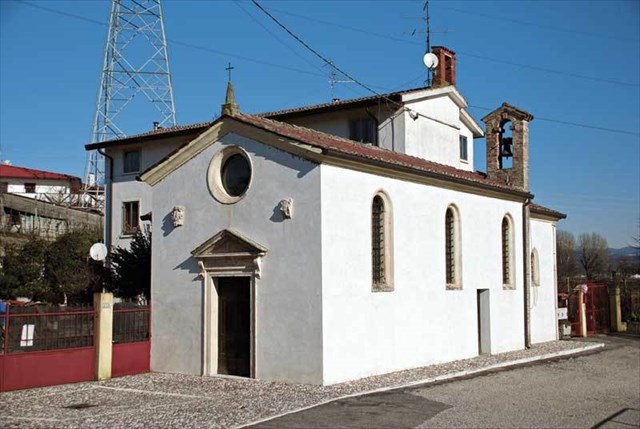
La chiesa di Sorio, chiamata anche oratorio di San Pietro Martire e San Giorgio, è la più antica chiesa di San Giovanni Lupatoto. E' un piccolo oratorio probabilmente basato su di una forma architetturale di stampo romanico ed ampliata successivamente in tempi diversi. Dedicata a San Pietro Martire è situata a Sorio e si trova ai piedi del terrazzo dell'Adige, in un luogo di solitudine e di preghiera. L'edificio viene eretto nel 1585 con lo scopo di essere utilizzato come chiesa padronale. La decadenza della chiesetta è iniziata nell'800 quando, con il potenziamento dei collegamenti stradali e la caduta della Repubblica Veneta, la navigazione fluviale perse la sua importanza e di conseguenza anche la chiesa non era più un punto di riferimento. Viene restaurata nel 1982 e parzialmente restaurata in epoca recente.
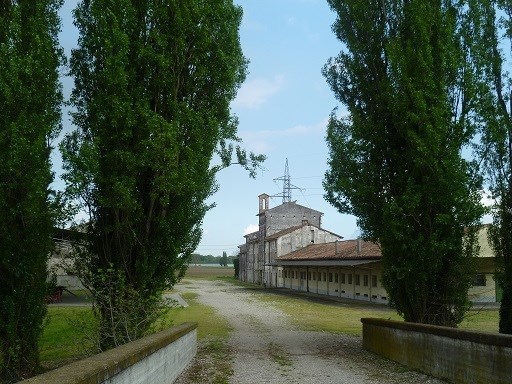
Si trova vicino a Corte Sorio: luogo anch'esso significativo per essere sopravvissuto sostanzialmente intatto sino ai giorni nostri. La comunità di Sorio viene citata in alcune carte medioevali: infatti questo toponimo si può trovare scritto per la prima volta su documenti del 1175. Tuttavia, data la posizione spostata e isolata rispetto al primo nucleo centrale del paese, alcuni ritengono che, alle sue origini, non si possa considerare Sorio come una parte di San Giovanni Lupatoto, ma come un'entità a sé stante, riunificata al paese solo in tempi più recenti.
La chiesa di Sorio fu fondata nel 1585 per iniziativa della nobil signora Isotta Borghetti, moglie del nobil signor Guglielmo Guarienti, come chiesa padronale. Inizialmente fu messa sotto la giurisdizione della Santa Congregazione del Clero Intrinseco che ne nominava il cappellano. Qui vi si celebravano due messe feriali settimanali e tutte le feste di precetto e di devozione secondo la volontà del coniugi Borghetti.
Nel 1900 il papa Leone XIII concesse alla chiesetta l'indulgenza plenaria applicata per sette anni ai defunti e a tutti i fedeli che, dopo essersi confessati, visitavano l'oratorio nella festa di san Pietro Martire o in uno dei sette giorni seguenti, pregando per la concordia dei principi cristiani, per l'estirpazione delle eresie, per la conversione dei peccatori e per l'esaltazione della santa Madre Chiesa.
In questa chiesa vennero anche sepolti i nobili signori Borghetti-Cartolari. Durante il periodo in cui mons. L. Boscani era parroco, i nobili Cartolari donarono alla parrocchia di San Giovanni Lupatoto l'oratorio, la casa annessa e i due orti che affiancano la chiesa. Nel 1982 la chiesa è stata restaurata completamente.

INTERNO
La chiesa è illuminata da tre finestre romaniche che si trovano sulla parete destra e dal rosone della facciata. La parete sinistra è adorna di una grande tela che “Joannes Humanus Ligoccia Pictor faciebat” in cui vi è rappresentato il Redentore affiancato da san Giovanni Battista e san Pietro Apostolo. L'altare laterale è dedicato alla Beata Vergine e ai Santissimi Michele Arcangelo e Giorgio Martire come ricorda il quadro di “D. F. 1610”. Il quadro però desta il sospetto di copia (forse del 1800) perché appare in buone condizioni. L'altare maggiore è in marmo bianco e rosso.
Nell'abside una pala, dipinta da un ignoto, raffigura la Vergine col Bambino che guarda amorevolmente al martirio di san Pietro da Verona. La pala risale al 1600 circa ed è di scuola veronese. Gli affreschi sulle pareti rappresentano i Dodici Apostoli con santa Caterina d'Alessandria, riconoscibile dalla ruota, simbolo del suo martirio. Tutti hanno lo sguardo fisso verso la Vergine che viene assunta al cielo. Nel pavimento ci sono le epigrafi sepolcrali della famiglia Borghetti-Cartolari.
In epoca recente, abbinato al restauro parziale della chiesa, è stato fatto uno studio in cui si sono cercati i riferimenti storico geometrici che hanno permesso di riconsiderare e valorizzare l'architettura dell'antico edificio per collocarlo nel suo preciso contesto storico architettonico. L'ipotesi formulata è che non abbia nulla a che vedere con la forma romanica accennata da alcuni studiosi. Nelle fasi del rilievo metrico e dell'analisi iconometrica sono state riscontrate, infatti, numerose analogie che hanno permesso di condurre ad una lettura del modello matematico che ha ordinato le proporzioni dell'intero manufatto, o quanto meno di una parte dello stesso, tanto da considerare l'ipotesi che l'edificio sia stato costruito ed ampliato in tempi diversi. Lo studio si conclude con la dimostrazione che la chiesa ha probabilmente un impianto architettonico basato su di una forma romanica, tuttavia successivamente ha subito importanti cambiamenti tanto da riconoscere nella pianta dell'edificio caratteristiche di tipologia rinascimentale.
[ENG]
This cache is part of a series dedicated to making known the more or less known churches of San Giovanni Lupatoto.
It is connected with the bonus cache The Hidden Church : GC87TDN
The last cache is accessible only once you find the other 4 and have noted the numbers that you will find during the stages because you will need them to find the final coordinates.
SORIO
The church of Sorio, also called the oratory of San Pietro Martire and San Giorgio, is a small oratory probably based on a Romanesque architectural form and subsequently enlarged at different times. Dedicated to San Pietro Martire, it is located in Sorio and is located at the foot of the Adige River terrace, in a place of solitude and prayer. The building was erected in 1585 with the purpose of being used as a master church. The decay of the church began in the 1800s when, with the strengthening of road connections and the fall of the Venetian Republic, river navigation lost its importance and consequently the church was no longer a point of reference. It was restored in 1982 and partially restored in recent times.
It is located near Corte Sorio: also a significant place to have survived substantially intact up to the present day. The community of Sorio is mentioned in some medieval papers: in fact this toponym can be found written for the first time on documents of 1175. However, given the position moved and isolated with respect to the first central nucleus of the country, some believe that, at its origins , we cannot consider Sorio as a part of San Giovanni Lupatoto, but as an entity in itself, reunited to the village only in more recent times.
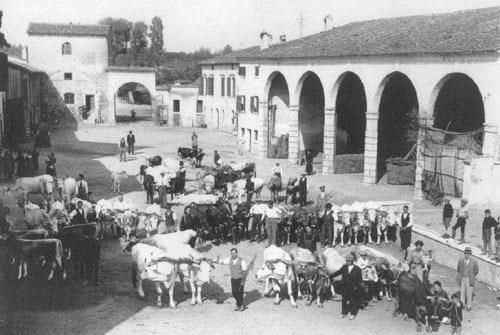
The church of Sorio was founded in 1585 on the initiative of Nobil Signora Isotta Borghetti, wife of Nobil Signor Guglielmo Guarienti, as the main church. Initially it was placed under the jurisdiction of the Santa Congregazione del Clero Intrinseco who appointed its chaplain. Here two weekly weekday masses were celebrated and all the feasts of precept and devotion according to the wishes of the spouses Borghetti.
In 1900, Pope Leo XIII granted the church the plenary indulgence applied for seven years to the dead and to all the faithful who, after confessing, visited the oratory on the feast of Saint Peter Martyr or in one of the following seven days, praying for the concord of Christian principles, for the eradication of heresies, for the conversion of sinners and for the exaltation of the holy Mother Church.
The noble Borghetti-Cartolari lords were also buried in this church. During the period in which Msgr. L. Boscani was parish priest, the Cartolari nobles donated to the parish of San Giovanni Lupatoto the oratory, the adjoining house and the two vegetable gardens next to the church. In 1982 the church was completely restored.
The church is illuminated by three Romanesque windows that are located on the right wall and the rose window of the facade. The left wall is adorned with a large canvas that "Joannes Humanus Ligoccia Pictor faciebat" in which is represented the Redeemer flanked by St. John the Baptist and St. Peter the Apostle. The side altar is dedicated to the Blessed Virgin and to the Saints Michele Arcangelo and Giorgio Martire as the picture of "D. F. 1610 ". The picture, however, arouses the suspicion of a copy (perhaps from the 1800s) because it appears to be in good condition. The main altar is in white and red marble.
In the apse an altarpiece, painted by an unknown, depicts the Virgin and Child who looks lovingly at the martyrdom of Saint Peter of Verona. The altarpiece dates back to around 1600 and is from the Verona school. The frescoes on the walls represent the Twelve Apostles with Saint Catherine of Alexandria, recognizable by the wheel, symbol of her martyrdom. All have their eyes fixed on the Virgin who is taken to heaven. In the floor there are the sepulchral epigraphs of the Borghetti-Cartolari family.
In recent times, combined with the partial restoration of the church, a study was carried out in which historical geometric references were sought which allowed to reconsider and enhance the architecture of the ancient building to place it in its precise historical architectural context. The hypothesis formulated is that it has nothing to do with the Romanesque form mentioned by some scholars. In the phases of the metric survey and of the iconometric analysis, in fact, numerous analogies were found which led to a reading of the mathematical model that ordered the proportions of the entire building, or at least a part of it, as much from consider the hypothesis that the building was built and expanded at different times. The study concludes with the demonstration that the church probably has an architectural structure based on a Romanesque form, but subsequently it has undergone important changes so as to recognize in the plan of the building characteristics of Renaissance typology.