
My fifth cache commemorating landmark decisions in American legal history. Forty one years ago Wednesday, FCC v. Pacifica Foundation was decided in a 5–4 ruling by the US Supreme Court. The Court majority held that the Federal Communications Commission (FCC) did in fact have the power to censor licensed broadcasters.
Background
On October 30th, 1973, FM radio station WBAI in New York City aired a broadcast that included a segment which featured the recording “Filthy Words” by 20th Century philosopher and comedian George Carlin. Carlin had been arrested the previous year for performing the routine in Wisconsin and it was part of a program about societal attitudes toward language. A few weeks later, John Douglas (an active member of Morality in Media) stated in a complaint filed with the FCC that he heard the broadcast while he was driving with his 15-year-old son. He also stated the material was “inappropriate”. In response, Pacifica received a letter of reprimand from the FCC, censuring them for allegedly violating broadcast regulations which prohibited airing indecent material , and threatened to impose sanctions on the Pacifica Foundation, who owned WBAI, over any subsequent complaints. Pacifica challenged this finding in court, and in 1977 the United States Court of Appeals for the District of Columbia Circuit ruled in favor of the broadcast entity by a 2-1 margin, sending the case to the Supreme Court.
Decision
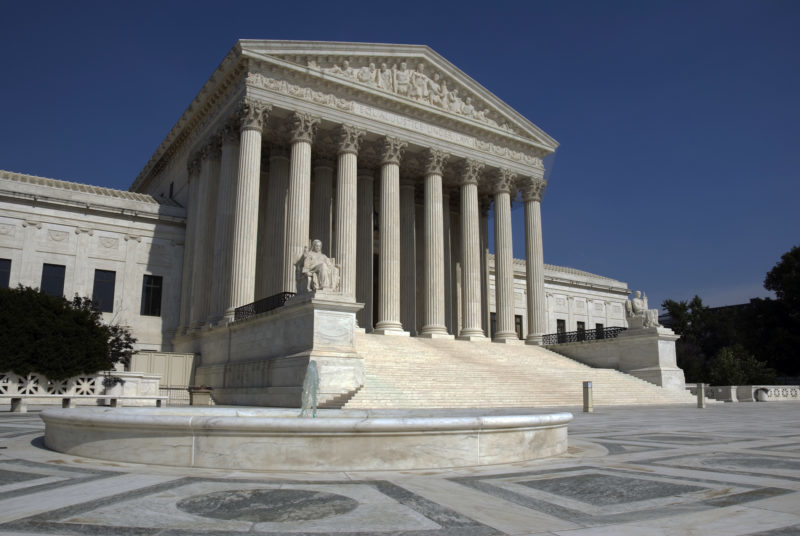
On July 3, 1978, the Supreme Court issued its ruling upholding the FCC's power to determine language guidelines and limitations by a 5-4 margin. Penning the majority decision, Justice John Paul Stevens cited the need for such regulation due to broadcast media's "uniquely pervasive presence in the lives of all Americans." The Court recognized the government had strong interests in shielding children from potentially offensive material, and ensuring that unwanted speech does not intrude on the privacy of one's home. In his dissenting opinion Justice William Breenan wrote he found it “equally disturbing” that his fellow Justices had the “inability to appreciate that in our land of cultural pluralism, there are many who think, act, and talk differently from the Members of this Court, and who do not share their fragile sensibilities”.
Impact
At first, despite the resounding win in Pacifica, the FCC used its new regulatory powers sparingly. In the 1990s, however, the FCC ramped up sanctions for indecent broadcasts. And by the early 2000s, the FCC began to levy more sanctions with higher dollar amounts—with fines of up to $500,000 for some offenses. In 1997, Pacifica Radio "Living Room" host Larry Bensky prefaced an interview with Carlin by saying: "George Carlin, you're a very unusual guest for Pacifica Radio. You're probably the only person in the United States that we don't have to give The Carlin Warning to about which words you can't say on this program, because it's named after you."