

The story we want to tell you happened many millions of years ago in the period of Middle and Late Triassics (242.0 - 201.3 million years ago). At that time, the Adriatic Tectonic Plate formed a thick layer of limestone and dolomite, the thickness of which reached 8,000 m. In these layers took place a process, which effects can be observed today on the stone, located on the coordinates of this earthcache.
You look at the stone and see an "insert" with a very diverse color in relation to the rest of the stone block. Wondering how nature did it? We will try to bring it to you.
The stone you look at is a limestone, which was formed from a loose limestone sediment (among other things the fauna of the sea), which underwent the process of lithification.
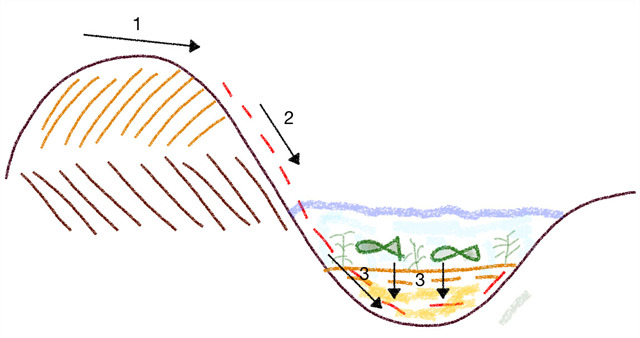
The schematic drawing shows the process of creating, among others limestone rocks. Sedimentation of marine animals (sinks to the bottom) - arrows no. 3. Parallel processes 1 and 2 occur, that is: erosion (decay) of rocks and transport of material to water reservoirs. These materials are necessary for binding limestone rocks.
Then a long-lasting process of diagenesis (in simplification: fossilization) of sediments took place. It is a process of creating a compact rock from loose rocks, consisting of combining (sticking together) with the binder of rock grains. The freshly deposited sediment is loose, soft and usually saturated with water. It is subjected to chemical and physical transformations that lead to it becoming cohesive, hard and almost completely devoid of water. The processes leading to this are carried out under pressure and temperature conditions that do not differ or slightly differ from the conditions in which the sediment was deposited.
During this process in the rock mass, so-called „privileged surfaces". These are surfaces that have better filtration parameters (easier transport of solutions forming rocks).
"Preferred surfaces" filled with rock material are just "lines" that you see on the rocks. Their thickness depends on the shape of the "privileged" layer.
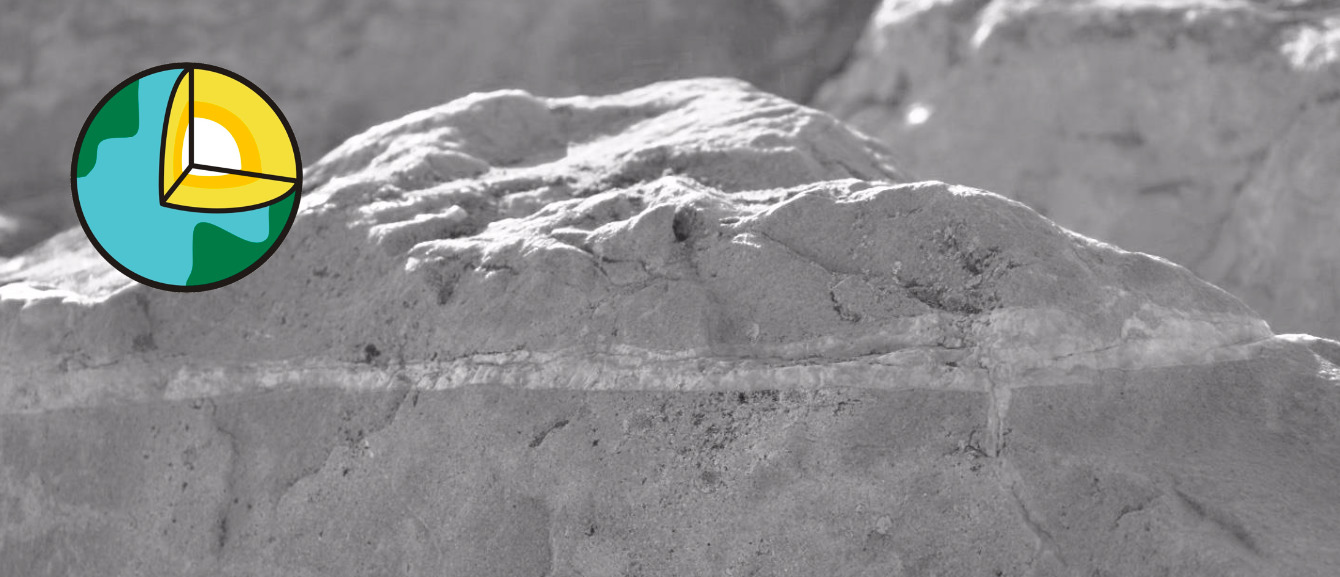
What filled the spaces? Calcite, in other words: calcium carbonate (CaCO3), which wandered in better-filtered layers creating the effect described above. White stripes give exceptionally clean calcite resources (this is what we are dealing with in this case). This is how the horizontal, wider bar was made. Visible thinner veins were probably formed a bit later, as a result of pressure or expansion of the rock mass. This influenced the final formation of the inserts.
Calcite
Calcite rock occurs in nature in three varieties, in terms of structure:
a) crystalline - the size of the crystals is large enough to distinguish individual components macroscopically (with an eye),
b) cryptocrystalline - the size of the crystals is very small, and individual components can be distinguished only under a microscope,
c) porphyry - characterized by the presence of two clearly distinguishable age and size generations of minerals.
The color of calcite depends on its purity. Calcite free of impurities occurs in a color similar to white. Any dirt causes darker shades.
Tasks to be performed on-site:
1. Find the stone - the topic of the cache (its fragment can be found in the picture in the description). Provide the width of the calcite strip, please.
2. Is the observed calcite a clear-crystalline, cryptocrystalline or porphyry rock? Justify your answer.
3. What is the color of the calcite insert, explain the color based on the cache description.
4. Is this the only rock containing calcite inserts in this area. Look around and answer.
5. This place is famous for its beautiful views of the Adriatic Sea - put a photo of you, your GPS or TB on the background of rocks and the sea.


La storia che vogliamo raccontarvi è avvenuta molti milioni di anni fa nel periodo del Triassico medio e tardo (242.0 - 201.3 milioni di anni fa). A quel tempo, la placca tettonica adriatica formava uno spesso strato di calcare e dolomite, il cui spessore raggiungeva gli 8000 m. In questi strati ha avuto luogo un processo, che gli effetti possono essere osservati oggi sulla pietra, che si trova sulle coordinate di questo earthcache.
Guardi la pietra e vedi un "inserto" con un colore molto diverso in relazione al resto del blocco di pietra. Ti chiedi come la natura ha fatto? Cercheremo di portartelo.
La pietra che si osserva è una pietra calcarea, formata da un sedimento calcareo sciolto (tra le altre cose la fauna del mare), che ha subito il processo di litificazione.
Il disegno schematico mostra il processo di creazione, tra le altre rocce calcaree. Sedimentazione di animali marini (lavandini sul fondo) - frecce n. 3. Processi paralleli 1 e 2 si verificano, vale a dire: erosione (decadimento) di rocce e trasporto di materiale in serbatoi d'acqua. Questi materiali sono necessari per legare rocce calcaree.
Quindi ha avuto luogo un lungo processo di diagenesi (in termini di semplificazione: fossilizzazione) dei sedimenti. È un processo di creazione di una roccia compatta da rocce sciolte, che consiste nel combinare (attaccarsi insieme) con il legante di grani di roccia. Il sedimento appena depositato è sciolto, morbido e solitamente saturo di acqua. È soggetto a trasformazioni chimiche e fisiche che lo portano a diventare coeso, duro e quasi completamente privo di acqua. I processi che portano a questo sono effettuati in condizioni di pressione e temperatura che non differiscono o differiscono leggermente dalle condizioni in cui il sedimento è stato depositato.
Durante questo processo nella massa rocciosa, le cosiddette "superfici privilegiate" sono superfici che hanno parametri di filtrazione migliori (trasporto più facile di soluzioni che formano rocce).
"Le superfici preferite" piene di materiale roccioso sono solo "linee" che vedi sulle rocce. Il loro spessore dipende dalla forma del livello "privilegiato".
Cosa riempiva gli spazi? Calcite, in altre parole: carbonato di calcio (CaCO3), che vagava in strati filtrati meglio creando l'effetto sopra descritto. Le strisce bianche danno risorse di calcite eccezionalmente pulite (questo è ciò di cui ci stiamo occupando in questo caso). Ecco come è stata realizzata la barra orizzontale più ampia. Probabilmente le vene più sottili visibili si sono formate un po 'più tardi, a causa della pressione o dell'espansione della massa rocciosa. Questo ha influenzato la formazione finale degli inserti.
calcite
La roccia calcite si presenta in natura in tre varietà, in termini di struttura:
a) cristallino - la dimensione dei cristalli è abbastanza grande da distinguere macroscopicamente i singoli componenti (ad occhio nudo),
b) criptocristallino - la dimensione dei cristalli è molto piccola e i singoli componenti possono essere distinti solo al microscopio,
c) porfido - caratterizzato dalla presenza di due generazioni chiaramente distinte di età e dimensioni di minerali.
Il colore della calcite dipende dalla sua purezza. La calcite senza impurità si presenta in un colore simile al bianco. Lo sporco provoca tonalità più scure.
Compiti da eseguire sul posto:
1. Trova la pietra - l'argomento della cache (il suo frammento può essere trovato nella foto nella descrizione). Fornire la larghezza della striscia di calcite, per favore.
2. La calcite osservata è una roccia cristallina, criptocristallina o porfirica? Giustifica la tua risposta.
3. Qual è il colore dell'inserto di calcite, spiegare il colore in base alla descrizione della cache.
4. È questa l'unica roccia contenente inserti di calcite in quest'area. Guardati intorno e rispondi.
5. Questo posto è famoso per le sue splendide viste sul Mare Adriatico - mettere una foto di te, il tuo GPS o TB sullo sfondo di rocce e il mare.

Historia, jaką chcemy Wam opowiedzieć działa się wiele milionów lat temu w okresie Średniego i Późnego Triasu (242,0 - 201,3 milionów lat temu). Wtedy to Adriatycka Płyta Tektoniczna uformowała grubą warstwę wapieni i dolomitów, której miąższość dochodziła do 8000 m. To w tych warstwach miał miejsce proces, którego efekty możecie dziś obserwować na kamieniu, zlokalizowanym na koordynatach tego earthcache.
Patrzysz na kamień i widzisz „wstawkę” o bardzo zróżnicowanym kolorze w stosunku do reszty kamiennego bloku. Zastanawiasz się w jaki sposób natura to wykonała? Spróbujemy Ci to przybliżyć.
Kamień na który patrzysz to wapień, który powstał z luźnego osadu wapiennego (między innymi fauna ówczesnego morza), który uległ procesowi lityfikacji.
Rysunek schematyczny przedstawia proces tworzenia się m.in. skał wapiennych. Następuje sedymentacja zwierząt morskich (opadają na dno) - strzałki nr 3. Równolegle zachodzą procesy 1 i 2, to jest erozja (wietrzenie) skał i transport materiału do zbiorników wodnych. To te materiały są niezbędne do wiązania skał wapiennych.
Następnie miał miejsce długotrwały proces diagenezy (w uproszczeniu: skamienienia) osadów. Jest to proces tworzenia skały zwięzłej ze skał luźnych polegający na łączeniu (zlepianiu) spoiwem ziaren skalnych. Osad świeżo złożony jest luźny, miękki i zazwyczaj przesiąknięty wodą. Ulega przeobrażeniom chemicznym i fizycznym, które prowadzą do tego, że staje się on spoisty, twardy i prawie zupełnie pozbawiony wody. Procesy do tego prowadzące przebiegają w warunkach ciśnienia i temperatury, nieróżniących się lub niewiele różniących się od tych warunków, w jakich osad został złożony.
W trakcie tego właśnie procesu w masie skalnej występowały tzw. „uprzywilejowane powierzchnie”. To takie powierzchnie, które posiadają lepsze parametry filtracji (następuje łatwiejszy transport roztworów, tworzących skały).
„Uprzywilejowane powierzchnie” wypełnione materiałem skalnym to właśnie „kreski”, które widzisz na skałach. Ich miąższość zależy od kształtu warstwy „uprzywilejowanej”.
Co wypełniło te przestrzenie? Kalcyt, czyli inaczej: węglan wapnia (CaCO3), który wędrował w lepiej filtrowanych warstwach tworząc opisywany wyżej efekt. Białe pasy dają wyjątkowo czyste zasoby kalcytu (z takim mamy do czynienia w opisywanym przypadku). Tak powstał poziomy, szerszy pasek. Widoczne cieńsze żyłki powstały najprawdopodobniej nieco później, w wyniku nacisków lub rozprężenia górotworu. Miało to wpływ na ostateczne uformowanie się wstawek.
Kalcyt
Skała kalcytowa występuje w naturze w trzech odmianach, pod względem struktury:
a) jawnokrystaliczna - wielkość kryształów jest na tyle duża, że można poszczególne składniki wyróżnić makroskopowo (gołym okiem),
b) skrytokrystaliczna - wielkość kryształów jest bardzo mała, a poszczególne składniki można wyróżnić tylko pod mikroskopem,
c) porfirowa - charakteryzująca się występowaniem dwóch wyraźnie wyróżnialnych względem siebie wiekowych i wielkościowych generacji składników mineralnych.
Kolor kalcytu zależy od jego stopnia czystości. Kalcyt pozbawiony zanieczyszczeń występuje w kolorze zbliżonym do białego. Wszelkie zanieczyszczenia powodują ciemniejsze odcienie.
Zadania do wykonania na miejscu:
1. Znajdź kamień o którym opowiada kesz (jego fragment znajdziesz na zdjęciu w opisie). Podaj szerokość paska kalcytowego.
2. Czy obserwowany kalcyt to skała jawnokrystaliczna, skrytokrystaliczna czy porfirowa? Uzasadnij swoją odpowiedź.
3. Podaj kolor wstawki kalcytu, na podstawie opisu kesza, wyjaśnij z czego wynika taki właśnie kolor.
4. Czy to jedyna skała zawierająca wstawki kalcytu w tej okolicy. Rozejrzyj się i odpowiedz.
5. Miejsce to słynie z pięknych widoków na Morze Adriatyckie - umieść w logu zdjęcie swoje, gps lub tb na tle skał i morza.

(Vielen Dank fcbdos, dass Sie den Inhalt des Caches übersetzt haben)
Die Geschichte, die wir euch hier erzählen möchten, ereignete sich vor vielen Millionen Jahren in der Zeit der Mittel- und Spättrias (vor 242,0 - 201,3 Millionen Jahren). Zu dieser Zeit bildete die adriatische Tektonikplatte eine dicke Schicht aus Kalkstein und Dolomit, deren Dicke bis 8.000 m erreichte. In diesen Schichten fand ein Prozess statt, dessen Auswirkungen heute auf dem Stein zu beobachten ist, der sich an den Koordinaten dieses Earthcaches befindet.
Betrachtet den Stein und ihr seht einen „Einschlag“ mit einer unterschiedlichen Farbe, im Gegensatz zum Rest des Steinblocks. Ihr fragt euch, wie die Natur das geschaffen hat? Wir werden versuchen, es euch zu erklären.
Bei dem Stein, den ihr betrachtet, handelt es sich um einen Kalkstein, der aus einem losen Kalksediment (unter anderem der Meeresfauna) gebildet wurde, das einer Lithifizierung (Umwandlung in Festgestein) unterzogen wurde.
Die obige schematische Zeichnung zeigt den Herstellungsprozess unter anderem von Kalksteinfelsen.
Sedimentation von Meerestieren (sinken nach unten) - Pfeil Nr. 3. Parallele Prozesse 1 und 2 finden gleichzeitig statt, durch Erosion (Zerfall) von Gesteinen und Materialtransport zu den Wasserreservoirs. Diese Materialien werden zum Binden von Kalkstein benötigt.
Dann fand ein langwieriger Prozess der Diagenese (Vereinfachung: Versteinerung) von Sedimenten statt.
Dieser Prozess dient der Herstellung eines kompakten Gesteins aus losen Gesteinen, der aus der Kombination mit dem Bindemittel der Gesteinskörner besteht. Das frisch abgelagerte Sediment ist locker, weich und in der Regel mit Wasser gesättigt. Es unterliegt chemischen und physikalischen Umwandlungen, die dazu führen, dass es kohäsiv, hart und nahezu wasserfrei wird. Die dazu führenden Prozesse werden unter Druck- und Temperaturbedingungen durchgeführt, die sich von den Bedingungen, unter denen das Sediment abgelagert wurde, nicht oder nur geringfügig unterscheiden.
Bei diesem Vorgang in der Gesteinsmasse handelt es sich um sogenannte "privilegierte Oberflächen". Dies sind Oberflächen, die bessere Filtrationsparameter aufweisen (leichterer Transport von gesteinsbildenden Lösungen).
"Bevorzugte Oberflächen", die mit Gesteinsmaterial gefüllt sind, sind nur "Linien", die Sie auf den Felsen sehen. Ihre Dicke hängt von der Form der "privilegierten" Schicht ab.
Was füllte die Leerräume? Calcit, mit anderen Worten: Calciumcarbonat (CaCO3), das in besser gefilterten Schichten wanderte und den oben beschriebenen Effekt erzeugte.
Weiße Streifen ergeben außergewöhnlich saubere Kalzitressourcen (damit haben wir es in diesem Fall zu tun). So wurde der horizontale, breitere Balken hergestellt. Sichtbar dünnere Adern bildeten sich wahrscheinlich etwas später als Folge von Druck oder Ausdehnung der Gesteinsmasse. Dies beeinflusste die endgültige Bildung der Einschläge.
Calcit
Calcitgestein kommt in der Natur in drei strukturellen Varianten vor:
a) kristallin - die Größe der Kristalle ist groß genug, um einzelne Bestandteile makroskopisch (mit bloßem Auge) zu unterscheiden,
b) kryptokristallin - die Größe der Kristalle ist sehr klein und einzelne Komponenten können nur unter einem Mikroskop unterschieden werden,
c) Porphyr - gekennzeichnet durch das Vorhandensein von zwei deutlich unterscheidbaren Alters- und Größengenerationen von Mineralien.
Die Farbe von Calcit hängt von seiner Reinheit ab. Calcit ohne Verunreinigungen tritt in einer Farbe ähnlich Weiß auf. Schmutz führt zu dunkleren Farbtönen.
Aufgaben vor Ort:
1. Findet den Stein - der welchem das Thema des Cache gewidmet ist (sein Fragment findet ihr im Bild in der Beschreibung). Bitte gebt die Breite des Calcitstreifens an.
2. Handelt es sich bei dem beobachteten Calcit um ein klar-kristallines, krypto-kristallines oder porphyrisches Gestein? Erkläre in deiner Antwort wieso.
3. Welche Farbe hat die Kalzit-Einlage? Erläutern Sie die Farbe anhand der Cache-Beschreibung.
4. Ist dies das einzige Gestein, das Calcit-Einschläge in diesem Bereich enthält? Schau dich um und beantwortete die Frage.
5. Dieser Ort ist berühmt für seine schöne Aussicht auf die Adria - ihr ein Foto von euch, eurem GPS oder TB mit den Felsen und/oder dem Meer im Hintergrund machen und dem Log anhängen.
Sources/Źródła:
Surić, Maša (June 2005). "Submerged Karst – Dead or Alive? Examples from the eastern Adriatic Coast (Croatia)". Geoadria. University of Zadar. 10 (1): 5–19. ISSN 1331-2294. Retrieved 28 January 2012.
"International Chronostratigraphic Chart" (PDF). International Commission on Stratigraphy. 2018.
Polski Instytut Geologiczny - konsultacja merytoryczna
CONGRATULATIONS ON FTF FOR  fcbdos
