 Slovensky (English listing below)
Kontroverzná synagóga s farebnými kachličkami bola splneným snom aj nenávidenou stavbou. Z miesta modlitieb sa postupom času stal sklad aj televízne ateliéry, neskôr synagóga padla na úkor stavby Mosta SNP.

Od prvej polovice 19. storočia prebiehal v Uhorsku proces emancipácie židov. Na Uhorskom židovskom kongrese v roku 1868 sa rozdelili na ortodoxných a neológov, inak známych aj ako reformovaných. V Prešporku bývali najmä tí reformovaní a tí potrebovali miesto na modlitby. Neológovia nedodržiavali predpisy a smeli v synagóge používať aj nemčinu či maďarčinu, nielen hebrejčinu. Ženy mali rovnaké práva ako muži a mohli uzatvárať manželstvo s kresťanmi. Ortodoxní židia boli takýmto správaním pobúrení. Reformovaní mali zákaz vstupu do ortodoxných synagóg, pochovávať zosnulých na starých cintorínoch a mnohí rabíni ich odmietali sobášiť.
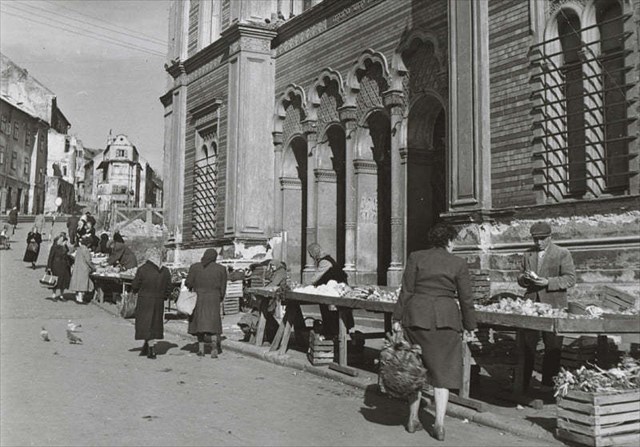
Neologická židovská obec si preto v Prešporku zriadila vlastný cintorín a snažila sa aj o vznik synagógy. Bohatý majiteľ obchodu s orientálnymi kobercami Zigmund Fornheim kúpil hostinec U zlatého slnka a požiadal architekta Dionýza Milcha, aby vypracoval projekt synagógy. Impozantná stavba v ozdobnom a orientálnom maurskom štýle privítala prvých veriacich v septembri 1894. V tesnej blízkosti Dómu sv. Martina pôsobila výnimočne, no jej poloha prekážala katolíkom aj ortodoxným židom. Budova obložená pestrofarebnými obkladačkami podľa nich pôsobila v priestore jednotnej neskorobarokovej zástavby Rybného námestia rušivo.

Po druhej svetovej vojne a nástupe komunistickej vlády prestala synagóga slúžiť pôvodnému účelu. Najprv v nej bol sklad a v šesťdesiatych rokoch ateliéry a štúdiá Slovenskej televízie. Napriek tomu, že sa úspešne vyhla vojnovému bombardovaniu, zbúraná bola aj tak. Kvôli stavbe Mosta SNP, ktorý začali budovať v roku 1967. Projekt, našťastie, nezasiahol historické jadro mesta. Naopak, vďaka nemu sa podarilo odkryť a obnoviť veľmi dôležitý zachovaný úsek stredovekého mestského opevnenia.
V súčasnosti na mieste nájdete inštalované panely, ktoré poskytujú bohaté informácie o židovskom obyvateľstve v Bratislave, ako aj o tejto Stratenej synagóge. Informačné panely boli nedávno odstránené, že stratili svoj význam, atraktivitu a boli vandalizované. Židovská náboženská obec však vraj do budúcna pripravuje novú expozíciu.
Podmienka logovania
-
K logu pridajte požadovanú fotografiu (nie do súkromnej správy).
Fotografia musí byť zhotovená na zverejnených súradniciach a musí na nej byť zároveň:
- pamätník aj veža Dómu sv. Martina,
- akákoľvek identifikovateľná časť kešera (napr. ruka, silueta, časť postavy a pod.; tvár nemusí byť viditeľná),
- čitateľná geoprezývka alebo osobný geocachingový predmet (TB, SWG, GPS zariadenie a pod.).
Fotografiu nahrajte k logu do 24 hodín od zalogovania nálezu. Neposielajte ju do správy.
-
Dobrovoľné: Vopred si pripravte
Dávidovu hviezdu ✡️ a ukážte sa aj s ňou.
-
Príklad fotografie nájdete
>tu<
(alebo
>tu<
pre ostýchavých).
Upozornenie
- Jedna fotka = jeden kešer, nie skupina. Každý pridáva fotografiu za seba.
- Logy bez splnenej podmienky môžu byť v rámci pravidiel vymazané bez upozornenia.
 English
The controversial synagogue with colorful tiles was a dream come true, but also hated building at the same time. Over time, this place of prayers became a warehouse and television studios, later the synagogue was demolished at the expense of the construction of the SNP Bridge.
From the first half of the 19th century, the process of emancipation of the Jews took place in Austrian-Hungarian empire. At the Hungarian Jewish Congress in 1868, they split into Orthodox and Neologists, otherwise known as the Reformed. The Reformed people in particular lived in Pressburg (former name of Bratislava) and they needed a place for prayers. Neologists did not follow the rules and were allowed to use German or Hungarian language in the synagogue, not only Hebrew. Women had the same rights as men and could marry Christians. Orthodox Jews were outraged by this behavior. The Reformed were forbidden to enter the Orthodox synagogues, bury the dead in the old cemeteries, and many rabbis refused to wed them.
The Neological Jewish community therefore established its own cemetery in Pressburg and also sought to establish a synagogue. The wealthy owner of the oriental carpet shop, Zigmund Fornheim, bought the U zlatého slnka inn and asked architect Dionýz Milch to design the synagogue. The impressive building in ornate and oriental Moorish style welcomed the first believers in September 1894. In close proximity to the Cathedral of St. Martin seemed exceptional, but its position hindered both Catholics and Orthodox Jews. According to them, the building lined with colorful tiles was disturbing in the area of the uniform late Baroque development of Rybné námestie (literally "Fish square").
After the Second World War and the onset of the communist government, the synagogue ceased to serve its original purpose. At first there was a warehouse in it and in the sixties the studios of Slovak Television. Despite successfully avoiding war bombing, it was demolished anyway, due to the construction of the SNP Bridge, which they began to build in 1967. Fortunately, the project did not affect the historic centre of the city. On the contrary, thanks to it, it was possible to uncover and restore a very important preserved section of the medieval city fortifications.
At present time, you will find installed panels on the site, which provide rich information about the Jewish population in Bratislava, as well as about this Lost synagogue. The panels have been removed, as they lost attractivity and partially due vandalism.
Logging requirements
-
Attach the required photo to your log (not via private message).
The photo must be taken at the published coordinates and must clearly show all of the following at the same time:
- the memorial and the tower of St. Martin’s Cathedral,
- any identifiable part of the cacher (for example a hand, silhouette, part of the body, etc.; the face does not need to be visible),
- a readable geonickname or a personal geocaching-related item (TB, SWG, GPS device, etc.).
Please upload the photo to your log within 24 hours after logging the cache. Do not send it via private message.
-
Optional: Prepare a
Star of David ✡️ in advance and include it in your photo as well.
-
Example photos can be found
>here<
(or
>here<
for shy cachers).
Notice
- One photo = one cacher, not a group. Each cacher must upload their own photo.
- Logs not meeting these requirements may be deleted without warning in accordance with the rules.
Ďalšie kešky v Bratislave so židovskou tématikou / Other Jewish-related geocaches in Bratislava
Virtual Rewards 2.0 - 2019/2021
This Virtual Cache is part of a limited release of Virtuals created between June 4, 2019 and December 31, 2021. Only 4,000 cache owners were given the opportunity to hide a Virtual Cache. Learn more about Virtual Rewards 2.0 on the Geocaching Blog.
Sources: