Als unser Team vor längerer Zeit die Möglichkeit erhielt, einen virtuellen Cache zu erstellen, freuten wir uns sehr.
Von Anfang an war klar – der Cache sollte in unserem liebsten Urlaubsland gelegt werden.
Einige Zeit später war die Welt leider nicht mehr so wie vorher und unser Plan war nicht zu verwirklichen.
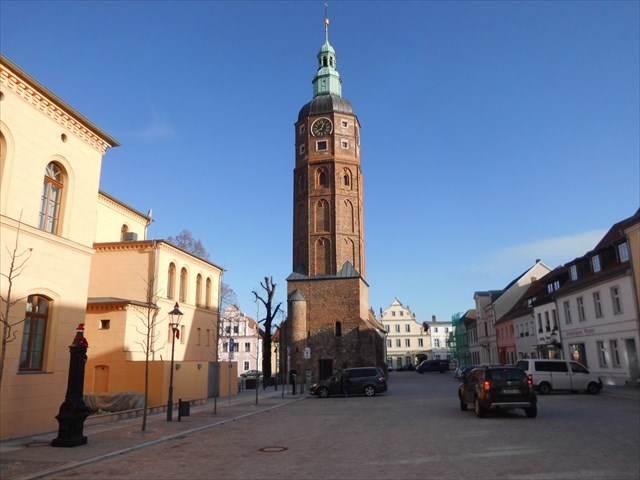
Nun haben wir uns entschieden, mit diesem virtuellen Cache unser schönes Heimatstädtchen zu würdigen.
 |
Sehr viel haben wir von unseren Eltern und Großeltern erfahren, so einige Details wurden auch im Schulunterricht behandelt.
Eine schöne Zusammenfassung findet sich bei Wikipedia, die wir hier gerne anführen:
|
„Die älteste überlieferte Urkunde, die die Stadt Luckau (sorbisch Łukow) erwähnt, stammt aus dem Jahr 1230. Im Jahre 1276 wurde der Ort als Lukkowe erwähnt. 1351 wurde der Luckauer Vertrag geschlossen. Als wohlhabende Stadt wurde sie 1492 zu einer der Hauptstädte der Niederlausitz. Mit dem Prager Frieden 1635 wurde der sächsische Kurfürst mit dem Markgraftum Niederlausitz belehnt, welches bis dahin unter böhmischer Lehnshoheit stand. Im Dreißigjährigen Krieg bauten die Schweden die Stadt als Hauptstützpunkt aus; sie erlitt infolge der anschließenden Auseinandersetzungen starke Zerstörungen. Am 4. Juni 1813 wurde während der Freiheitskriege im Gefecht bei Luckau der Vormarsch französischer Verbände auf Berlin durch die verbündeten russisch-preußischen Truppen vereitelt. Im Rahmen einer Truppeninspektion weilte Napoleon am 20. und 21. Juli 1813 in Luckau. Er bezog Quartier in der oberen Etage des Sommerhauses des Kaufmanns Vogt. Dieser Kaufmann war damals der reichste Mann der Stadt. Er war so reich, dass sogar die Stadt Luckau sich von ihm Geld auslieh. Da es in dieser Julinacht sehr kalt war, ließ sich Napoleon eine kupferne Wärmflasche ans Bett bringen. Diese Wärmflasche ist heute noch im Niederlausitz-Museum Luckau zu besichtigen. Durch Beschluss des Wiener Kongresses von 1815 wurde die Niederlausitz preußisch, das Markgraftum aufgelöst und das Gebiet der Niederlausitz und damit auch die Stadt Luckau der Provinz Brandenburg angeschlossen. Von 1816 bis 1952 war die Stadt Verwaltungssitz des Landkreises Luckau und Anfang des 20. Jahrhunderts ein bekanntes Moorbad. Von 1952 bis 1993 war Luckau Kreissitz des Kreises Luckau (bis 1990 im DDR-Bezirk Cottbus). „
|
Einige besondere Baudenkmäler haben wir hier einmal aufgezählt:
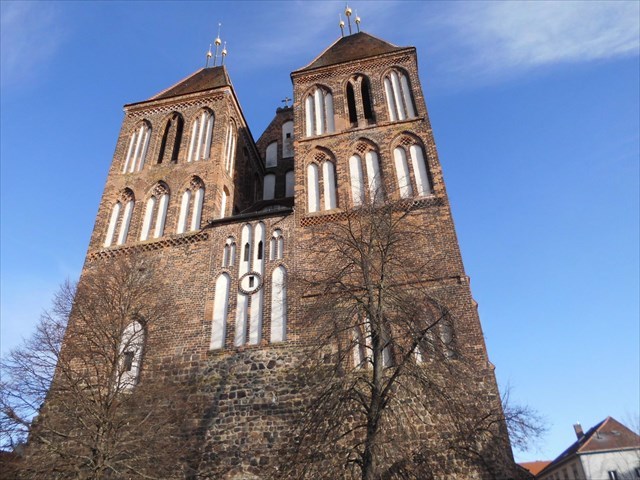
Die Evangelische St. - Nikolai – Kirche (von 1375 bis etwa 1437 errichtet).
Der Hausmannsturm mit der St. Georgenkapelle (um das 13. Jahrhundert errichtet)
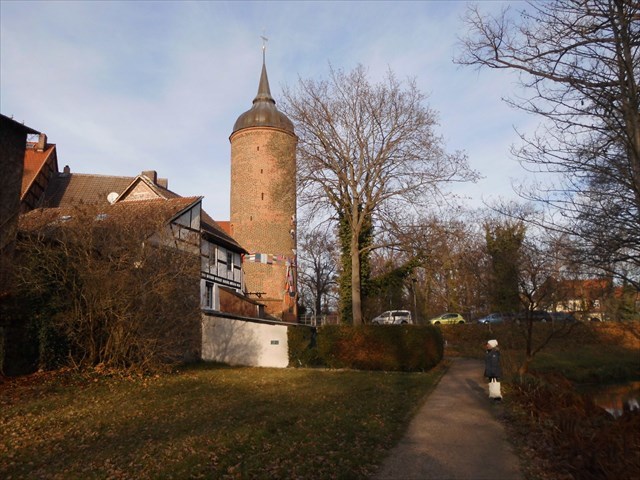
Die ungefähr 1800 m lange Stadtmauer aus dem 13. / 14. Jahrhundert mit dem Roten Turm und dem Stadtgraben.
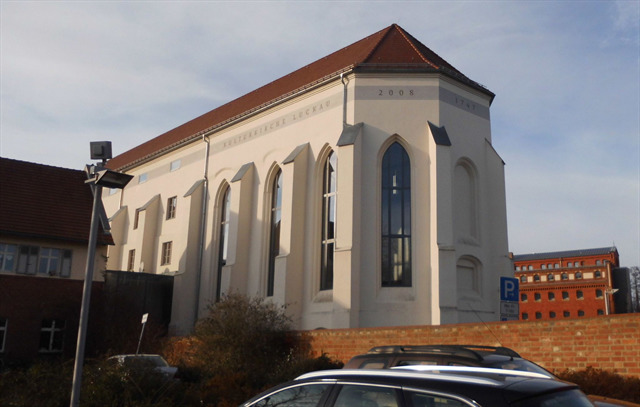
Das über 700 Jahre alte ehemalige Dominikanerkloster, später als Gefängnis und heute für kulturelle und Wohnzwecke genutzt.
|
 |
Lasst euch von dem Charme der schönen Altstadt bezaubern und genießt euren Besuch.
Die Logbedingungen sind recht einfach zu erfüllen:
Ihr müsst vier verschiedene Objekte fotografieren, jeweils eins aus jeder der vier Kategorien.
1. Ein Wohn- oder Geschäftshaus mit einer schön gestalteten Fassade.
2. Ein großes öffentliches Gebäude oder einen Turm.
3. Einen Abschnitt der Stadtmauer, gern mit dem Stadtgraben.
4. Einen Platz, ein Denkmal, einen Brunnen oder etwas anderes, das euch bei eurem Besuch in Luckau ganz besonders gut gefallen hat.
Auf mindestens einem dieser Fotos muss der Name eures Teams zu sehen sein, notfalls ein Körperteil von euch.
Logs ohne die geforderten Fotos müssen wir leider löschen.
 |
 Das copyright für die Fotos im Listing liegt bei uns. Das copyright für die Fotos im Listing liegt bei uns. |
| Für die Übersetzung des Textes haben wir den Google – Übersetzer genutzt.
English version:
When our team was given the opportunity to create a virtual cache a long time ago, we were very happy.
From the beginning it was clear - the cache should be placed in our favorite holiday destination.
Some time later the world was unfortunately not the same as before and our plan could not be realized.
Now we have decided to pay tribute to our beautiful hometown with this virtual cache.
|
 |
Some information about the history of our city:
We learned a lot from our parents and grandparents, some details were also dealt with in school lessons.
We have taken over some interesting facts from Wikipedia here.
"The oldest surviving document that mentions the city of Luckau (Łukow in Sorbian) comes from the year 1230. [4] In 1276 the place was mentioned as Lukkowe. In 1351 the Luckau Treaty was signed. As a wealthy city, it became one of the capitals of Lower Lusatia in 1492. With the Peace of Prague in 1635, the Saxon Elector was enfeoffed with the Lower Lusatia margravate, which until then had been under Bohemian suzerainty. In the Thirty Years War, the Swedes expanded the city as a main base; it suffered severe destruction as a result of the clashes that followed. On June 4, 1813, during the wars of freedom in the battle near Luckau, the advance of French units on Berlin was thwarted by the allied Russian-Prussian troops. As part of a troop inspection, Napoleon stayed in Luckau on July 20 and 21, 1813. He moved into quarters on the upper floor of the summer house of the merchant Vogt. This merchant was the richest man in town at the time. He was so rich that even the city of Luckau borrowed money from him. As it was very cold that July night, Napoleon had a copper hot water bottle brought to the bed. This hot water bottle can still be seen today in the Niederlausitz Museum in Luckau. By resolution of the Congress of Vienna in 1815, Lower Lusatia was Prussian, the Margraviate was dissolved and the area of Lower Lusatia, and thus also the city of Luckau, became part of the Province of Brandenburg. From 1816 to 1952 the city was the administrative seat of the Luckau district and a well-known mud bath at the beginning of the 20th century. From 1952 to 1993 Luckau was the seat of the district of Luckau (until 1990 in the GDR district of Cottbus). "
We have listed some special architectural monuments here:
The Evangelical St. Nikolai Church (built from 1375 to around 1437).
The Hausmannsturm with the St. Georgen Chapel (built around the 13th century)
The approximately 1800 m long city wall from the 13th / 14th century with the red tower and the city moat.
The over 700 year old former Dominican monastery, later used as a prison and today for cultural and residential purposes.
Let yourself be enchanted by the charm of the beautiful old town and enjoy your visit.
The logging conditions are quite easy to meet:
You have to photograph four different objects, one from each of the four categories.
1. A residential or commercial building with a beautifully designed facade.
2. A large public building or tower.
3. A section of the city wall, preferably with the city moat.
4. A square, a memorial, a fountain or something else that you particularly liked during your visit to Luckau.
The name of your team must be shown on at least one of these photos, if necessary a part of your body.
Unfortunately, we have to delete logs without the required photos.
We used the Google translator to translate the text.
Please leave the following text at the bottom of the page, so cache finders understand the Virtual Rewards 2.0 project.
Virtual Rewards 2.0 - 2019/2020
This Virtual Cache is part of a limited release of Virtuals created between June 4, 2019 and June 4, 2020. Only 4,000 cache owners were given the opportunity to hide a Virtual Cache. Learn more about Virtual Rewards 2.0 on the Geocaching Blog.
Virtual Rewards 2.0 - 2019-2021 This Virtual Cache is part of a limited release of Virtuals created between June 4, 2019 and December 31, 2021. Only 4,000 cache owners were given the opportunity to hide a Virtual Cache. Learn more about Virtual Rewards 2.0 on the Geocaching Blog.