Kate Sheppard is one of New Zealand's most important historical figures, a suffragist who led the fight to give New Zealand women the right to vote in parliamentary elections in the late 1800s. To claim this cache you must visit some of the locations that celebrate her achievements. It requires visiting a (free) exhibition during its opening hours, and a small amount of walking to gather the information you need.
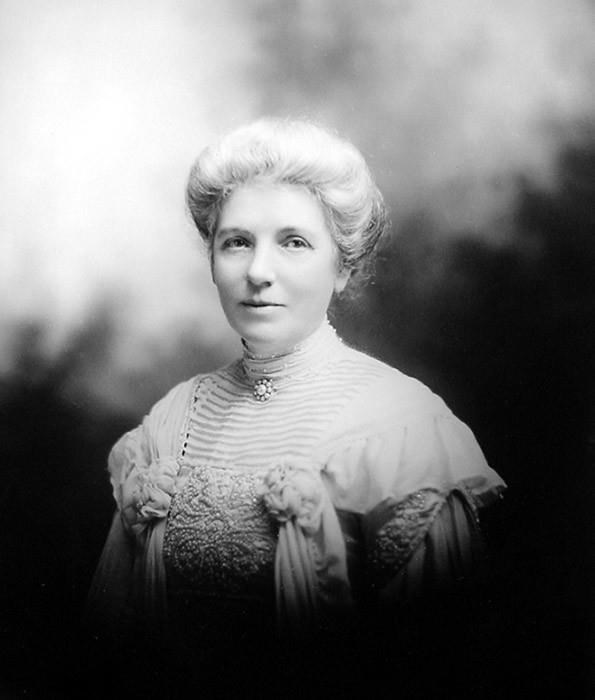
Kate Sheppard
Born in Liverpool in 1847, Kate Sheppard migrated to Christchurch in her early twenties. In 1885 she joined the new Women's Christian Temperance Union (WCTU), which advocated women’s suffrage as a means to fight for liquor prohibition. For Kate Sheppard, suffrage quickly became an end in itself. Sheppard travelled the country, writing to newspapers, holding public meetings and lobbying members of Parliament. Opposition was fierce. As Wellington resident Henry Wright wrote, women were ‘recommended to go home, look after their children, cook their husbands’ dinners, empty the slops, and generally attend to the domestic affairs for which Nature designed them’; they should give up ‘meddling in masculine concerns of which they are profoundly ignorant’.
In 1893, election year, Kate Sheppard and her fellow suffragists gathered the signatures of nearly 32,000 women – almost a quarter of all adult women in the country – to demonstrate the support for their cause. A 270m-long petition – in the words of Kate Sheppard, "a monster" – was presented to parliament. Despite the opposition of Premier Richard Seddon, the Electoral Act 1893 was passed by both houses of Parliament and became law on 19 September.
New Zealand thus became the first self-governing country in the world in which women had the right to vote in parliamentary elections. In most other democracies – including Britain and the United States – women did not win the right to the vote until after the First World War. New Zealand’s world leadership in women’s suffrage became a central part of our image as a trail-blazing ‘social laboratory'
Sources: NZ History website, Te Ara website, National Library website.
Remembering Kate Sheppard today
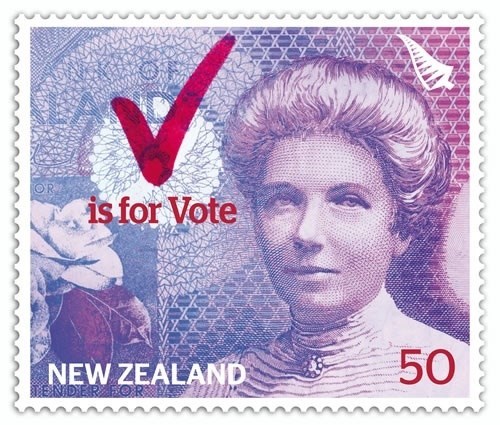
Kate Sheppard's contribution to our history has been recognised in a number of ways – for example, using her image on a 1990 postage stamp and on our $10 banknote.
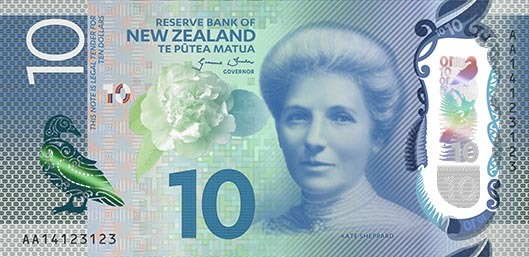
NZ Banknotes: up until 1991, all New Zealand's banknotes featured pictures of the Queen (or King before 1953!). When new notes were introduced in 1991, the image of the Queen was replaced with images of New Zealanders who have made significant contributions to New Zealand and the world on all but the $20 note.
Kate Sheppard shares some very distinguished company:
- $5: Sir Edmund Hillary, first to climb Mt Everest, and the only living person who isn't a current head of state to feature on a banknote.
- $50: Sir Āpirana Ngata, first Māori to graduate from a NZ university, prominent member of parliament, led a revival of Māori people and culture
- $100: Lord Ernest Rutherford, physicist and "father of the atom"; Nobel prize winner.
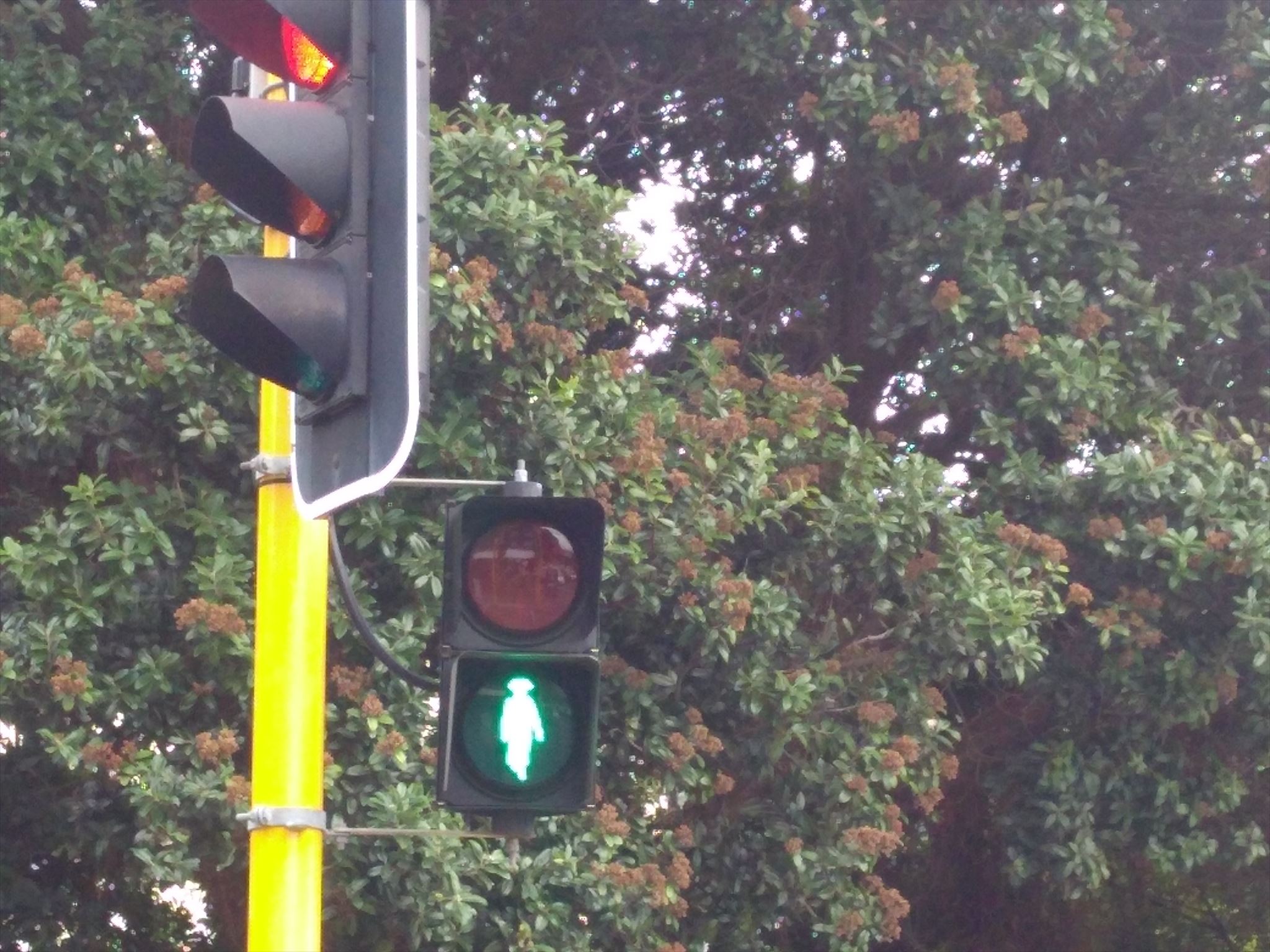
As other tributes to her contribution to society, Sydney Street East (to the east of Parliament) was renamed Kate Sheppard Place in the 1990s, and since 2014 an image of Kate Sheppard has appeared as the green pedestrian cross signal at eight intersections near parliament.
The cache
To claim this cache, here is what you have to do:
1. WP1/posted coordinates: Go into the National Library at the posted coordinates and visit the He Tohu exhibition (free entry - see details below or at https://natlib.govt.nz/he-tohu). The National Library is a ten-minute walk from the Railway Station, and a number of bus routes will take you to Molesworth St. This exhibition contains three important artifacts from New Zealand history: the Women's Suffrage Petition (1893), the Treaty of Waitangi (1840) and the Declaration of Independence of the United Tribes of New Zealand (1835). In the exhibition, how many display cabinets are there in the document room?
2. WP2 (S41° 16.667' E174° 46.674'): Walk one block south to Kate Sheppard Place. Here the Kate Sheppard Apartments tower above you. At the entrance to the street look for the foundation stone of the High Court. What is the date on the stone? (Day, month, year please.)
3. Make your way to the Reserve Bank (WP3). Along the way, record which intersections you cross, and which ones have Kate Sheppard as the green cross figure.
4. WP3 (S41° 16.728' E174° 46.522'): At the Reserve Bank, take a photo of yourself (or part of yourself) , your GPSr or other geocaching item with the picture of the $10 note on the side of the Reserve Bank building clearly visible in the background.
Send me the answers to questions 1 to 3, and upload your photo from 4 with your log. You may log your find after sending me the email, and I will confirm your answers. Note I will delete any found logs that don't have the correct answers or photo.
Note: entry to the He Tohu exhibition at the National Library is free. Hours are 9am to 5pm, Monday to Friday and 9am to 1pm, Saturday.
Virtual Rewards 2.0 - 2019/2020
This Virtual Cache is part of a limited release of Virtuals created between June 4, 2019 and June 4, 2020. Only 4,000 cache owners were given the opportunity to hide a Virtual Cache. Learn more about Virtual Rewards 2.0 on the Geocaching Blog.
Geocache video
When GeoRick did this cache they made a fantastic video of their experience - you can see it on YouTube at Cache Walks - Kate Sheppard Virtual Walk.
Interestingly they refer to the white Kate Sheppard Camellia that's also featured on the $10 note. These were planted all around the country during the suffrage centenary, and unfortunately many have been sadly neglected, but the one in the Wellington Botanic Garden is still going strong - you can get a bonus point if you find it!
