Geological heritage sites, including sites of geomorphological interest and volcanic heritage sites, are under regular revision by the Geological Society of Australia, especially in the assessment of significance and values. This site features a particular volcanic Eruption Point that is significant and typical of this region.
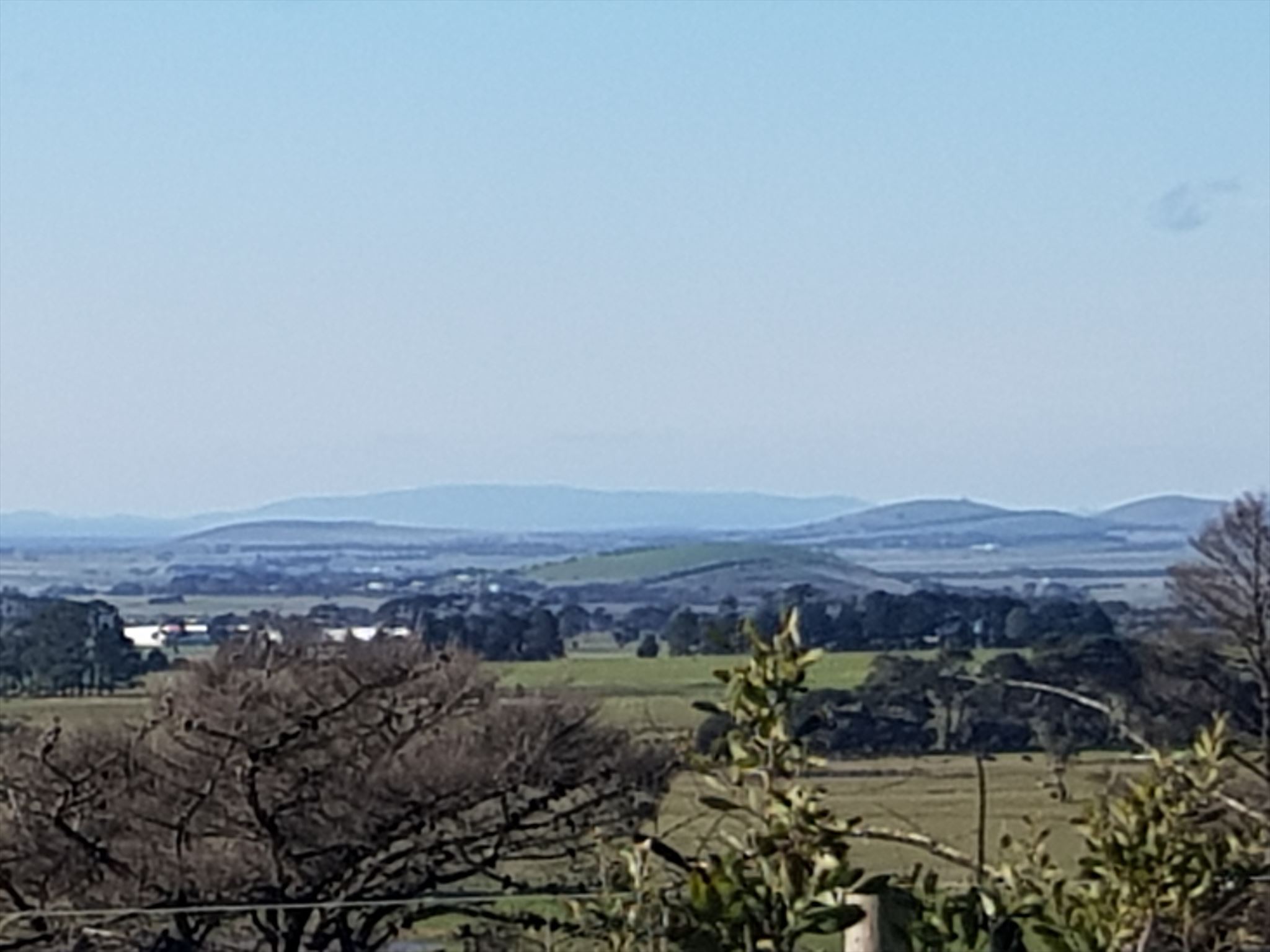
Newer Volcanics Province in Southeastern Australia report has been produced by the GSA in order to document >704 eruption points from >416 volcanic centres in this region.
The term Newer Volcanic Province describes the area of volcanic activity in Western Victoria younger than 7 million years ago (Wellman 1974). Within the Province is contained a rich array of features typical of a basaltic lava field, and because of their relatively young age many of the volcanic features are well preserved. The eruption points are often quite conspicuous and form dominant landscape features.
The voluminous Newer Volcanics Province covers a broad 15,000 km2 area of SE Australia with small shield volcanoes and explosive vents of Tertiary-to-Holocene age, and it is estimated that the province has an eruption frequency of 1:10 800 yrs. Volumetrically the vast proportion of volcanic products consist of flat-lying lava flows, although the most prominent features of the volcanic field are the numerous small scoria cones, tuff rings, cinder cones and ash domes, lava shields and maars that rise above the lava plain. This simple glossary of terms may help explain.
Scoria:fragmented (clastic) rock material formed by a volcanic explosion or ejection from a volcanic vent that is irregular in form and generally very vesicular (air bubbles).
Tuff Rings: A wide, low-rimmed, well-bedded accumulation of hyalo-clastic debris built around a volcanic vent located in a lake, coastal zone, marsh, or area of abundant ground water.
Cinder Cones: A volcanic cone built entirely of loose fragmented material, a conical hill formed by the accumulation of volcanic debris around a vent.
Ash domes: Volcanic ash that has fallen through the air from an eruption cloud. A deposit so formed is usually well sorted and layered.
Lava Shield: A shield volcano made of basaltic lava.
Lava Dome: A steep-sided mass of viscous (doughy) lava extruded from a volcanic vent, often circular in plane view and spiny , rounded, or flat on top. Its surface is often rough and blocky as a result of fragmentation of the cooler, outer crust during growth of the dome.
Maars: A volcanic crater that is produced by an explosion in an area of low relief, is generally more or less circular, and often contains a lake, pond, or marsh.
Increasingly, the eruption points and associated volcanic features are being degraded by human activity. In many cases quarrying, agricultural activities and urbanisation have significantly altered or even obliterated features. Conversely, in some instances quarrying has provided excellent sections through eruption points, exposing details that would otherwise not be visible. The purpose of this study was to examine the eruption points of the Newer Volcanic Province and identify those that are significant. Once these important volcanic features are destroyed or badly degraded, the community has lost a valuable scientific, educational and/or aesthetic asset.
Ref 1: http://vro.agriculture.vic.gov.au/dpi/vro/nthcenregn.nsf/pages/nthcen_eruption_points
_____________________________________________________________________________________________
TO COMPLETE THIS EARTH CACHE PLAY THE ROLE OF A GSA REVIEWER.
1. Write a brief report to the three questions below.
2. Send your report to the CO via email or message.
3. Do not send an 'official report' to the Geological Society of Australia.
Question A: Describe any evidence "the eruption points are often quite conspicuous and form dominant landscape features".
Question B: Describe any evidence "the eruption points and associated volcanic features are being degraded by human activity".
Question C: Describe why "the Ring" might have "geo-morphological interest and volcanic heritage"?
Log the cache at your leisure, and remember to send your 'official report' to the CO.
Using the principle that a picture speaks 1000 words, photographic evidence is welcome.
CAUTION: (1). NOTE THE SPEED LIMIT HERE ALONG BEACONSFIELD RD, IS 100 KPH. (2). TAKE CARE TO CROSS THE ROAD AND REACH THE DESIGNATED VANTAGE POINT SAFELY.