The basilisk of Bondo - Il basilisco di Bondo
Nel bestiario immaginario con cui la fantasia popolare ha animato boschi, selve e foreste il basilisco ha sicuramente un posto di rilievo, fin dal Medio Evo. Si tratta di un animale fantastico, strettamente imparentato, come la salamandra, ai draghi. In Val Bregaglia, per la precisione a Bondo, la credenza nel basilisco era assai radicata e si credeva avesse un comportamento molto aggressivo: "balza addosso all'uomo con balzi prodigiosi, schizzando veleno e rincorre chi fugge; soffia come un gatto e talvolta emette fischi spaventosi, che fanno impazzire il bestiame sul pascolo." (vedi http://www.paesidivaltellina.it/basilisco/index.htm#bondo)
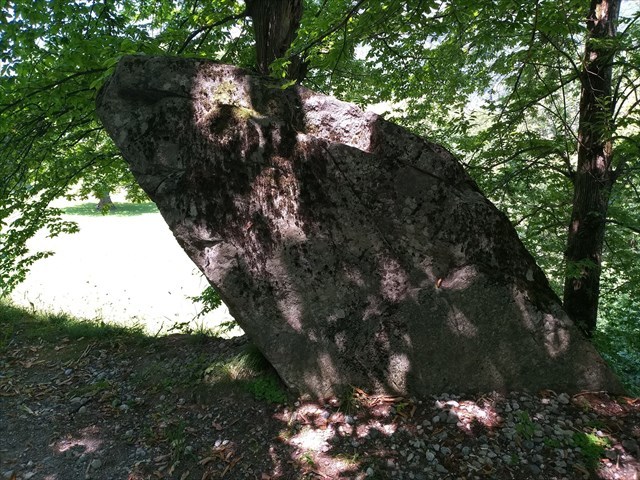
Sul sentiero che state percorrendo da Bondo a Lüder avete occasione di vedere diverse rocce (vedi foto sotto) con solchi verticali simili a graffi profondi e file di buchi simili a segni di denti affilatissimi. Alcuni dicono che sono gli effetti degli attrezzi che hanno spezzato le rocce per realizzare il sentiero a me invece piace pensare che siano i graffi e i morsi di un grande Basilisco di pietra la cui testa potete vedere lungo il sentiero (waypoint 02). Probabilmente è tutto una leggenda ...ma nella ricerca della nostra cache prestate molta attenzione ...non si sa mai!

In the imaginary bestiary with which the popular fantasy has animated woods and forests, the basilisk has certainly a prominent place, since the Middle Ages. It is a fantastic animal, closely related, like the salamander, to dragons. The Latin writer Plinio il Vecchio presents the basilisk as a snake with a tip similar to a crown on his head. In Bregaglia, to be precise in Bondo, the belief in the basilisk was very rooted and was believed to have a very aggressive behavior: "he jumps to the man with prodigious leaps, sprays poison and pursues those who flee, blows like a cat and sometimes emits whistles that scare the cattle. "(see http://www.paesidivaltellina.it/basilisco/index.htm#bondo)
On the path you are following from Bondo to Lüder you have the opportunity to see different rocks (see photos below) with vertical grooves similar to deep scratches and rows of holes similar to very sharp teeth marks. Some say that it is the effects of the tools that broke the rocks to make the path, but I like to think that they are the scratches and stings of a large stone basilisk whose head can be seen along the way (waypoint 02).....it's probably all just a legend... but be very careful while searching for our cache... you never know!"