17 October 2019
9.15 am - 2.30(ish) pm
Meet at the Dakota memorial car park near the Radar Station, Down Lane, Ventnor at the listed coordinates on Ventnor Down
Please indicate your ‘will attend’ and arrive on time for registration - as well as signing our own log sheet, we will be signed in (and out) by the National Trust who will give us a Method and Health & Safety brief before the exercise begins.
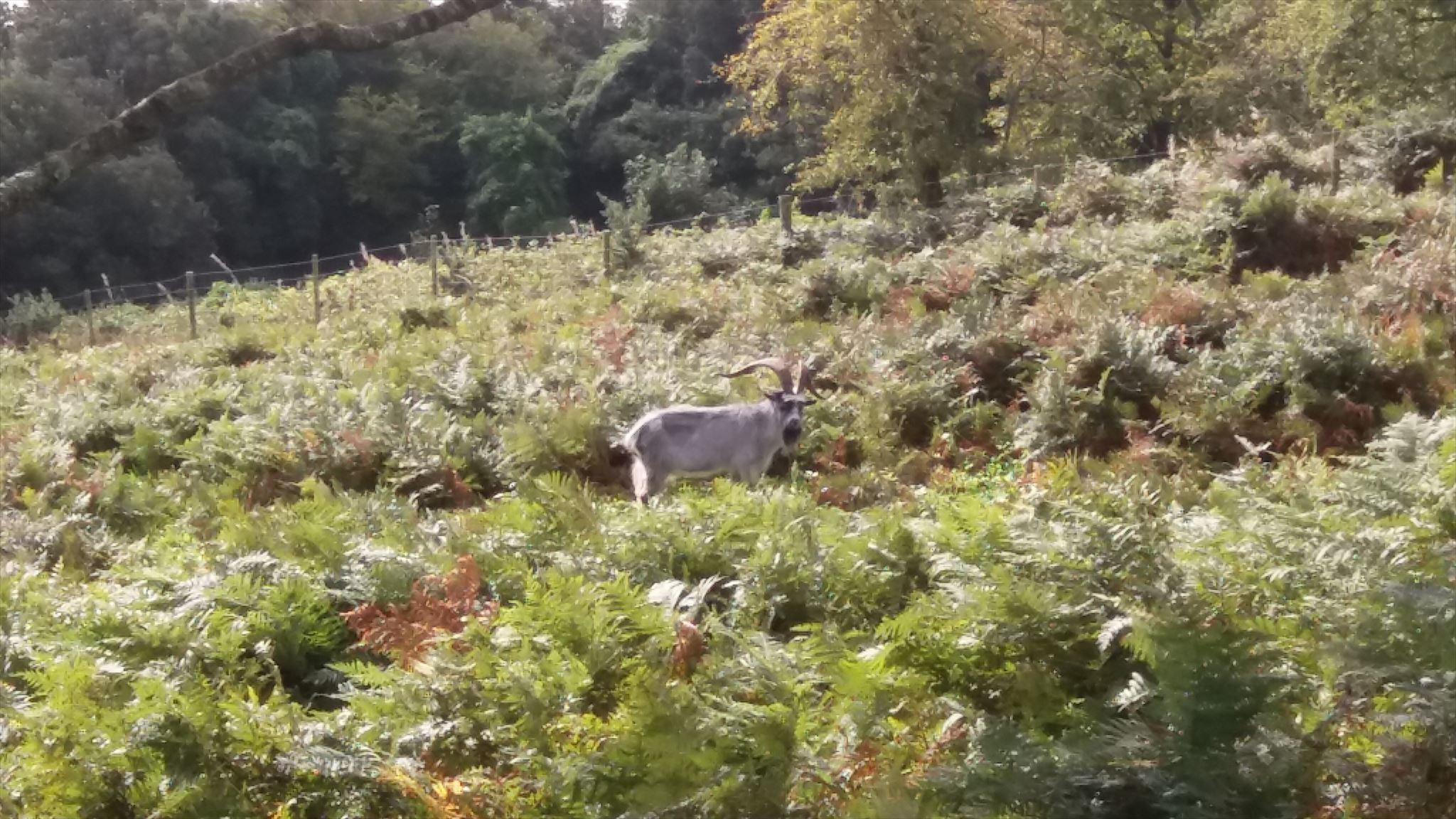
We have been invited by the National Trust to join them in their annual goat round up on Ventnor Downs on Thursday 17 October 2019. Each year, as part of their conservation of the downland, the National Trust round up their feral goats and herd them along the length of Bonchurch Down into a collecting pen. The goats are counted, checked over for health issues, ear tags are checked, new kids are tagged, recorded and then they are once more released.
There are some forty odd ferral goats roaming the Downs. Last year, because of a previously undetected fence that is thought to have been knocked down by cows, some of the goats fled onto another part of the Downs - escaping the round up before it began! At the end of the main 'hunt' 21 goats from Coombe Bottom, including 4 kids that were born that year, were rounded up, penned, processed and then released. Later on a few of the volunteers went out again with the rangers and a further 4 billys were penned up and checked on Bonchurch Down.
Biscuits and squash will be provided for refreshment after the event.
As many volunteers as possible are needed because the idea is to form an unbroken line of people to ensure the goats don’t slip back behind the line and escape. Volunteers from other organisations (both from the Island and the mainland) such as: Island Roads, The Environment Trust, The Wildlife Trust, The National Trust and of course, a few from our own Geocaching community, offer their help. All contributing towards protecting these beautiful down lands that we all derive so much enjoyment from.
There are geocaches up there too - if you have enough energy left at the end of the day to look for them!
Please note the Terrain level above. The course of the round up is approximately 2 kilometres on very steep slopes with uneven ground and patches of bramble, bracken and gorse - so don’t expect a leisurely stroll for this one 
There may also be an opportunity to help in the pen during processing.
You will need:
● old clothes; stout walking shoes; thick gloves; a suitable coat in case of rough weather
● any drinks and food you might need during the day.
● plenty of stamina
● you might find a walking stick (or two) handy for help on the steep slopes - particularly if it's wet and slippery
● children must be kept under close parental/guardian supervision
● NOT suitable for dogs - sorry
You might be wondering why this ‘event’ is posted as a CITO so here’s a little background information - more detailed information can be found by clicking the links in the following text.
The Victorians introduced the holm oak [Quercus ilex] to Ventnor. This evergreen tree is not native to this Country but it became particularly invasive on the Ventnor Downs where, at one point, it grew to be the largest naturalised holm oak wood in northern Europe. This was a real threat to the chalk grassland, with all the specialist species that depend on it, and was causing the butterfly and insect populations to dwindle. https://www.nationaltrust.org.uk/ventnor-downs/features/the-holm-oaks-of-ventnor-downs
After various attempts to control the spread of the holm oak, in 1993 the National Trust introduced some feral goats https://www.nationaltrust.org.uk/ventnor-downs/features/goats-on-ventnor-downs that were brought up from the Valley of the Rocks in Devon.
Over the years, those few goats have become a small breeding herd.
Tree stripped of bark
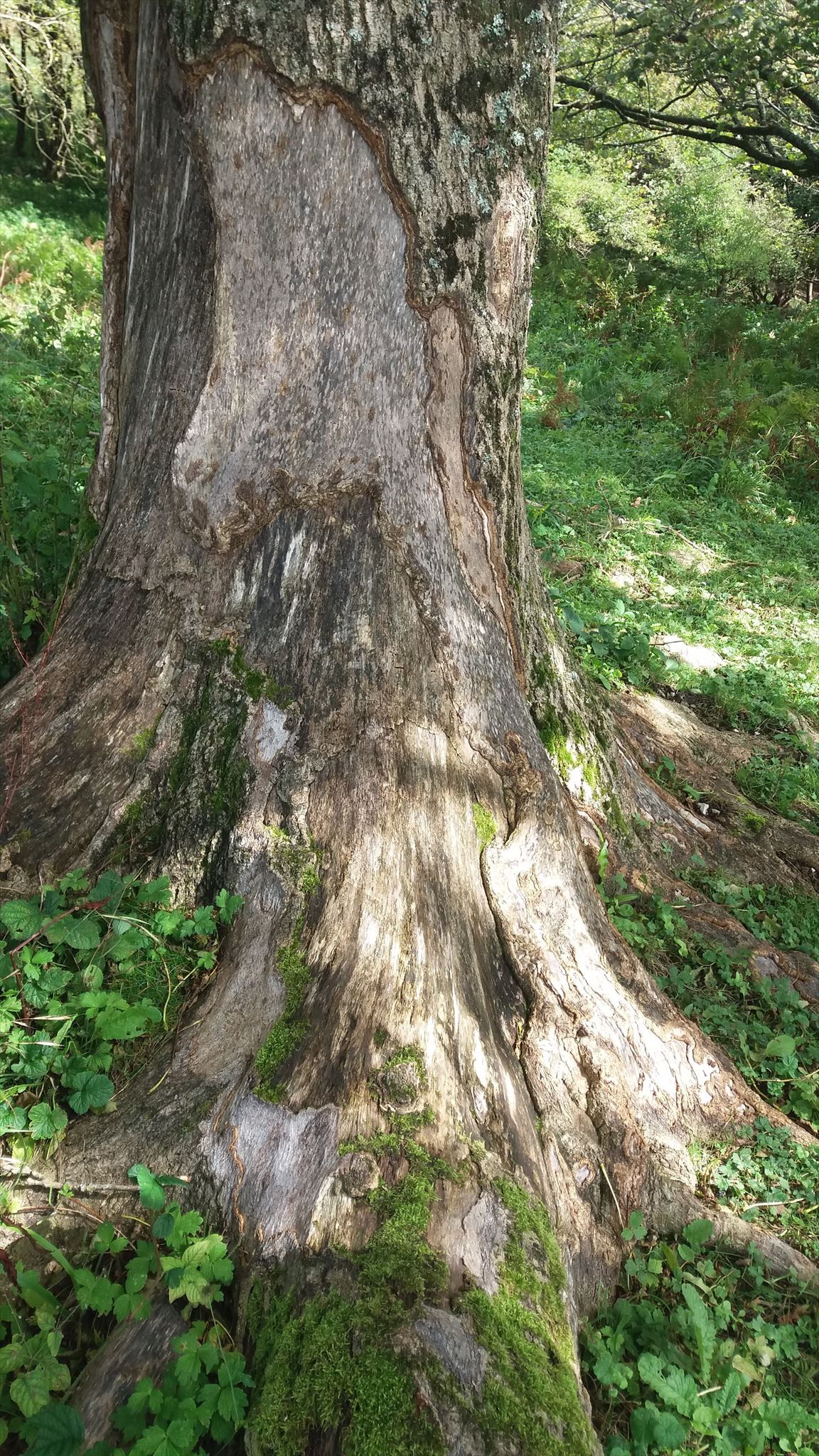 |
By gnawing, stripping and eating the bark from the holm oak tree, as the photo shows, the goats deny it the essential nutrients and water it needs to survive, causing it to slowly die. They also help to keep a check on the spread of the holm oaks by eating the saplings before they have a chance to grow and establish. In addition to the holm oaks, a varied diet is available to the goats on the downs and, as well as being able to graze like sheep, they enjoy coarse grasses, bramble, gorse, hawthorn, ash and sycamore. |
|
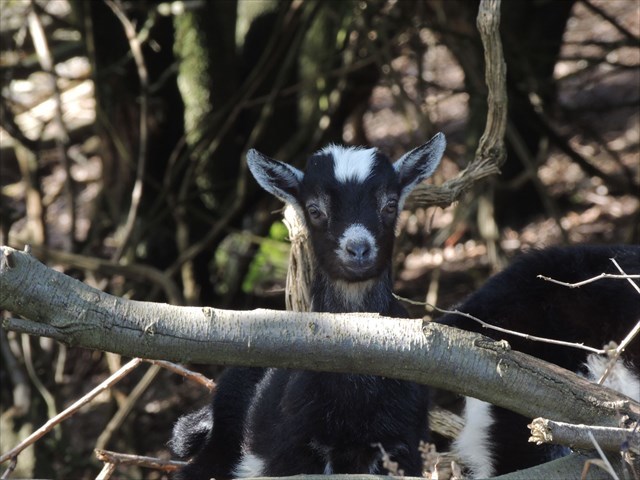
A nosy kid
|
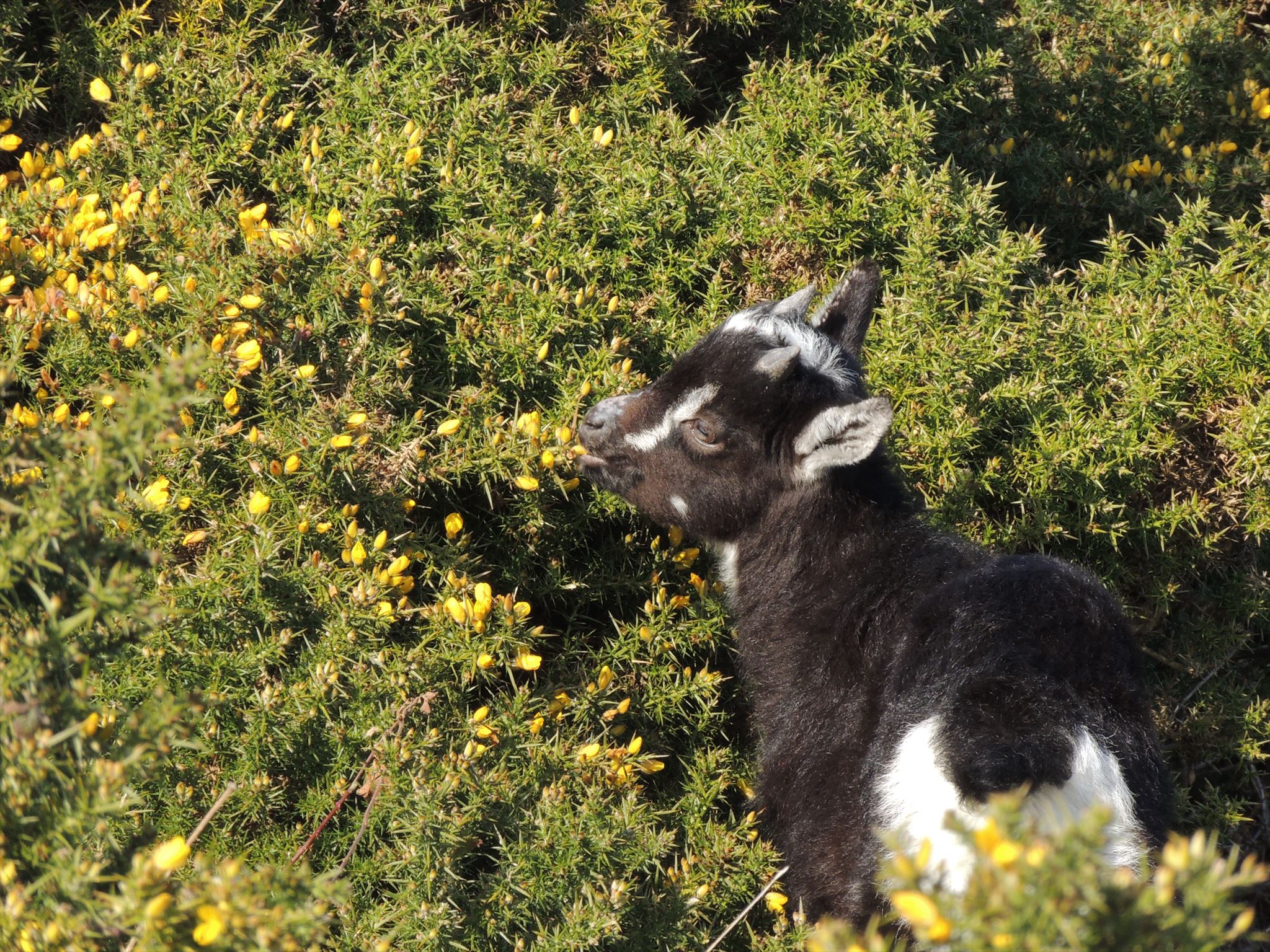
A peckish kid
 |
Hiding?
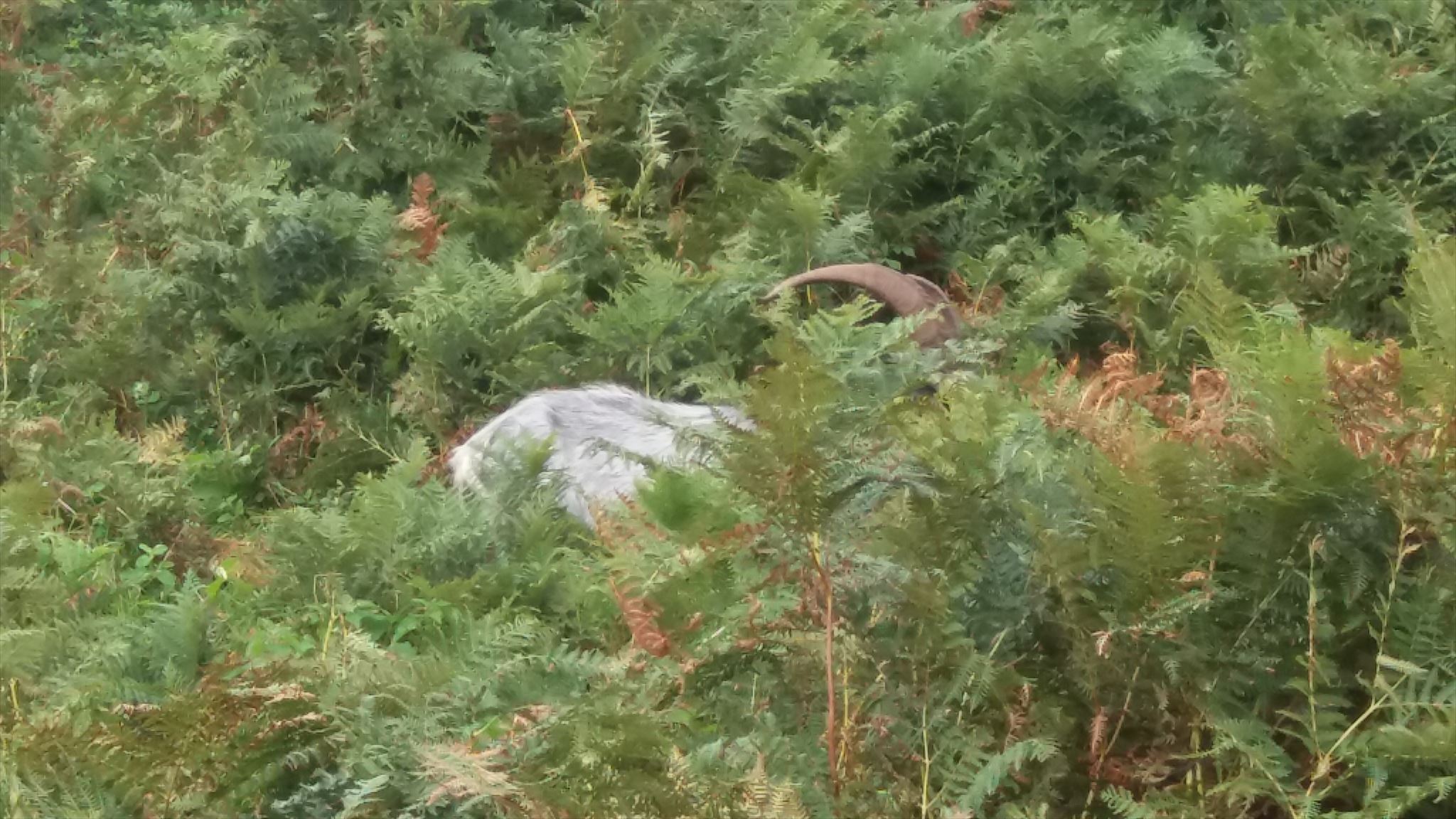 |
Thanks to Ian Ridett for his kind permission to use photographs of the goat kids.