Park is open sunrise to sunset.

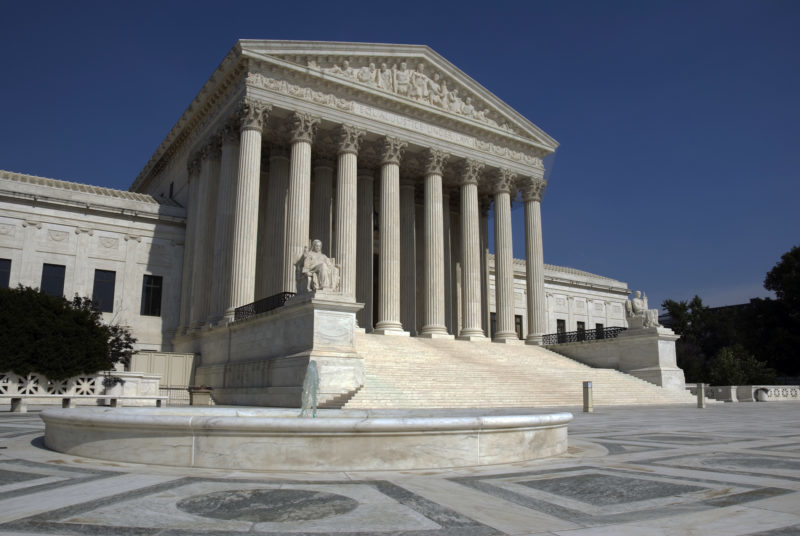
My sixth cache commemorating landmark decisions in American legal history. Forty five years ago this Wednesday the Supreme Court ruled in United States v. Nixon that it does have the final voice in determining constitutional questions; no person, not even the president of the United States, is completely above the law; and the president cannot use executive privilege as an excuse to withhold evidence that is "demonstrably relevant in a criminal trial." In a unanimous decision against President Richard Nixon the court ordered him to deliver tape recordings and other subpoenaed materials to a federal district court. The decision was important to the late stages of the Watergate scandal, when there was an ongoing impeachment process against Richard Nixon. United States v. Nixon is considered a crucial precedent limiting the power of any U.S. president to claim executive privilege. Chief Justice Warren E. Burger wrote the opinion for a unanimous court while Associate Justice William Rehnquist recused himself as he had previously served in the Nixon administration as an Assistant Attorney General.
Background
The case arose out of the Watergate scandal, which began during the 1972 Presidential campaign. On June 17, 1972, about five months before the general election, five burglars broke into Democratic headquarters located in the Watergate building complex in Washington, D.C. In May 1973, Nixon's Attorney General, Elliot Richardson, appointed Archibald Cox to the position of special prosecutor, charged with investigating the break-in. In October 1973, Nixon arranged to have Cox fired in the Saturday Night Massacre. Nixon appointed a new special prosecutor, Leon Jaworski, who was charged with conducting the Watergate investigation for the government. In April 1974 Jaworski obtained a subpoena ordering Nixon to release certain tapes and papers related to specific meetings between the President and those indicted by the grand jury. Those tapes and the conversations they revealed were believed to contain damaging evidence involving the indicted men and perhaps the President himself. Nixon turned over edited transcripts of 43 conversations. Nixon's attorney, then requested Judge John Sirica of the U.S. District Court for the District of Columbia to quash the subpoena. Sirica denied Nixon's motion and ordered the President to turn the tapes over. Both Nixon and Jaworski appealed directly to the Supreme Court. Nixon's attorney argued the matter should not be subject to "judicial resolution" since the matter was a dispute within the executive branch and the branch should resolve the dispute itself. Also, he claimed Special Prosecutor Jaworski had not proven the requested materials were absolutely necessary and claimed Nixon had an absolute executive privilege to protect communications between "high Government officials and those who advise and assist them in carrying out their duties."
Decision
Less than three weeks after oral arguments, the Court issued its decision. Within the court, there was never much doubt about the general outcome. Chief Justice Burger delivered the decision from the bench and the very fact that he was doing so meant that knowledgeable onlookers realized the decision must be unanimous. The Court's opinion found that the courts could indeed intervene on the matter and that Special Counsel Jaworski had proven a "sufficient likelihood that each of the tapes contains conversations relevant to the offenses charged in the indictment". While the Court acknowledged that the principle of executive privilege did exist, the Court would also directly reject President Nixon's claim to an "absolute, unqualified Presidential privilege of immunity from judicial process under all circumstances." The Court held that a claim of Presidential privilege as to materials subpoenaed for use in a criminal trial cannot override the needs of the judicial process if that claim is based, not on the ground that military or diplomatic secrets are implicated, but merely on the ground of a generalized interest in confidentiality. Nixon was then ordered to deliver the subpoenaed materials to the District Court. Nixon resigned sixteen days later, on August 9, 1974.