상족몽돌 설명
상족몽돌은 고성의 유명한 해안선입니다. 이 해변은 많은 공룡 발자국이 있는 것으로 유명합니다. ( 고성 공룡 트랙 사이트 및 상족암 ( 테이블 다리 보세요) 그러나 공룡이 여기에 걸어 긴 후, 자신의 발자국은 퇴적암의 수백만 년에 의해 묻혔다이 해안선 근처의 화산 활동에 의해 변경되었습니다.
화산 암맥이란 무엇입니까?
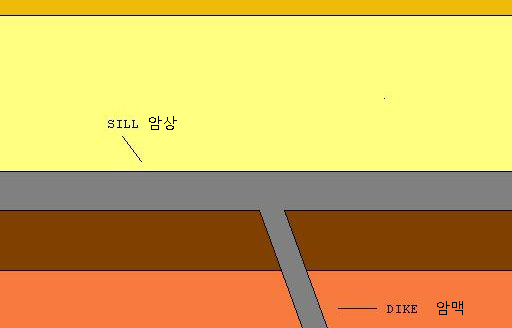
지질학에서 암맥은 기존 암석의 골절로 형성된 암석입니다. 암맥은 화성의 또는 퇴적물이 될 수 있습니다. 마그마가 균열에 유입되면 마그네틱 암맥이 형성되어 시트의 침입으로 굳어 져 암석 층을 가로 질러 또는 연속 된 암석 덩어리를 통과합니다. 퇴적물이 기존 균열을 채울 때 정상적인 암맥이 형성됩니다.
침입 성 암맥은 화성암으로 만들어지며 종횡비가 매우 높습니다. 이것은 일반적으로 두께보다 훨씬 길다는 것을 의미합니다. 암맥은 두께가 수 밀리미터에서 수 미터까지 다양 할 수 있지만 수 킬로미터 동안 늘어날 수 있습니다. 마그마는 액체처럼 흐르기 때문에 바위의 균열을 채우고 물이 작은 영역을 채우는 것과 같은 방식으로 경화 된 다음 추울 때 얼어 붙는 것을 상상할 수 있습니다. 이 때문에, 암맥은 단지 균열에 채워져 있기 때문에 항상 주변 암석보다 젊습니다. 암맥은 일반적으로 하이 앵글 또는 거의 수직 방향 인 반면, 침상 평면을 따라 거의 수평에 가까운 침입은 침입 성 암상이라고합니다.
때때로, 암맥군은 단일 침입 이벤트 동안 다소 생성 된 수백에서 수백 개의 암맥으로 구성됩니다.
암맥은 질감이 다양 할 수 있으며 그 구성은 이염 기성 또는 현무암에서 화강암 또는 유문암에 이르기까지 다양합니다. 그러나 대부분의 경우 암맥은 현무암입니다. 페그마타이트 암맥은 매우 굵은 결정질 화강암 암석으로 구성되는데, 이는 종종 후기 화강암 침입 또는 변성 분리와 관련이 있습니다. 아플라이트 암맥은 입자가 세립칠거나 설탕 사이즈 입자 구성의 입자입니다.
암상이란 무엇입니까?
지질학에서 암상은 퇴적암의 오래된 층들, 화산 용암 또는 응회암 층 사이, 또는 심지어 변성암의 잎의 방향을 따라 침입 한 표 시트 침입입니다. 이것은 오래된 암석을 가로 지르는 암맥과 달리, 암상이 기존 암석을 가로 지르지 않는다는 것을 의미합니다. 암상은 암맥에 의해 공급됩니다. 암석은 퇴적암 또는 화산 층 사이의 기존 평면 또는 변성암의 잎과 관련된 약화 된 평면을 따라 발생하는지 여부에 관계없이 마그마가 부모 암석을 침입하는 평면을 생성하기 위해 부서지기 쉽고 균열이 있어야합니다. 이러한 평면 또는 약화 된 영역은 기존 침구 평면, 일치하는 파단 영역 또는 잎과 평행을 이루는 얇은 시트형 마그마 바디의 침입을 허용합니다.
로그하는 방법
1. 암맥과 암상의 차이점은 무엇입니까?
2. 캐시 좌표에 암맥이나 암상이 보입니까?
3. 웨이 포인트 1에서 : 암맥이나 암상이 보입니까?
4. 캐시 좌표에는 다른 화산암 구조에서 물을 가로 질러 보라는 표시가 있습니다. 그 구조는 무엇입니까?
5. 어스캐시 좌표에서 GPS와 (아니면 기타 지오캐싱 아이템) 사진을 찍고 로그와 동시에 업로드하세요.
6. 답을 제 Profile에 있는 메시지창을 이용해 제게 보내주세요. 이제 로그하셔도 됩니다. 답에 문제가 있을 경우 제가 메시지를 드리겠습니다
Sangjok Mongdol Beach Introduction
Sangjok Mongdol Beach is a famous coastline in Gosoeong. Primarily, this beach is famous for the dinosaur footprints (see Goseong Dinosaur Tracksite) and Sangjokam (see Table Legs). However, long after the dinosaurs walked here, their footprints were buried by millions of years of sedimentary rocks, this coastline was changed by nearby volcanic activity.
What is a Magmatic Dike?
A dike or dyke, in geology, is a sheet of rock that is formed in a fracture in a pre-existing rock body. Dikes can be either magmatic or sedimentary in origin. Magmatic dikes form when magma flows into a crack then solidifies as a sheet intrusion, either cutting across layers of rock or through a contiguous mass of rock. A Clastic dike is formed when sediment fills a pre-existing crack.
An intrusive dike is made from igneous rock and has a very high aspect ratio. This means that it is usually much longer than it is thick. A dike can vary in thickness from a few millimeters to several meters thick, but can stretch for several kilometers. Magma flows as a liquid, so you can imagine it filling up the cracks in rocks and hardening in the same way water would fill small areas, and then freeze when it's cold. Because of this, a dike is always younger than the surrounding rock as it simply filled in the cracks. Dikes are usually high-angle or near vertical orientation, whereas near horizontal intrusions along bedding planes are called intrusive sills.
Sometimes, dikes appear in swarms, consisting of several to hundreds of dikes that were more or less created during a single intrusive event.
Dikes can vary in texture and their composition can range from diabase or basaltic to granitic or rhyolitic, but on a global perspective the basaltic composition prevails, manifesting ascent of vast volumes of mantle-derived magmas through fractured lithosphere throughout Earth history. Pegmatite dikes comprise extremely coarse crystalline granitic rocks - often associated with late-stage granite intrusions or metamorphic segregations. Aplite dikes are fine-grained or sugary-textured intrusives of granitic composition.
What is a Sill?
In geology, a sill is a tabular sheet intrusion that has intruded between older layers of sedimentary rock, beds of volcanic lava or tuff, or even along the direction of foliation in metamorphic rock. This means that the sill does not cut across preexisting rocks, in contrast to dikes, which do cut across older rocks. Sills are fed by dikes. The rocks must be brittle and fracture to create the planes along which the magma intrudes the parent rock bodies, whether this occurs along preexisting planes between sedimentary or volcanic beds or weakened planes related to foliation in metamorphic rock. These planes or weakened areas allow the intrusion of a thin sheet-like body of magma paralleling the existing bedding planes, concordant fracture zone, or foliations.
How to Log this Cache
1. What is the difference between a dike and a sill?
2. Do you see a dike or a sill at the cache coordinates?
3. At Waypoint 1: Do you see a dike or a sill?
4. At the cache coordinates, there is a sign that tells you to look across the bay at another volcanic rock structure. What is that structure?
5. Take a picture of your GPS (or other geocaching related item) at the cache site and upload it with your log.
6. Please send the answers to me by message on my profile. You may log this cache as “Found.” (If the answers are not correct I will contact you.)
| I have earned GSA's highest level: |
 |