Collega Earthcache a Earthcache GC8BXGG /
Connect this Earthcache to the Earthcache GC8BXGG /
Verbinde diesen Earthcache mit dem Earthcache GC8BXGG
Italiano | English | Deutsch
Val Verzasca - a geological Point of view
 Italiano (Traduzione dal tedesco di https://translate.google.com)
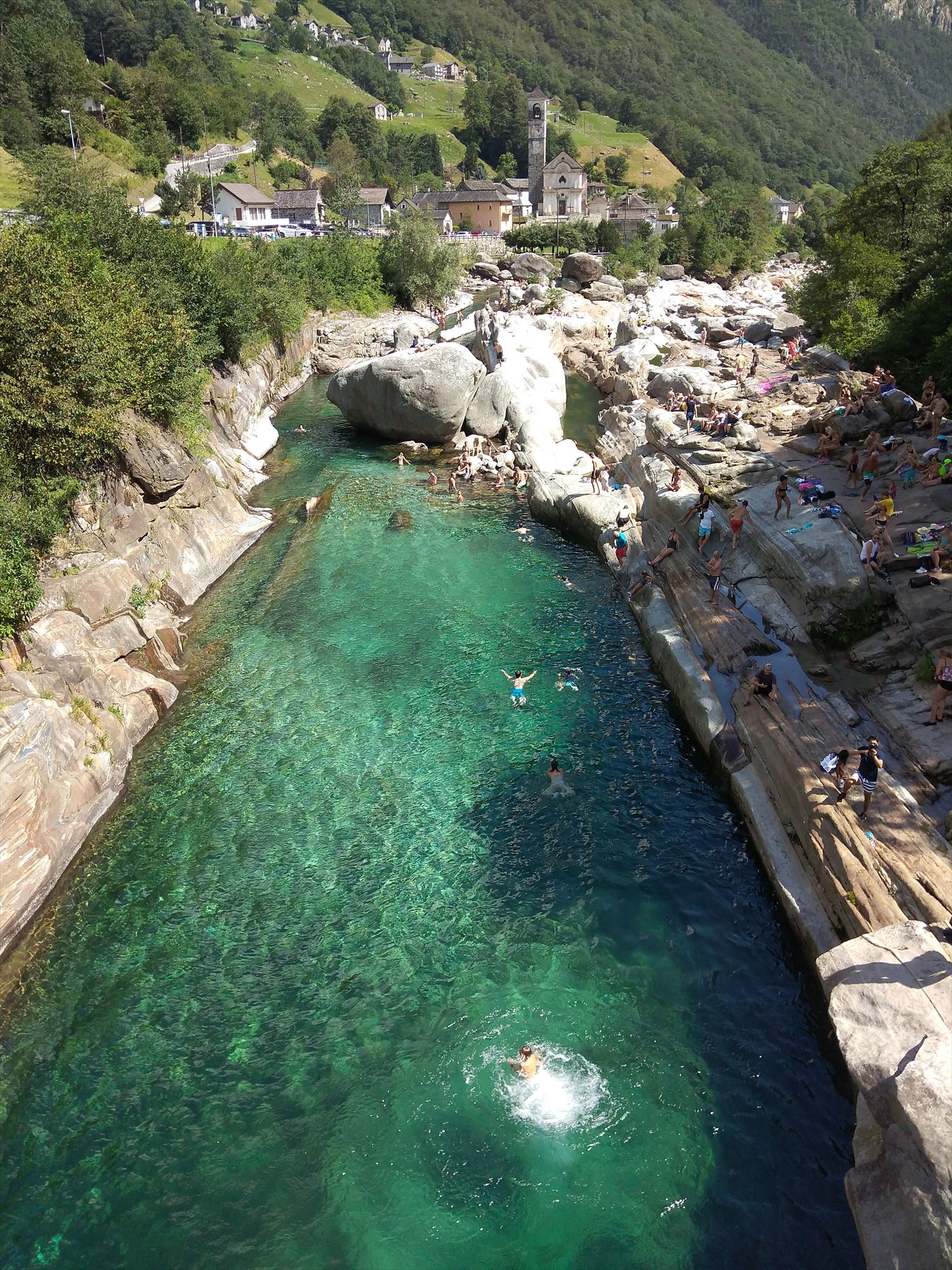
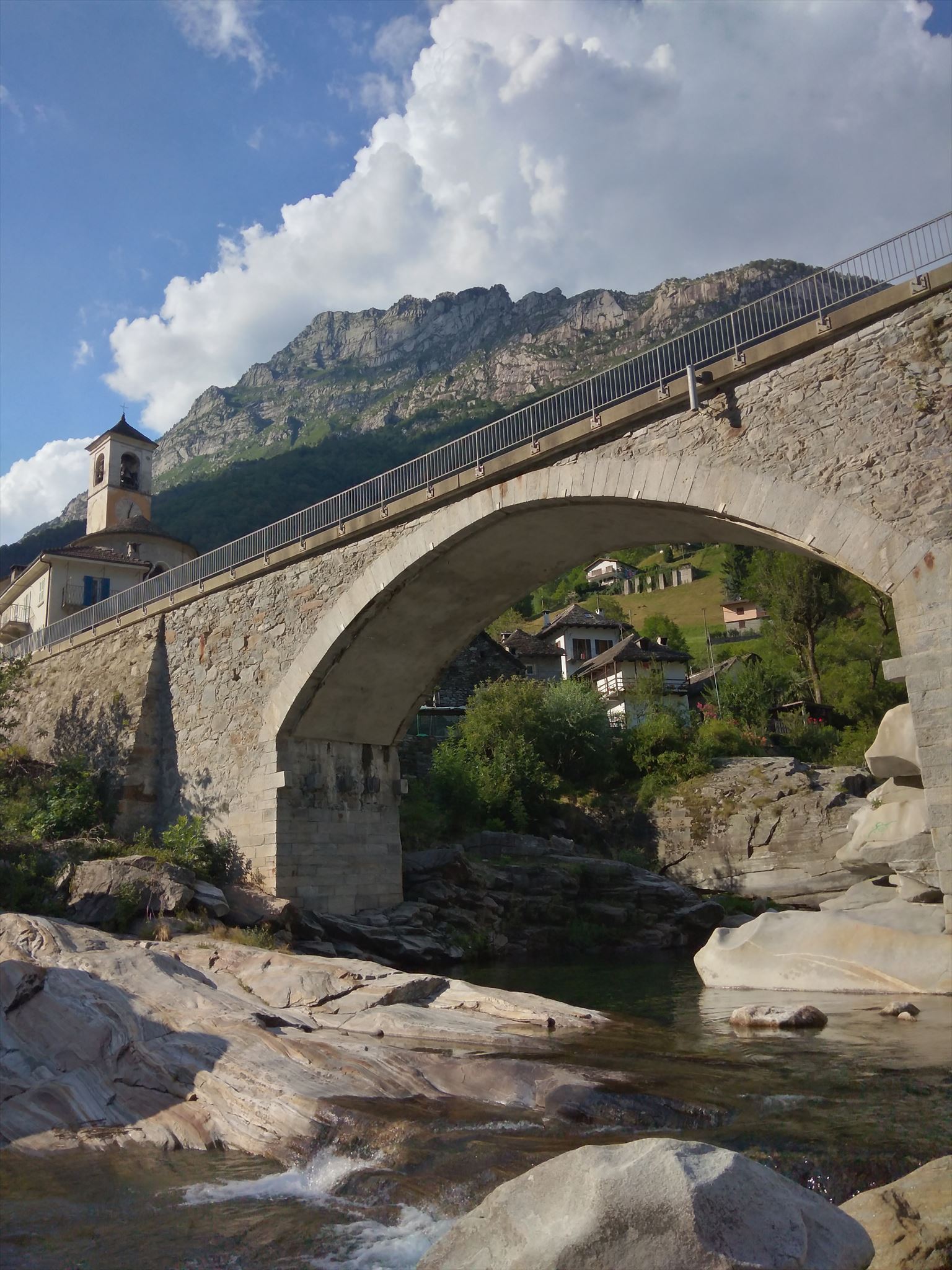
La Val Verzasca è conosciuta per le sue acque verde smeraldo, il Ponte dei Salti vicino a Lavertezzo e numerose formazioni rocciose arrotondate che rendono il vostro soggiorno sull'omonimo fiume un'esperienza speciale. Ogni giorno innumerevoli visitatori visitano l'area intorno alle coordinate specificate.
Se guardi questo Earthcache, non dovresti venire qui solo per quello. Perché anche sotto aspetti geologici qui ci sono attrazioni assolute da offrire. Cerchiamo di darvi un'idea di questo con l'aiuto di questo problema, a questo punto ci siamo concentrati sui seguenti tre argomenti, che sono particolarmente vividi alle coordinate:
gneiss
La roccia predominante in Val Verzasca è lo gneiss. Questo è stato creato da metamorfosi, d. h. Conversione di roccia ad alta pressione e ad alte temperature. La maggior parte degli gneiss contiene feldspato, quarzo e mica e quindi ha proprietà simili. I feldspati determinano il colore, il quarzo la durezza e la resistenza all'abrasione dello gneiss. La mica (muscovite, biotite) conferisce agli gneiss le loro buone proprietà di scissione.
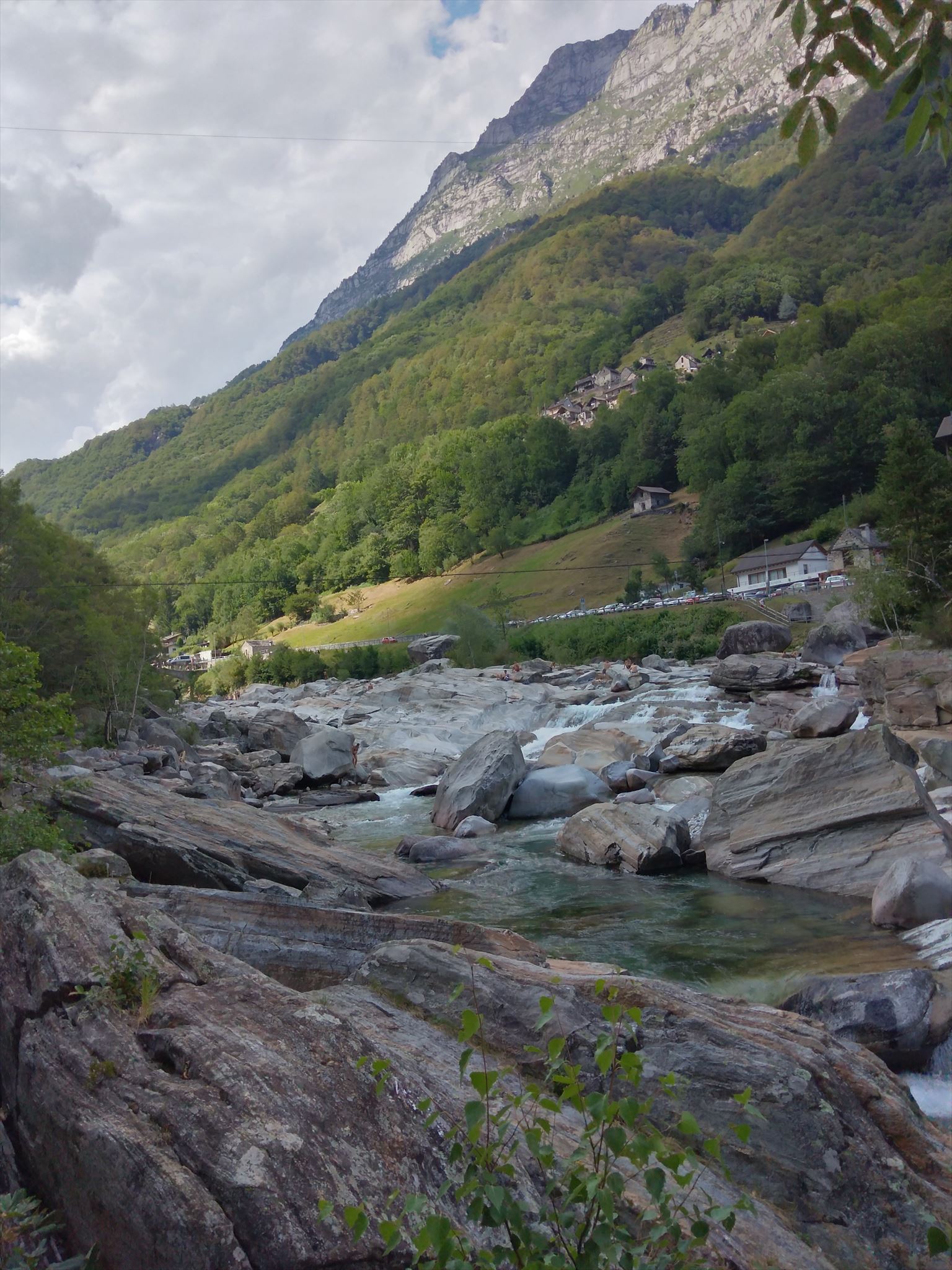
Il materiale di partenza è ricoperto da molti altri strati di roccia. La gneiss appare sulla superficie solo quando il materiale sovrastante viene eroso / esposto alle intemperie o strati precedentemente bassi sono stati sollevati in superficie da dislocazioni tettoniche / rocciose. Lo gneiss sul sito è piegato, cioè spostato o spostato in contrasto con il processo naturale di deposizione / formazione. Inoltre, ci sono differenze nell'aspetto del colore e della luminosità.
La distinzione dei tipi di gneis di solito viene fatta in base ai loro materiali di partenza (educati): l'ortoogneise rappresenta il prodotto di trasformazione metamorfica di rocce ignee ricche di feldspato e quarzo. Tuttavia, hanno spesso subito diverse conversioni rock (polimetamorfosi) e sono emerse da gneiss esistenti. Le ortogne nella Val Verzasca sono ben definite per il loro colore brillante e la loro struttura omogenea.
Al contrario, le paragne sono formate dalla trasformazione di rocce sedimentarie (arenarie, scisti di argilla o greywackes) e quindi hanno una maggiore varietà di minerali accessori (sottoprodotti) rispetto alle ortogne. Di colore, in Val Verzasca, sono spesso caratterizzati da una tonalità rossastra quando il contenuto di ferro è elevato.
L'erosione degli strati rocciosi
In caso di strati rocciosi diversi, accade che i singoli strati siano più soggetti agli agenti atmosferici rispetto ai loro strati circostanti.
Gli agenti atmosferici - il termine deriva da "tempo" - è un processo geologico essenziale e una forza della natura che determina l'aspetto della superficie terrestre. Il termine riassume tutti i processi fisici e chimici che portano all'allentamento e alla distruzione delle rocce. La maggior parte delle rocce sono state create in un ambiente molto diverso dalle condizioni di temperatura, umidità e pressione sulla superficie terrestre. La roccia ascesa si scioglie dall'interno della terra, ad esempio, si solidifica molto lentamente in granito in profondità nella crosta terrestre ad alta pressione. Le particelle di roccia più fini vengono depositate a temperatura quasi costante e umidità costante sul fondo del mare profondo e solidificate nel tempo con l'argilla. Infine, queste rocce raggiungono la superficie sollevando la crosta terrestre e rimuovendo gli strati sovrapposti. Lì si trovano di fronte a condizioni e processi climatici sotto l'influenza di cui non avrebbero potuto svilupparsi. Diventano fisicamente e chimicamente instabili e soggetti ai diversi processi di alterazione atmosferica. Si può anche dire che gli agenti atmosferici significano adattare la roccia a nuove condizioni ambientali.Nota: una maggiore durezza della roccia non significa automaticamente una maggiore resistenza agli agenti atmosferici.
La menzione di questo argomento significa che gli agenti atmosferici sono un processo che dovrebbe essere studiato anche all'interno di questa Earthcache. Partendo dalla sezione precedente, uno dei due tipi di gneiss è chiaramente visibile sul sito in quanto resistente agli agenti atmosferici, ovvero più resistente agli effetti della natura. Questa è la domanda 2.
Pegmatite-transizioni
In Val Verzasca si notano i cosiddetti corsi di pegmatite. Per i laici, si tratta di gruppi rock che, contrariamente ai soliti gruppi rock, ad es. con un angolo di 90 gradi. Un tale corso di pegmatite ha una composizione diversa rispetto alla roccia circostante. La fusione che ha dato origine all'apparenza di oggi proviene presumibilmente da un ex sedimento che si è intromesso / confluito nella fenditura di una roccia. Il termine "pegmatite" risale alla parola greca pegma (= saldamente stabilita). Si chiama ganga cristallina molto grossolana.
fonti: www.rainer-olzem.de, www.fotorganic.ch/naturwunder-im-verzascatal/, www.strand-und-steine.de/, www.wikipedia.de, www.wissen.de
Il geocache
Per registrare questa cache, si prega di rispondere alle seguenti domande usando le osservazioni sul campo usando le informazioni sulla lista.
Scrivi le risposte al mio account. È possibile accedere immediatamente. Se qualcosa non va, ti contatterò.
Domanda 1: Tipi di gneiss
Quale delle due tipi di gneiss elencate nell'elenco puoi individuare le coordinate? Descrivi le tue osservazioni e stima la lunghezza delle bande rock da nord-ovest a sud-est.
Domanda 2: agenti atmosferici rocciosi
Dalle coordinate che puntano a nord-ovest verso il Ponte Salti è possibile vedere strati rocciosi stagionati, quindi parti rotte / mancanti in alcuni punti. Dai un'occhiata a un posto simile e descrivi se l'ortognei o le paragne sono influenzati dagli agenti atmosferici. Quali conclusioni dalla tua osservazione trai per quanto riguarda la resistenza agli agenti atmosferici delle due specie di gneiss?
Domanda 3: Pegmatitgang
Il Pegmatitgang alle coordinate è molto caratteristico. Si prega di indicare la sua lunghezza e larghezza massima. Descrivere anche il colore e la purezza (intervallati da altre sostanze o molto puri) del materiale.
Opzionale: foto
Nessun requisito di registrazione, ma una foto di te nella località è volentieri vista - per favore senza informazioni alle domande poste, in modo che ogni successore / godimento della determinazione della risposta rimanga.
 English (Translation from the German by https://translate.google.com)
The Val Verzasca is known for its emerald green waters, the Ponte dei Salti bridge near Lavertezzo and numerous rounded rock formations that make your stay on the river of the same name a special experience. Every day countless visitors visit the area around the specified coordinates.
If you look at this Earthcache, you should not just come here for that. Because even under geological aspects here are absolute attractions to offer. We try to give you an idea of this with the aid of this Earthcache. At this point we concentrated on the following three topics, which are particularly vivid at the coordinates:
gneiss
The predominant rock in Val Verzasca is gneiss. This was created by metamorphosis, d. H. Conversion of rock under high pressure and at high temperatures. Most gneisses contain feldspar, quartz and mica and therefore have similar properties. The feldspars determine the color, the quartz the hardness and the abrasion resistance of the gneiss. Mica (muscovite, biotite) gives the gneisses their good splitting properties.
The starting material is overlaid by many other rock layers. Gneiss appears on the surface only when either the overlying material is eroded / weathered or formerly low-lying layers have been lifted to the surface by tectonics / rock dislocations. The gneiss on site is folded, ie shifted or shifted contrary to the natural deposition / formation process. In addition, there are differences in the appearance of color and brightness.
The distinction of the types of gneiss is usually made according to their starting materials (educts): Orthogneise represent the metamorphic transformation product of feldspar and quartz-rich igneous rocks such. However, they have often undergone several rock conversions (polymetamorphosis) and emerged from existing gneisses. Orthogneisses in the Val Verzasca are well-defined by their bright color and their homogeneous structure.
By contrast, paragneisses are formed by the transformation of sedimentary rocks (sandstones, clay shales, or greywackes) and therefore have a greater variety of accessory minerals (by-products) than the orthogneisses. In color, in Val Verzasca, they are often characterized by a reddish hue when the iron content is high.
The weathering of rock layers
In cases of different rock strata, it happens that individual strata are more subject to weathering than their surrounding strata.
Weathering - the term comes from "weather" - is an essential geological process and a force of nature that determines the appearance of the Earth's surface. The term summarizes all physical and chemical processes that lead to the loosening and destruction of rocks. Most of the rocks were created in an environment that is very different from the temperature, humidity and pressure conditions on the earth's surface. Ascended rock melts from the interior of the earth, for example, solidify very slowly into granite deep into the earth's crust under high pressure. Finest rock particles are deposited at almost constant temperature and constant humidity at the deep seabed and solidified to clay over time. Finally, these rocks reach the surface by lifting the earth's crust and removing superimposed layers. There they are confronted with climatic conditions and processes under the influence of which they could not have developed. They become physically and chemically unstable and subject to the different processes of weathering. It can also be said that weathering means adapting the rock to new environmental conditions. Note: Greater rock hardness does not automatically mean higher weathering resistance.
The mention of this topic means that weathering is a process that should also be investigated within this Earthcache. Building on the previous section, one of the two types of gneiss is clearly visible on site as weathering-resistant, ie more resistant to the effects of nature. This is Question 2.
Pegmatitgänge
Noticeable in Val Verzasca are so-called pegmatite courses. For the layman, these are rock bands which, contrary to the usual rock bands, e.g. at a 90-degree angle. Such a pegmatite course has a different composition than the surrounding rock. The melt that has given rise to today's appearance presumably comes from a former sediment that has intruded / flowed into the crack of a rock. The term "pegmatite" goes back to the Greek word pegma (= firmly established). It is called very coarse crystalline gangue.
text sources: www.rainer-olzem.de, www.fotorganic.ch/naturwunder-im-verzascatal/, www.strand-und-steine.de/, www.wikipedia.de, www.wissen.de
The geocache
To log this cache, please answer the following questions using your field observations using the listing information.
Please write the answers to my account. You can log immediately. If something is wrong, I'll contact you.
Question 1: Type of Gneiss
Which of the two gneiss types listed in the listing can you spot at the coordinates? Describe your observations and estimate the length of the rock bands from northwest to southeast.
Question 2: Rock weathering
From the coordinates pointing to the northwest to the Ponte the Salti you can see weathered rock layers, so broken / missing parts in some places. Take a look at such a place and describe whether the orthogneiss or the paragneisses are affected by weathering. What conclusion from your observation do you draw regarding the weathering resistance of the two gneiss species?
Question 3: Pegmatitgang
The Pegmatitgang at the coordinates is very distinctive. Please indicate its length and maximum width. Please also describe the color and purity (interspersed with other substances or very pure) of the material.
Optional: photo
No logging requirement, but a photo of you in the locality is gladly seen - please without information to the asked questions, so that each successor / enjoyment of the answer determination remains.
 Deutsch
Das Val Verzasca kennt man insbesondere aufgrund des smaragdgrünen Wassers, der Brücke Ponte dei Salti bei Lavertezzo und zahlreichen, rundgeschliffenen Felsformationen, die den Aufenthalt am gleichnamigen Fluss zu einem besonderen Erlebnis werden lassen. So besuchen täglich unzählige Besucher den Bereich um die angegebenen Koordinaten.
Wenn du diesen Earthcache betrachtest, solltest du aber nicht nur deshalb herkommen. Denn auch unter geologischen Aspekten sind hier absolute Sehenswürdigkeiten zu bieten. Wir versuchen, dir diese anhand dieses Earthcaches ein wenig näher zu bringen und haben uns an dieser Stelle auf folgende drei Themenkomplexe konzentriert, die an den Koordinaten besonders anschaulich vorzufinden sind:
Gneis
Das im Val Verzasca vorherrschende Gestein ist Gneis. Dieser entstand durch Metamorphose, d. h. Umwandlung von Gestein unter hohem Druck und bei hohen Temperaturen. Die meisten Gneise enthalten Feldspat, Quarz und Glimmer und haben daher ähnliche Eigenschaften. Die Feldspäte bestimmen dabei die Farbe, der Quarz die Härte sowie die Abriebfestigkeit der Gneise. Glimmer (Muskovit, Biotit) verleiht den Gneisen ihre guten Spalteigenschaften.
Das Ausgangsmaterial wird von vielen anderen Gesteinsschichten überlagert. An die Oberfläche tritt Gneis nur dann, wenn entweder das überliegende Material erodiert/verwittert ist oder ehemals tiefliegende Schichten durch Tektonik/Gesteinsverwerfungen an die Oberfläche gehoben wurden. Der Gneis vor Ort ist gefaltet, also entgegen des natürlichen Ablagerungs-/Entstehungsprozesses verschoben bzw. verlagert. Zudem ergeben sich farbliche und die Helligkeit betreffende Unterschiede im Erscheinungsbild.
Die Unterscheidung der Gneisarten nimmt man für gewöhnlich nach ihren Ausgangsgesteinen (Edukten) vor:
Orthogneise stellen das metamorphe Umwandlungsprodukt von feldspat- und quarzreichen magmatischen Gesteinen wie z. B. Granit dar. Oftmals haben sie aber bereits mehrere Gesteinsumwandlungen durchgemacht (Polymetamorphose) und entstanden aus bereits vorliegenden Gneisen. Orthogneise sind im Val Verzasca an ihrer hellen Farbe und ihrer homogenen Struktur gut auszumachen.
Paragneise entstehen dagegen durch die Umwandlung von Sedimentgesteinen (Sandsteinen, Tonschiefern oder Grauwacken) und weisen deshalb eine größere Vielfalt von akzessorischen Mineralen (Nebengemengeteile) auf als die Orthogneisen auf. Farblich kennzeichnen sie sich im Val Verzasca bei einem hohen Eisengehalt oft durch einen rötlichen Farbton.
Die Verwitterung von Gesteinsschichten
In Fällen von unterschiedlichen Gesteinsschichten kommt es vor, dass einzelne Schichten deutlicher einer Verwitterung unterliegen als ihre Umgebungsschichten.
Die Verwitterung - der Begriff stammt von “Wetter“ - ist ein wesentlicher geologischer Prozess und eine Naturgewalt, die das Erscheinungsbild der Erdoberfläche bestimmt. Unter dem Begriff sind alle physikalischen und chemischen Prozesse zusammengefasst, die zur Lockerung und Zerstörung von Gesteinen führen. Die meisten Gesteine sind in einer Umgebung entstanden, die sich sehr stark von den Temperatur-, Feuchtigkeits- und Druckbedingungen an der Erdoberfläche unterscheidet. Aufgestiegene Gesteinsschmelzen aus dem Erdinnern erstarren beispielsweise tief in der Erdkruste unter hohem Druck ganz langsam zu Granit. Feinste Gesteinspartikel werden unter nahezu konstanter Temperatur und gleichbleibender Feuchtigkeit am Tiefseeboden abgelagert und im Laufe der Zeit zu Tonstein verfestigt. Schließlich gelangen diese Gesteine durch Hebung der Erdkruste und Abtragung überlagernder Schichten an die Oberfläche. Dort sind sie mit Klimaverhältnissen und Prozessen konfrontiert, unter deren Einwirkung sie nicht hätten entstehen können. Sie werden physikalisch und chemisch instabil und unterliegen den unterschiedlichen Prozessen der Verwitterung. Man kann auch sagen: Verwitterung bedeutet Anpassung des Gesteins an neue Umweltbedingungen. Merke: Eine größere Gesteinshärte bedeutet nicht automatisch eine höhere Verwitterungsresistenz.
Die Erwähnung dieses Themas bedeutet, dass Verwitterung ein Prozess ist, der ebenfalls innerhalb dieses Earthcaches untersucht werden soll. Aufbauend auf den vorausgehenden Abschnitt ist vor Ort deutlich eine der beiden Gneisarten als verwitterungsresitenter, also widerstandsfähiger gegenüber Natureinflüssen, auszumachen. Hiermit beschäftigt sich Frage 2.
Pegmatitgänge
Auffällig sind im Val Verzasca sogenannte Pegmatitgänge. Für den Laien sind dies Gesteinsbänder, die entgegen der üblichen Gesteinsbänder z.B. in 90-Grad-Winkel verlaufen. Ein solcher Pegmatitgang besitzt eine andere Zusammensetzung als das Umgebungsgestein. Die Schmelze, die zum heutigen Erscheinungsbild geführt hat, stammt vermutlich von einem ehemaligen Sediment, dass in den Riss eines Gesteins intrudiert / eingeströmt ist. Der Begriff "Pegmatit" geht auf das griechische Wort pegma (= fest Gewordenes) zurück. Es werden damit sehr grob kristalline Ganggesteine bezeichnet.
Quellen: www.rainer-olzem.de, www.fotorganic.ch/naturwunder-im-verzascatal/, www.strand-und-steine.de/, www.wikipedia.de, www.wissen.de
Der Geocache
Um diesen Cache loggen zu dürfen, beantworte bitte die folgenden Fragen mithilfe deiner Beobachtungen vor Ort unter Anwendung der Informationen aus dem Listing.
Schreibe die Antworten bitte an meinen Account. Du kannst sofort loggen. Wenn etwas nicht in Ordnung ist, melde ich mich.
Frage 1: Gneisarten
Welche der beiden im Listing genannten Gneisarten kannst du vor Ort an den Koordinaten entdecken? Beschreibe dazu deine Beobachtungen und schätze dabei die Länge der Gesteinsbänder von nordwestlicher in südöstliche Richtung.
Frage 2: Gesteinsverwitterung
Von den Koordinaten aus mit Blickrichtung nach Nordwesten zur Ponte die Salti kannst du verwitterte Gesteinsschichten erkennen, also herausgebrochene / fehlende Teile an einigen Stellen. Schaue dir eine solche Stelle näher an und beschreibe, ob eher die Orthogneise oder die Paragneise von Verwitterung betroffen sind. Welchen Schluss aus deiner Beobachtung ziehst du hinsichtlich der Verwitterungsresistenz der beiden Gneisarten?
Frage 3: Pegmatitgang
Der Pegmatitgang an den Koordinaten ist sehr markant. Gib bitte seine Länge und maximale Breite an. Beschreibe bitte zudem die Farbe und Reinheit (durchsetzt mit anderen Stoffen oder sehr rein) des Materials.
Optional: Foto
Keine Logvoraussetzung, aber gerne gesehen ist ein Foto von dir in der Örtlichkeit - bitte ohne eine Information zu den gestellten Fragen, damit jeder/m Nachfolger/in der Genuss der Antwortermittlung bleibt.
Divertiti con questa cache in Val Verzasca /
Have fun with this cache in Val Verzasca /
Viel Spaß bei diesem Cache im Val Verzasca wünscht