
Namibia's Striped Hills
"If one has done a few South African Earthcaches, you will have heard of geological formations, rocks, really long and complicated names.
For instance if you look at GC5MNEN, Cape Point, you will read about the Malmesbury Group, some Cape Granite, the Table Mountain Group, Graafwater formations, the Peninsula Formation and the Pakhuis Formation.
The Helderkruin Earthcache (GC62QXP) will teach you a little about the Witwatersrand Supergroup, which has some Basement granite, Ventersdorp Lavas, Malmani Dolomite as well as some subgroups, nl. the Hospital Hill Subgroup, the Government and Jeppestown subgroup, the Johannesburg Subgroup and the Turffontein Subgroup.
Enon Formations are described in the Knysna Earthcache (GC6BHHT) and the world famous Golden Gate sandstone is discussed in GC779NP, The Lesser known side of the Golden Gate.
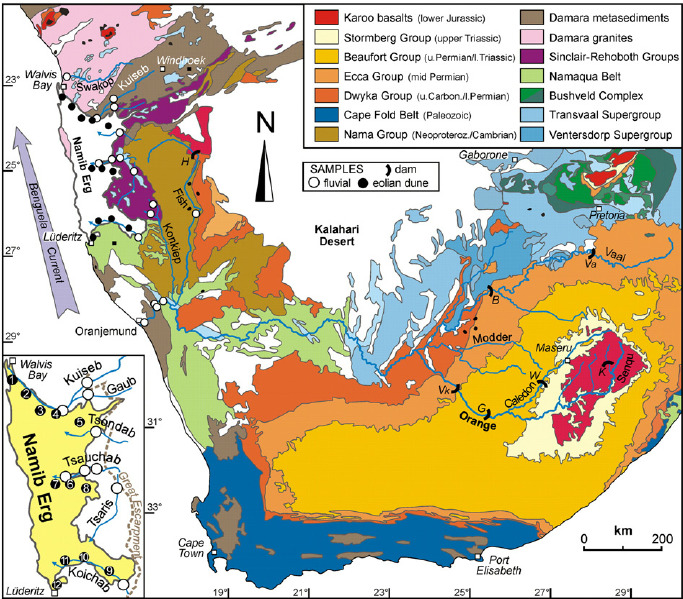
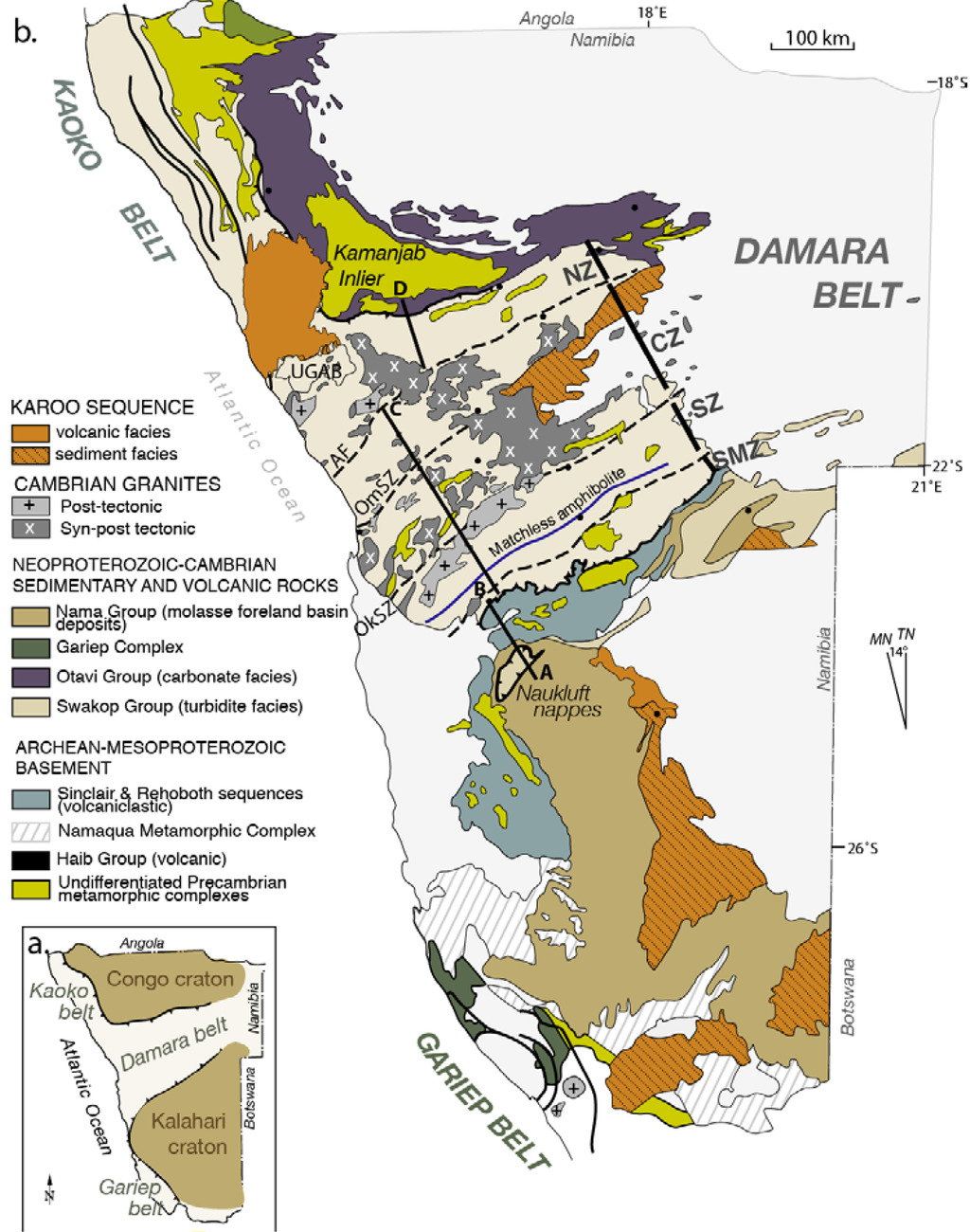
In Namibia, a whole new set of names appear. In the south, on the Atlantic Ocean side, there is the Gariep belt with the Kalahari craton, then the Damara belt, the Kaoko belt and the Congo Craton.
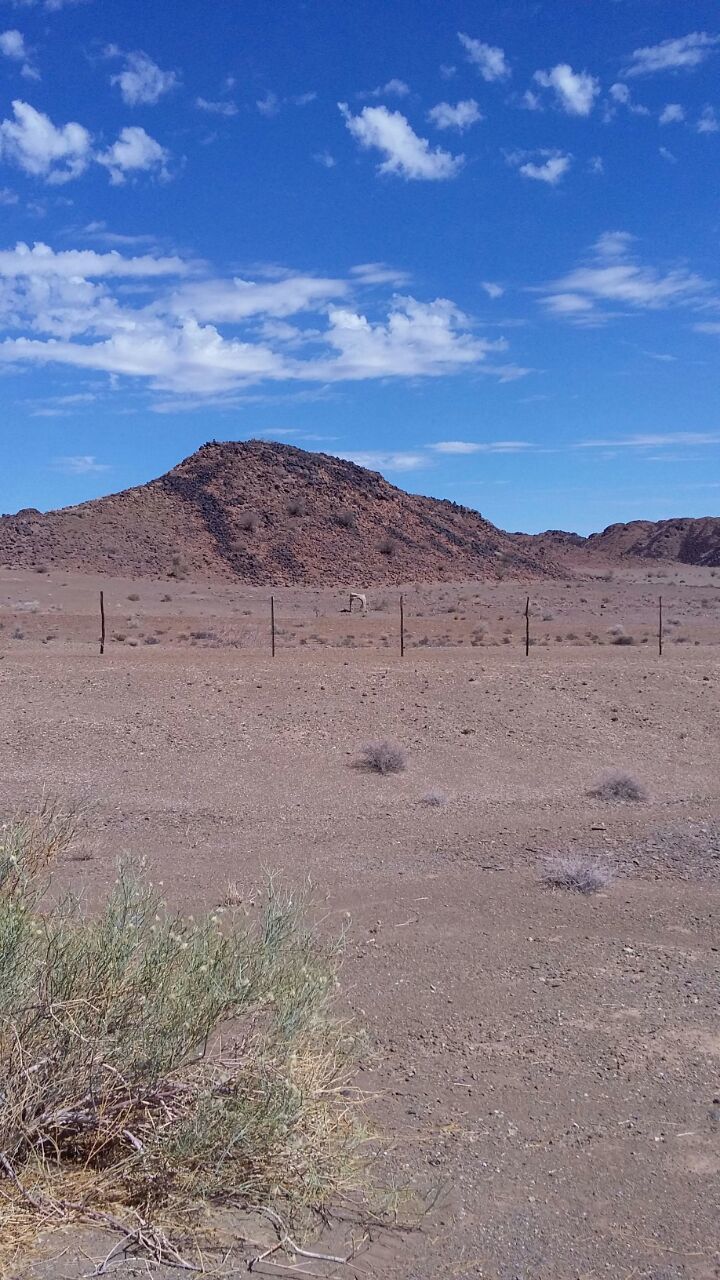
Here, at the listed co-ords, you will see the most interesting hills. Overall they are the normal, desert colour, except for the fact that there are most distinct black stripes in these hills. Underneath these hills, is a Jurassic Dolerite dyke. The Jurassic period was between 200 and 150 million years ago.
(The technical stuff - Dolerite is the medium grained, intrusive, equivalent of a basalt. It usually occurs as dykes, plugs or sills. Weaknesses in the crust became exploited by magmas which solidified to create the dykes and sills.)
The black stripes are probably due to manganese enrichment. This is because manganese is one of the products of advanced dolerite weathering.
Normally these intrusive features follow bedding planes (in sedimentary rocks), or other weak zones (such as faults). The "intrusive rock" actually devides and encloses the country rock.
Acknowledgements, with gratitude:
David Mourant
Grant Little
Robert Schouwstra
Prof Richard Fuggle
Ingrid Stengle (Geological Society of Namibia)
To log this earthcache, please answer the questions below and submit them via email or the geocaching app, to us.
Parking at GZ, and standing with your back to the road, look at the very interesting features of the hills in the distance. If you have binoculars with you, it would make seeing the distinct features of the hills that much easier.
1) Please describe what you can see that makes these hills different?
2) In your opinion, how did these features happen and what could they be?
3) Location question: On your left, in the distance, is a very distinctive man made object. What is it?
