운종가에 오신 것을 환영합니다
조선시대 운종가(雲從街)는 시전들이 설치돼 수많은 점포가 즐비하게 들어섰던 곳으로, 이름 그대로 '사람과 물화가 구름처럼 몰려드는' 경제의 중심지였다. 조선의 정치 1번지 육조거리와도 이어지며, 서울 600년의 모습이 지하 (현 지표아래) 4-6m 깊이에 층별로 켜켜이 쌓인채 보존돼 있는 '조선의 폼페이'이기도 합니다.
“청진 12-16지구 문화재 보존 및 전시과”은 서울특별시 종로구 청진동 119-1번지 일원에 위치한 12-16지구 도시환경 정비사업 부지에서 발견된 건물지, 우물, 도로 등 유구 (遺構, 옛 건축물의 흔적)를 보존. 전시하는 공간이다. 우리가 서 있는 서울의 땅, 그 아래 고스란히 살아 숨쉬는 조선시대 운종가와 600년 역사의 흔적을 만나 보세요.
조선시대의 폼페이
전 세계 도시의 오래된 부분은 종종 건설 프로젝트 또는 고고학 발굴 중에 발견됩니다. 많은 오래된 도시에서는 그 위에 새로운 건물을 짓기 전에 기존 건물을 그자리에 부수거나 태우는 비용이 다른 곳으로 운반해서 버리는 것보다 저렴해서 그런 방법을 택하기도 했습니다. 현대적인 기계를 사용함으로써 철거된 건물 잔해을 제거하는 비용은 저렴해 졌습니다. 같은 현대적인 기계는 또한 과거를 밝히는 데 도움을 주기도 합니다. 본질적으로 건물의 잔해들은 수십만년 동안 그자리에 쌓이며 도시를 건물의 깨진 잔해 속에 묻는 과정을 반복하고 있습니다.
오래전의 도시는 현대 도시와 매우 달랐습니다. 현대 도시는 비교적 깨끗하게 유지됩니다. 거리가 청소되고 사람들이 버리는 폐기물들은 바로 제거됩니다. 이런식으로 현대의 도시는 깨끗하고 위생적으로 유지되고 있습니다. 반면에 오래된 도시는 훨씬 더 더럽고 오염된 상태였습니다. 사람이 버린 폐기물을 제거하는데 비용이 많이 들었으므로 많은 도시에서 폐기물은 비가 올 때마다 강과 시내로 쓸려 내려갔습니다. 한양의 경우도 마찬가지였을 것입니다. 폐기물들은 종종 창문 밖으로 던져져서 길거리에 굴러다녔을 것입니다. 시간이 지남에 따라이 폐기물들은 쌓여서 나뭇잎, 먼지, 쓰레기 등과 같은 다른 것들과 섞입니다. 이것들은 해로운 물질 또는 생물학적 폐기물이며 시간이 지남에 따라 분해되어 토양이 됩니다. 이런 과정들이 숲에서 자연스럽게 일어나는 것이 좋은 사례입니다. 오랜 시간에 걸쳐 이런 폐기물들은 구조물의 잔해 사이에 쌓이고 나아가 그것들을 묻어 버리기도 합니다.
그러나 폐기물이 구조물의 잔해을 묻는데 수천년이 걸릴 수도 있습니다. 이곳의 구조물들은 비교적 빠른 시간 동안 매장되어 최근에 재발견되었습니다. 이곳의 구조물은 단지 수백년 전이었지만 땅속 깊이 묻혔습니다. "조선시대의 폼페이"는 같은 나이의 대부분의 도시보다 훨씬 빠른 속도로 묻힌 것입니다.
청계천의 침식 및 퇴적
1 단계 : 침식 및 퇴적물의 이동
한국의 겨울철에는 계곡 근처의 바위에는 눈이 내려 얼고 녹으며 틈이 생깁니다. 이것은 생물학적 및 다른 형태의 풍화에 의해 더 작은 조각으로 쪼개집니다. 우기에는 작은 암석과 퇴적물이 하류로 씻겨 내려갑니다. 일반적으로 흐름이 빠를수록 더 많은 퇴적물이 이동합니다. 물의 흐름은 퇴적물의 입자가 하류로 이동할 때 물 속의 입자들이 물속에 떠있게 하거나 바닥에 쌓이게 할 수도 있습니다. 부유 퇴적물을 부유사라고합니다. 용해 퇴적물을 용해사라고 합니다. 하천을 따라 움직이는 큰 퇴적물을 소류사라고 합니다. 운반된 퇴적물에는 광물질, 화학물질 및 오염물질, 유기물질이 포함될 수 있습니다.
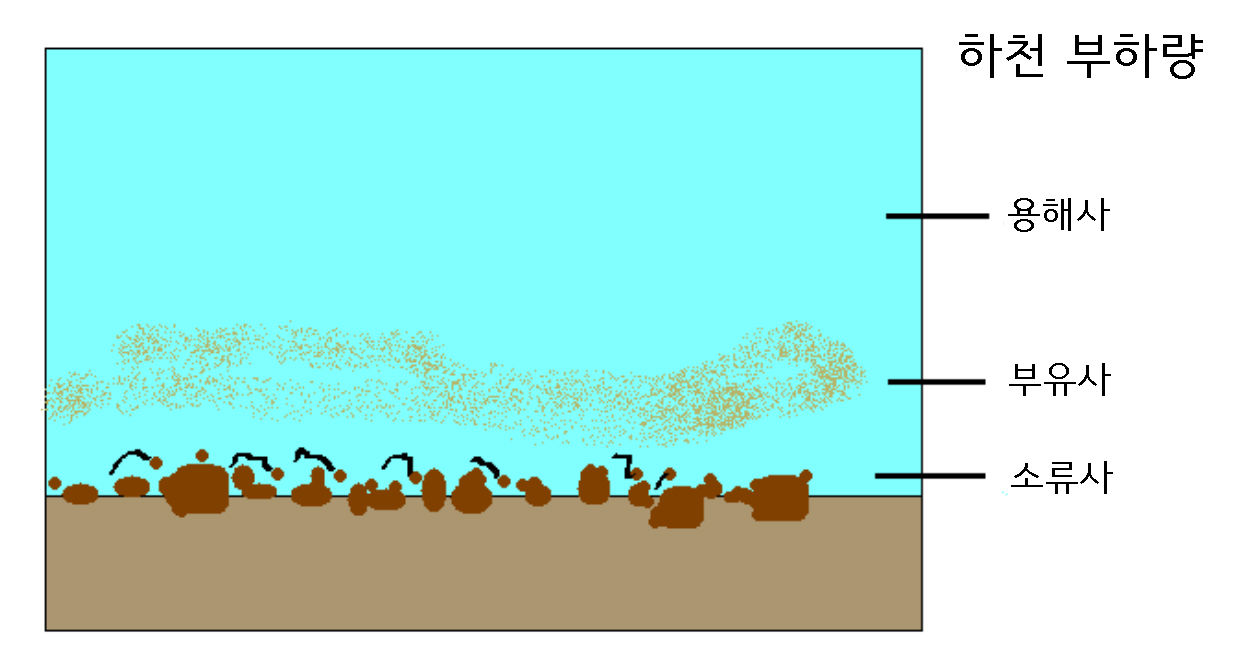
홍수에 의해 하천의 물은 급격히 늘어나 하천의 흐름과 속도가 비정상적으로 빠르게 만들기도 합니다. 이러한 현상에 의해 하천침식은 더 빠르게 일어나고 물의 흐름을 더 빠르게 합니다. 홍수의 결과로 퇴적물이 이동하여 하류에 퇴적됩니다. 홍수 동안 하천물의 양은 크게 증가합니다. 홍수가 발생하면 부유사가 증가하여 하천은 뿌연 색이 됩니다.
2 단계 : 홍수 및 퇴적
장마철에는 대부분 한국의 강의 수위는 많이 올라갑니다. 한강의 둑이 넘쳐 보행자 도로와 자전거 도로로 넘쳐흐르는 것을 종종 볼 수 있습니다. 과거에는 자전거 도로는 없었지만 대부분의 강둑들은 우기 동안 수천년을 반복하며 흘러 넘쳤을 것입니다. 비가 많이 올 때마다 강물은 평상시보다 더 많은 양의 퇴적물을 이동시킵니다. 지금은 서울의 홍수들이 현대적인 기술에 의해 통제되고 있지만 조선시대에는 그런 기술들이 없었습니다.
매년 청계천이 범람하면서 퇴적물이 쌓이게 되었다. 거리에서 퇴적물을 매번 제거하는 것보다 그대로 두는 비용이 때로는 더 저렴했기 때문에 퇴적물들은 그대로 방치되었습니다. 따라서 운종가에도 홍수가 발생했을 때 한양 건물들의 일부분은 침수되어 폐허가 되기도 하였습니다. 때로는 오래된 구조물을 철거하고 그 위에 새로 건축하는 것이 비용이 더 들기 때문에 오래된 건축물의 잔해를 흙으로 덮고 그 위에 새로 건축물을 짓기도 합니다. 이런 과정으로 폐기된 건축물의 잔해 위로 토사가 퇴적된 층이 쌓이고 그 위에 새로운 건축물을 짓기를 반복합니다.
로그하는 방법
1. 운종가 건축물들은 어떻게 묻혔습니까?
2. 웨이포인트 2에서 골목길에는 건축물들이 세워진 6 개의 퇴적층 중 3 개의 단면이 있습니다. 홍수가 어느층에서 가장 심했을 것이라고 생각하세요?
2a. 왜 그렇게 생각하세요?
3. 청계천의 범람을 통제하기 위해 무엇을 건설 했습니까? (웨이포인트 1)
4. 캐시 사이트에 로그랑 배경으로 GPS나 다른 지오캐싱 아이템의 사진을 찍어올려주세요.
5. 답을 제 Profile에 있는 메시지창을 이용해 제게 보내주세요. 이제 로그하셔도 됩니다. 답에 문제가 있을 경우 제가 메시지를 드리겠습니다
I'd like to thank bluejay99 for his help in translating this geocache to Korean
Also congratulations bluejay99 FTF!!!
Introduction to Unjongga
During the Joseon Period (1392-1897) Seoul was known as Hanyang and here, there were many stores leased by the government in the market zone of Unjongga. Unjongga literally meant "people and merchandise gathering like clouds." The area was the country's economic hub that attracted people and goods in droves. It was adjacent to Yukjo Street which was the country's political center in front of Gyeonbokgung Palace. The 4-6m occupation layer contains stories about Seoul, which has served as the country's capital for 600 years. Thus, it is considered the 'Pompeii of Korea.'
The Cultural Heritage Preservation and Exhibition Hall (Cheongjin 16-16 District), keeps and displays the remains of the olden-day structures, including building sites, wells, and roads, that have been found at the jobsite of the urban environment overhaul project. Nearby are many preserved displays of the area that was once a part of Seoul, but have be subsequently buried, and yet remain as a reminder of the past.
The Burial of a City
Old parts of cities around the world are often uncovered during construction projects or archaeological digs. In many older cities it was often cheaper to bulldoze or burn structures before building a new one on top of it. Modern machinery has helped cheapen the process of hauling away the demolished remains of buildings. The same modern machinery has also helped uncover the past. Essentially, the remains of buildings would stack up over hundreds to thousands of years and bury a city in the broken remains of buildings.
Old cities, were also very different from modern cities. Modern cities are kept relatively clean. The streets are swept, the leaves raked up and human waste easily removed. This helps keep modern cities clean and disease free. Old cities on the other hand were much dirtier. Removing human waste was much costlier, so in many cities waste would often build up and wash into rivers and streams whenever it rained. This was the case in this neighborhood of Hanyang. Waste would often be thrown out windows or left on the street. Over time this waste would accumulate and mix with other things like leaves, dirt, trash, etc. This is known as detritus, or biological waste that breaks down and becomes soil over time. You can see a good example of this on any forest floor. Over an extended period of time, this detritus can build up and bury the remains of structures.
However, detritus can take thousands of years to bury structures. The structures here were buried relatively quickly, only to be rediscovered in recent years. The structures here were buried quite deeply albeit only being a few hundred years old. This required a quicker method to bury the "Pompeii of Korea".
Erosion and Deposition in the Cheonggyecheon Stream
Step 1: Erosion and Sediment Transport
During the winter season in Korea snow falls and freezes in cracks in the rocks near mountain streams. This combined with biological and other forms of weathering rocks break apart to smaller and smaller pieces. Then during the rainy season the smaller rocks and sediments can wash downstream. In general, the greater the flow, the more sediment that will be conveyed. Water flow can be strong enough to suspend particles in the water as they move downstream, or simply push them along the bottom of a waterway. The suspended sediment is called the suspended load. Dissolved sediment is called the dissolved load. The larger sediment moving along the bottom of the stream is called the bedload. Transported sediment may include mineral matter, chemicals and pollutants, and organic material.
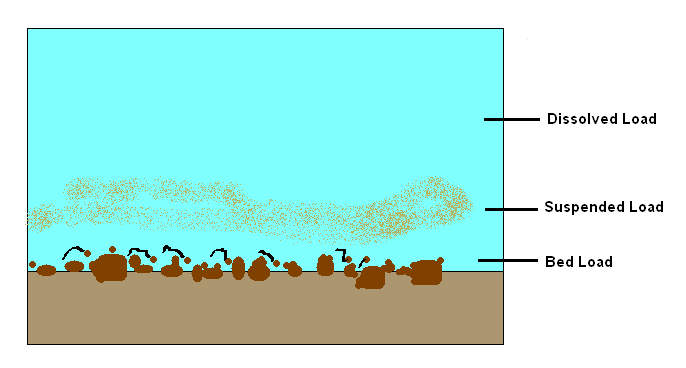
Floods create a scenario in which stream flow and velocity are unusually high due to the drastic addition of water to a stream. These heightened characteristics increase both the potential of stream erosion and heavier stream load. Flooded streams are often responsible for heavy sediment transportation and deposition downstream. Stream capacity is greatly increased during a flood. During a flood, increased suspended load may be visible, giving the stream a muddy color.
Step 2: Flooding and Deposition
Most years during the rainy season the rivers in Korea raise quite a bit. You can see this sometimes when the Han river or other rivers in Seoul river banks overflow and cover the pedestrian walking and bike paths. While the paths didn't use to be there the banks of the major rivers in Korea have been overflowing during rainy season for millennia. Every time major rainstorms come, the rivers flood bringing with them larger amounts of sediment than during normal times. Major flooding in modern Seoul is largely rerouted using modern technology, but during the Joseon Period this modern technology didn't yet exist, so floods in Seoul were often devastating.
Flooding each year along the Cheonggyecheon Stream brought with it sediments that would pile up over the years. As it was often cheaper to just leave the sediment on the street than take it away, it was just left there. So when there were major flooding events in Unjongga and the rest of Hanyang buildings would be flooded and ruined. Often it was less expensive to just demolish the older structures and build on top of them. This means that throughout the years layers would pile on top of each other and sometimes, parts of the city would get buried and built over.
Logging Requirements
Important! Read the entire description and go to all the waypoints before answering the questions.
1. How did the Unjongga neighborhood get buried?
2. Go to waypoint 2: In the narrow alleyway, on a 5X4 meter section of the wall, there are three cross sections of the six layers of sediment the neighborhood was built upon. At which layers do you think the yearly floods were likely to be more destructive?
2a. Why do you think that?
3. What was eventually built to control the flooding of the Cheonggyecheon Stream? (Waypoint 1)
4. Take a picture of your GPS (or some other geocaching item) at the cache site and upload it with your log.
5. Please send the answers to me by message on my profile. You may log this cache as “Found.” (If the answers are not correct I will contact you.)
Yes! You really do have to visit all of the waypoints. Use your cell phone GPS and/or the photo in the gallery to visit the waypoints. Your GPS device will be useless here. Please don't log this cache unless you actually visit all the waypoints. It will be obvious in your answers if you don't.
| I have earned GSA's highest level: |
 |