The Natural History Museum opened its doors in 1881 and houses some 80 million specimens, making it one of the largest natural history museums in the world.
In Romanesque style, the remarkable main building on Cromwell Road was designed by Alfred Waterhouse. Resembling medieval churches, the building with its ornate terracota façade was commonly referred to as the 'cathedral of nature'.
Additional buildings were later incorporated and include the Geological Museum (on Exhibition Road) and Darwin Centres phases 1 & 2 (on Queen's Gate). On its south west side corner there is a wildlife garden and seasonal instalations (bufferfly house, ice rink) on the lawn at the south east side.
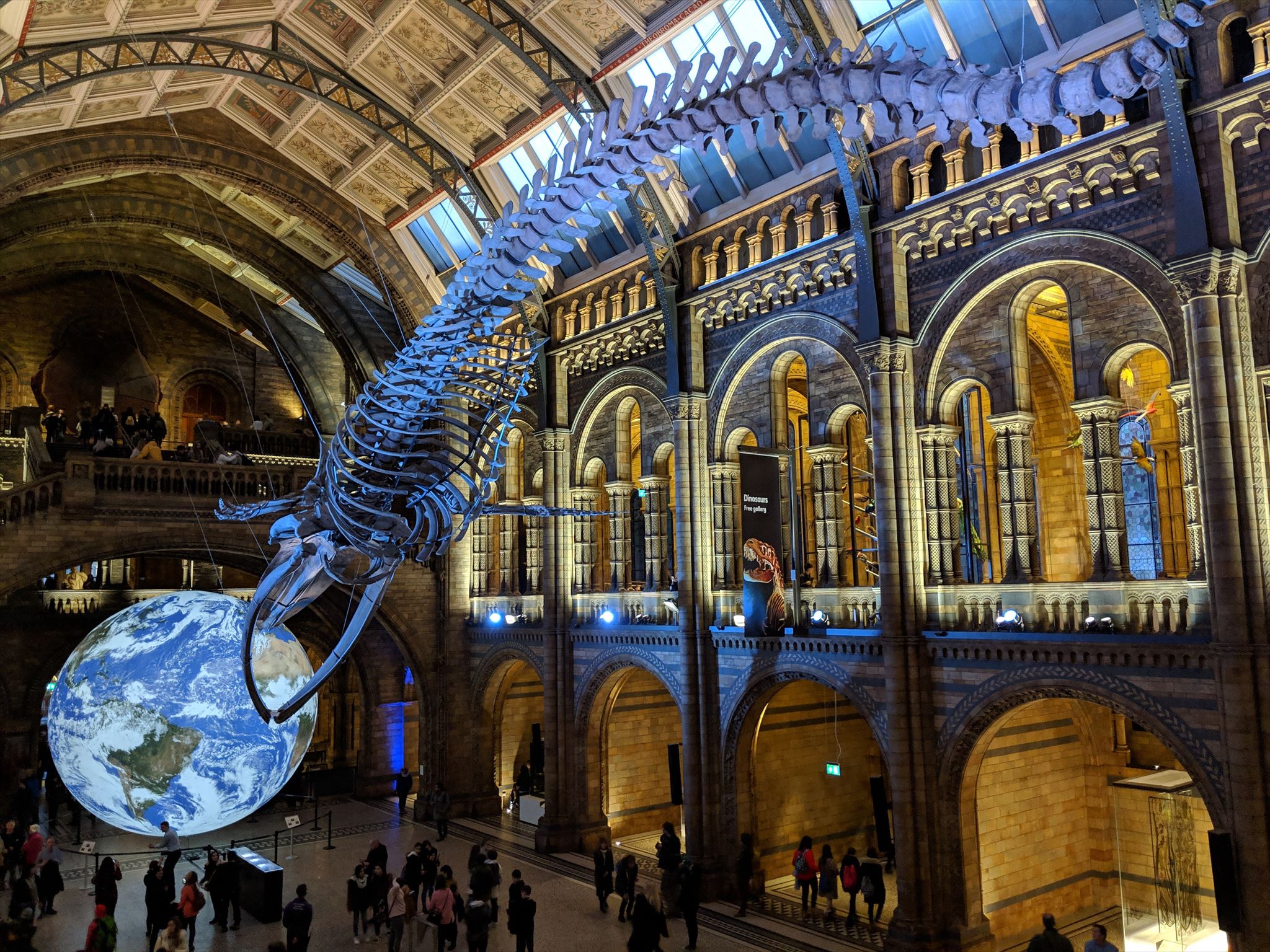
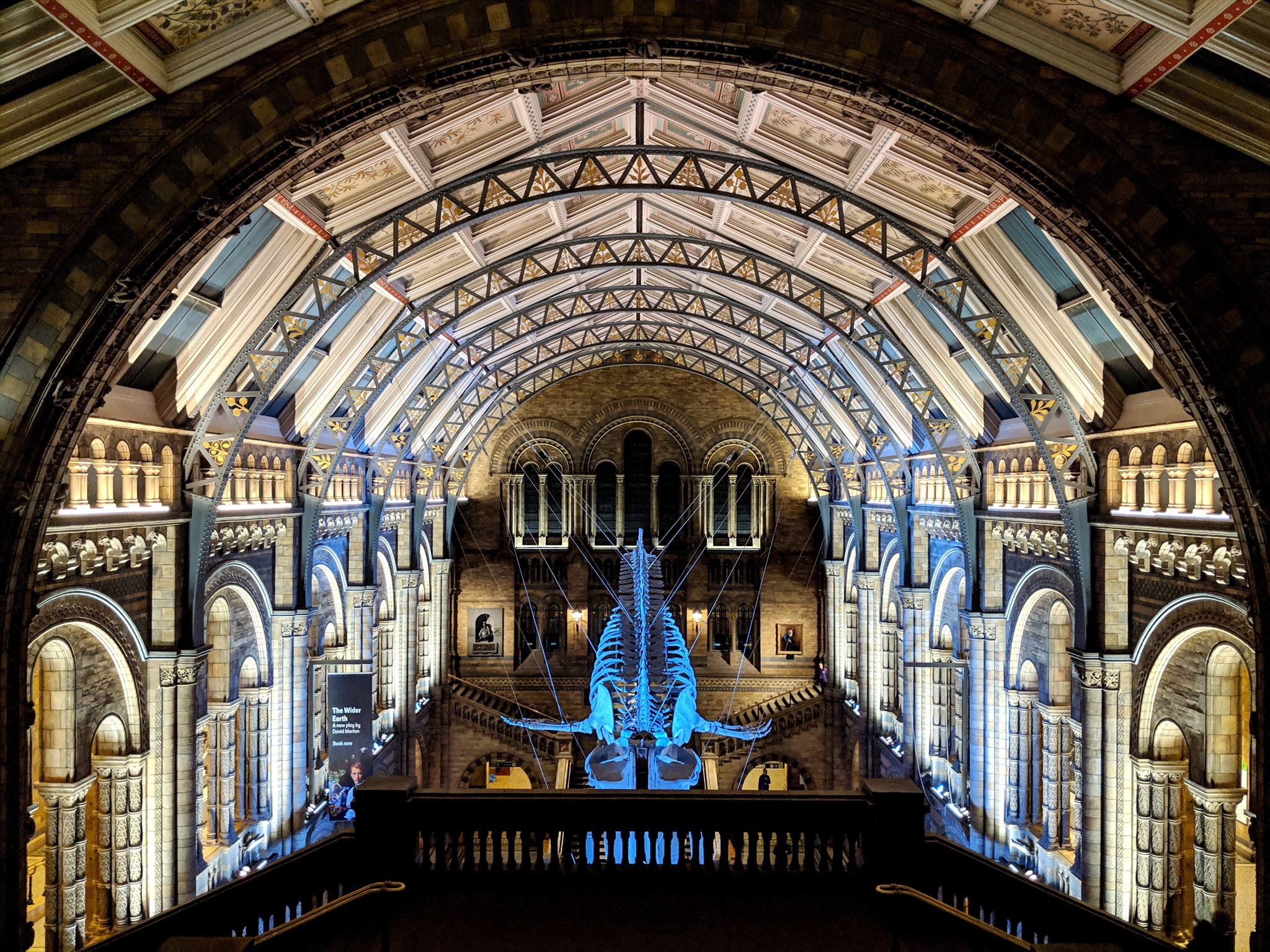
The Museum is a world renowned centre of research specialising in taxonomy, identification and conservation. Many of the collections have great historical as well as scientific value, such as specimens collected by Charles Darwin and during the great scientific expeditions of the 19th and 20th centuries. The museum is particularly famous for its exhibition of dinosaur skeletons and its main vaulted hall was dominated by a large iconic cast of a Diplodocus, nicknamed Dippy for over 100 years. Dippy was replaced in 2017 by a 25 meters long skeleton of a blue whale (dubbed Hope) hanging from the ceiling of the now named Hintze Hall.

__________________________________________________________________
The cache
Please note GZ is a HIGH muggle area - be discreet and return the cache as found.
You will be looking for a micro cache with a logsheet only - bring your pen to sign the log!!
There's no need to enter the museum to find this cache. Don't even think about climbing the fence as you can seriously hurt yourself on those sharp points (those little plastic tubes above eye level are to monitor air quality and are NOT the cache!)
The cache itself is accessible from the pavement anytime of the day or night and it's wheelchair users' friendly too.
Congratulations to artemisworks and -KROP- for a swift joint FTF. Well done!
