Questions
- From the top to bottom, does the dam seem to be made of identical material?
- Are there layers that have eroded less (over the years) vs more?
- What might this tell you about how porous the core of the dam is, and the layers?
- The gravel/stone that makes up the dams internal drain, what is it made of (gravel, large stones, different soil?)
- Add a photo of you from the location or of an identifiable item (paper with trackable name). Posting a photo pulled from the internet, or photoshopped will result in instant deletion.
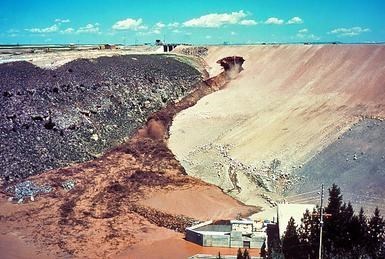
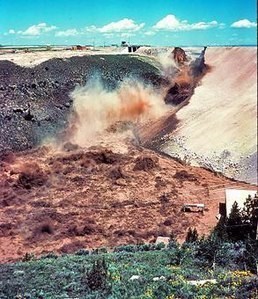
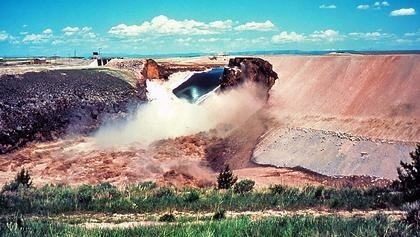
Teton Dam is one of the most studied earthen dams. When it failed in June 1976, there were hundreds of feet of water in the dam that was sent downstream, costing billions of dollars of damage and the loss of eleven lives Dams have been studied heavily for hundreds of years, so the failure should not have happened. Because it failed, and the records of construction were so well kept, they were able to make a cut in the remaining part of the dam, and study why it failed and the numerous problems.
Why here?
Geology. That is the simple answer. This river cut is in rock that is volcanic. This has a advantage of not being very permeable - water does not seep through - and resisting erosion as well. Basalt may have cracks, but they do not erode away. One of the problems in sandstone, and limestone is that the water will seep through and round the rocks. The erosion creating larger and larger holes. Making a tiny pinhole leak through the rock larger over time. This seemed to be a fantastic location. Early research and drill cores considered the area idea back in the 1930's for a dam.
It would also hold large amounts of water. The height of the dam would be over 300 feet and would hold nearly 300,000 acre feet of water.
Why an Earthen Dam?
Earthen dams are far less expensive, and the most common type of dam. Large concrete dams may be ideal in many situtations, however the costs can be prohibitive. So in the end an earthen dam was chosen because it was considered safe, reliable, and inexpensive.
Before building the dams are cleared of all topsoil. This removes all the soft silt, clay, or other material that they cannot control. This was done down to the bedrock. Once the bedrock was exposed they then began to drill for the grout curtain.
Grout Curtain
This is a hidden part of a dam. and though it was exposed in the (north/south) cutout, it is very difficult to see, if at all. A deep hole is drilled into the dam, sealed at the top, then grout is pumped in under pressure. This fills all the holes/cracks under the dam and around the sides of the dam. The cracks in the basalt are filled, preventing water from seeping through.
The original design called for three rows, staggered, the entire width of the dam. This would seal up the base. The problem came as they ran into a few small magma tubes - tunnels where lava once flowed, and eventually drained. The amount of grout needed to fill these magma tubes was far exceeding the amount budgeted for. So they reduced the number of holes drilled by over half in the grout curtain. It was not considered a high threat because of the geological makeup of the bedrock.
It was found there was a disconect with the people on the ground with the design crew. The construction crew was not clear how cracked an permiable the soil was, and the engineers were not clear how important itwas that the ground be fully sealed with the grout.
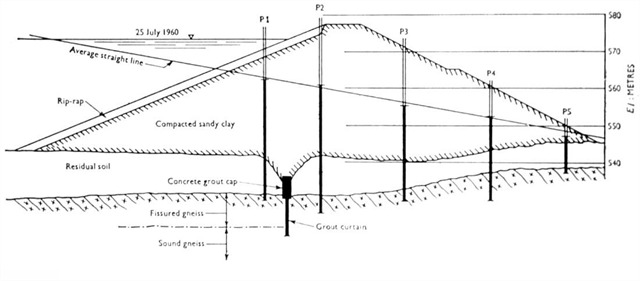
Cross section.
Many of us built dams in the ditches or gutters as kids. You know that different rocks and dirt worked well, and others did not. It is the same when they build dams. The soil used is very controlled. Some parts of the dame are allowed to be more porous, while others should not allow much water through. Because it is an earthen dam there will always be water running through parts of the dam. The goal is to control it and to direct it.
The dam is made layer by layer, a few inches at a time, and compactors press the soil together to exacting amounts. They also create a layer on the drainside of the dam with gravel or other material to allow the water that does seep through to drain through the dam, and not erode holes through the entire dam. On the waterside of the dam it is usually covered with a stone to prevent erosion from waves and water. Then a smaller amount on the dry side of the dam.
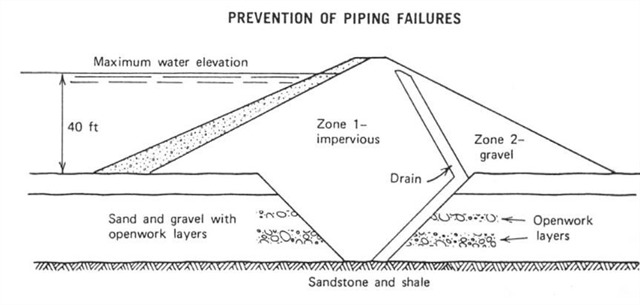
Design and Problems
The large center part of the dam would be compacted to 98% and would alow one foot per year of water flow. That was surrounded by a larger mass compacted to 70% that would be more permeable. This was to be standard throughout the dam.
As material for the core was placed, it was found that it was not compacting fully to the design. The lower 100 feet of the dam was compacted to 55psi. When this was found they changes equiptment, this let the compaction to be done at 200-400 psi. Normally on a shorter dam this may not be an issue, but the height, and the amount of water pushing at the dam made it so parts of the dam deflected or moved at different rates. This can pose an issue on the sides. Dams will normally deflect small amounts and have some seepage. Any small cracks should fill, and water drain through the drain built in the dam.
One issue, the design was nearly a standard design, and did not adequalty review the site, and make site specific alterations to the design and construction.
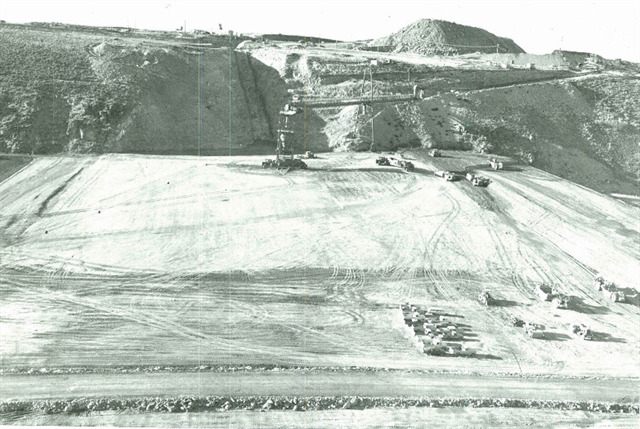
Filling the dam and failure
Eventually all the small problems compounded. As the water reached the level of the spillway, filling the dam, water crept through the side of the dam, it was deflecting slightly, and then moved through cracks that were not adequate grouted. Then into the soil on the face of the dam.
The leak was seen and a few large bulldozers were send down to work on the leak, but within a few hours they were abandoned, and soon after the dam failed, suddenly and dramatically. Within a few hours the water behind the dam was fully drained.
Eventually the government pored over the records and dug a road cut in the dam, to fully study it. It is rare in a dam failure to be able to study it in detail. After this failure, it ended the rapid building of dams. A few were in planning/construction and were completed, but not many have been completed in the US after this accident.
Eventually it was determined that the grout curtain was not adequate, and the soil was not evenly placed and compacted. Together they led to the failure on the side of the dam.
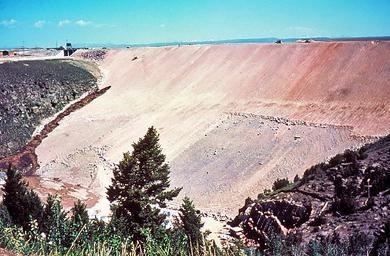
Permission for the visit locations given by the Bureau of Reclamation.