
Arène granitique du Tertre Marigny
Rappel concernant les Earthcaches :
Il n'y a pas de conteneur à rechercher ni de logbook à signer. Après avoir été sur les lieux pour chercher les réponses aux questions, loguez cette cache "Found it" et envoyez-moi vos propositions de réponses, en précisant le code GC de la cache, soit via mon profil, soit via la messagerie geocaching.com (Message Center), et je vous contacterai en cas de problème.
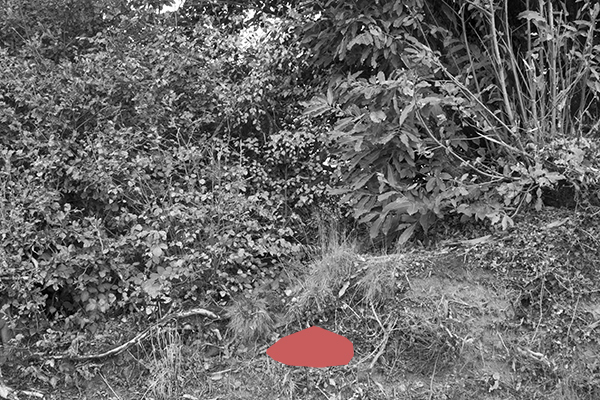
Questions :
1- quel est le principal responsable de l'arénisation du granite ?
2- Aux coordonnées, le terrain est privé, mais dites-moi la couleur de l'arène granitique que vous pouvez observer de la route. Et dites-moi d’où vient cette couleur ?
3- Au waypoint 2, et avec la photo spoiler, le granite sous la tache rouge est-il sain, pourri ou bien arenisé ?
Descriptif de l'earthcache
Au Nord de Domfront, au lieu dit Le Tertre Marigny on peut observer le phénomène de l'arénisation granitique.
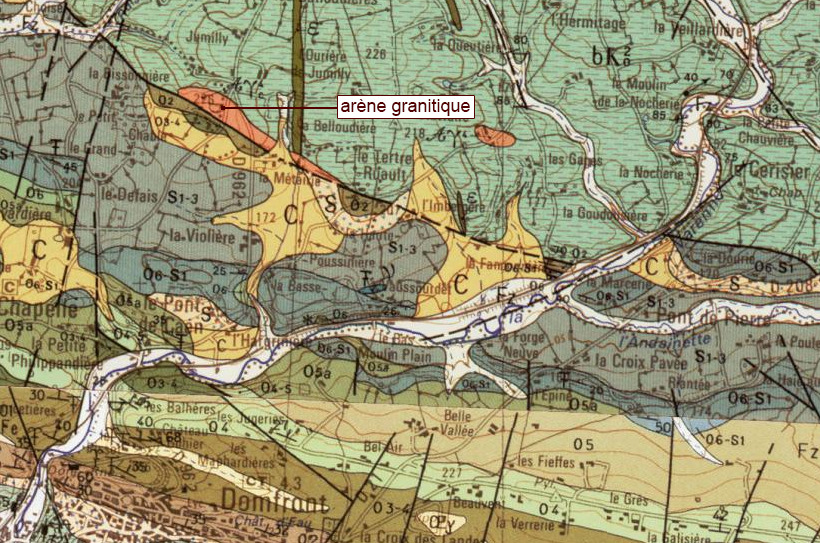
Le granite
Le granite est une roche magmatique plutonique, formée par le refroidissement lent, en profondeur, d'un magma issu de la fusion partielle de la croûte continentale. Le granite est formé de minéraux en grains tous visibles à l'œil nu, il s'agit principalement des micas, des feldspaths et des quartz. C'est une roche qui est dure et résistante, mais qui n'est pas indestructible. Avec les conditions météorologiques, le granite fini à la longue par s'altérer.
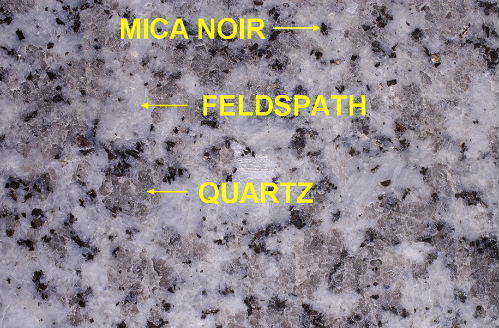
Altération du granite
Le granite est une roche dure et résistante, mais elle manque de souplesse. Avec les mouvements de l'écorce terrestre et au cours de son refroidissement, le granite fini par se fissurer. Les fractures qu'on appelle également diaclases facilitent l'altération en permettant à l'eau et aux racines des plantes de s'infiltrer plus rapidement au cœur de la roche.
L'eau agit de deux façons différentes :
- Par hydratation : l'eau s'additionne à certains composés du granite qui finissent par gonfler puis par se désolidariser de la roche.
- Par hydrolyse : l'eau solubilise certains éléments du granite
Les minéraux composant le granite réagissent différemment à l'altération :
- Le mica noir, en présence d'eau, s'hydrolyse rapidement en hydroxyde de fer et en argile.
- Le quartz est inaltérable.
- les feldspaths s'hydrolysent et se transforment en argiles.

Un granite altéré est appelé un "granite pourri", mais l'altération se poursuit et le granite pourri va se transformer en sable grossier pour donner "l'arène granitique"

Decomposed granite of Tertre Marigny
Reminder about Earthcaches:
There are no containers to search or logbooks to sign. Once you've been to the site to look for the answers to the questions, log this cache “Found it” and send me your suggested answers, specifying the cache's GC code, either via my profile or via geocaching.com (Message Center), and I'll contact you if there's a problem.
Questions :
1- who is the main responsible for the arenisation of the granite ?
2- At the coordinates the land is private, but tell me the color of the decomposed granit that you can observe from the road. And tell me where does this color come from ?
3- At waypoint 2, and with the photo spoiler, is the granite under the red stain healthy, rotten or arenised ?
Earthcache description
North of Domfront, at the place called Le Tertre Marigny we can see the decomposed granite.
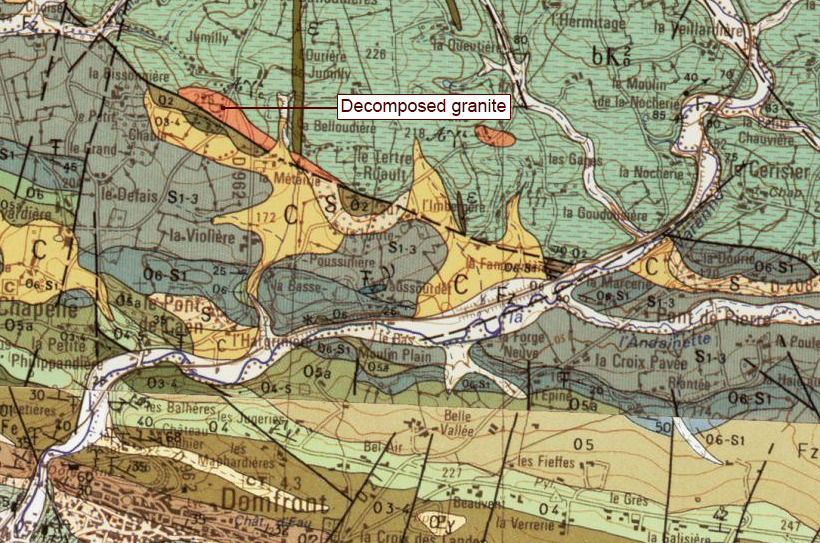
Granite
Granite is a plutonic magma rock, formed by the slow, deep cooling of a magma resulting from the partial melting of the continental crust. Granite is formed of grains minerals all visible to the naked eye, mainly micas, feldspars and quartz. It is a rock that is hard and resistant but is not indestructible. With the meteorological conditions the granite eventually deteriorates.
Alteration of granite
Granite is hard rock, but it lacks flexibility. With the movements of the earth's crust and during its cooling, the granite eventually cracked. Fractures, also known as joint, facilitate weathering by allowing water and plant roots to infiltrate more quickly into the heart of the rock.
Water acts in two different ways:
- by hydration : the water is added to certain compounds of the granite which end up to swell then to dissociate itself from the rock.
- by hydrolysis : water solubilizes some elements of granite
The minerals composing the granite react differently to the alteration:
- black mica, in the presence of water, hydrolyzes rapidly to iron hydroxide and clay.
- quartz is unalterable
- the feldspars hydrolyze and turn into clays.
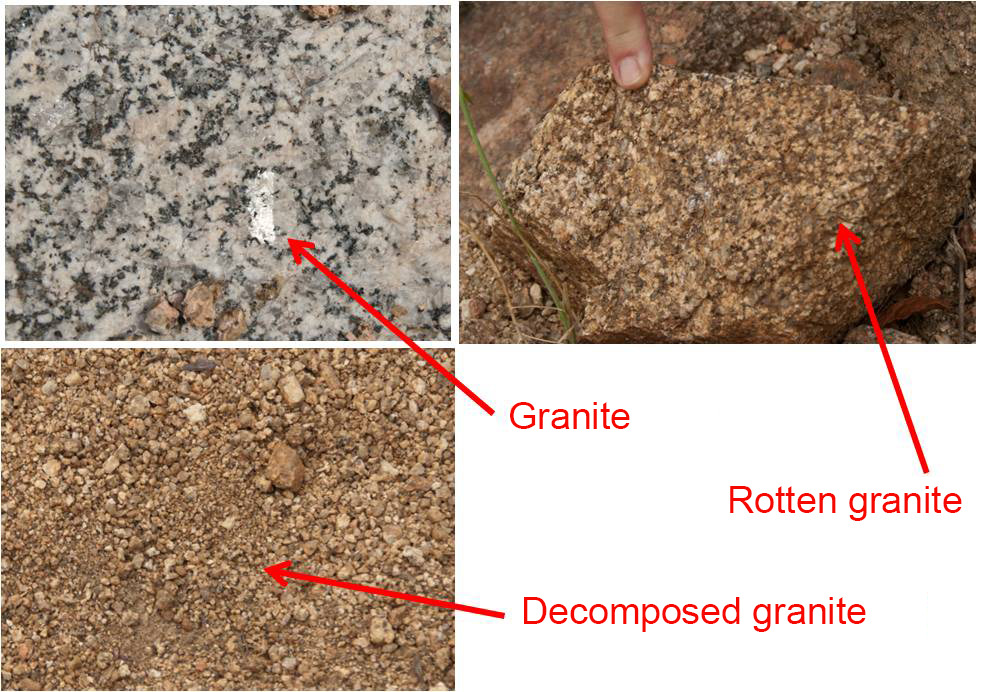
An altered granite is called a "rotten granite", but the alteration continues and the rotten granite will turn into coarse sand to give the "decomposed granite"