This is the spot of the first documented Gold find in Colorado. It was discovered by Lewis Ralston on June 22nd, 1850. Prospectors can still be found here on weekends, with their pans looking for riches.
GOLD
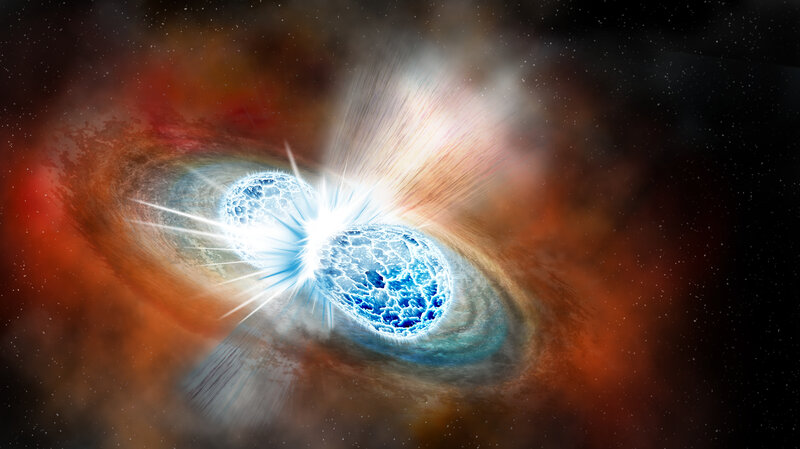
Gold is thought to have been produced in supernova nucleosynthesis, and from the collision of neutron stars, and to have been present in the dust from which the Solar System formed. Because the Earth was molten when it was formed, almost all of the gold present in the early Earth probably sank into the planetary core. Therefore, most of the gold that is in the Earth's crust and mantle is thought to have been delivered to Earth later, by asteroid impacts during the Late Heavy Bombardment, about 4 billion years ago.

Why can we find Gold in rivers and creeks?
Gold is concentrated in certain geothermal solutions formed when magma is injected into water bearing rocks. The magmatic heat sets up hydrothermal circulation. These hot fluids dissolve minerals and rocks and the solutions become metal rich. If certain conditions prevail, the solutions will preferentially transport gold in the aqueous state (as a solution), as a chloride complex for example. The decompression and cooling of this gold rich fluid results in the precipitation of native gold.

Therefore, gold is usually found in metamorphic rocks that have been affected by hydrothermal solutions.In addition to its presence in metamorphic rocks, sometimes gold gets weathered out. Then, because of its large density gold gets transported by streams and concentrated into what are called placer deposits. These are fluvial sediments that occur along the banks of streams and rivers.
Placer Deposits
In geology, a placer deposit or placer is an accumulation of valuable minerals formed by gravity separation from a specific source rock during sedimentary processes. The name is from the Spanish word placer, meaning "alluvial sand". Placer mining is an important source of gold, and was the main technique used in the early years of many gold rushes, including the California Gold Rush. Types of placer deposits include alluvium, eluvium, beach placers, and paleoplacers
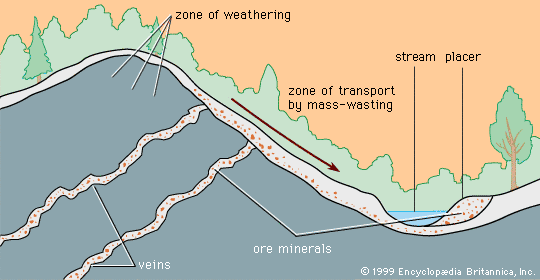
Alluvium (from the Latin alluvius, from alluere, "to wash against") is loose, unconsolidated (not cemented together into a solid rock) soil or sediment that has been eroded, reshaped by water in some form, and redeposited in a non-marine setting. Alluvium is typically made up of a variety of materials, including fine particles of silt and clay and larger particles of sand and gravel. When this loose alluvial material is deposited or cemented into a lithological unit, or lithified, it is called an alluvial deposit.
In geology, eluvium or eluvial deposits are those geological deposits and soils that are derived weathering or weathering plus gravitational movement or accumulation. Eluviation occurs when precipitation exceeds evaporation.
Beach placers form on seashores where wave action and shore currents shift materials, the lighter more rapidly than the heavier, thus concentrating them.
A palaeochannel, or paleopacer, is a remnant of an inactive river or stream channel that has been filled or buried by younger sediment. The sediments that the ancient channel is cut into or buried by can be unconsolidated, semi-consolidated, consolidated or lithified. The word palaeochannel is formed from the palaeo, meaning "old," and channel.
Paydirt

Gold panning is mostly a manual technique of separating gold from other materials. Wide, shallow pans are filled with sand and gravel that may contain gold. The pan is submerged in water and shaken, sorting the gold from the gravel and other material. Today, you can still pan for gold but to make things easier, you may also use a gold Classifier as well as your shallow pan. The gold classifier is used when panning for gold as a first step to remove large debris prior to panning material for gold.Common sizes of Classifiers are 1/100", 1/70", 1/50", 1/30", 1/20", 1/12", 1/8", 1/4", 1/2". For example, a 1/2 inch mesh is about 4 holes per square inch; a 1/4 inch mesh has about 16 holes per square inch; 1/8 inch contains about 64 holes per square inch and so on. 1/100 inch is the smallest mesh that is commonly used for microscopic gold recovery and ultra fine gold dust and flakes.
To earn credit for this Earthcache, email or message me with the answers to these questions. Please do not include answers in your visit log, or they will be removed.
-
Using the information above: Which type of Placer Deposit can be found at this location? Why did you come to that conclusion?
-
Carefully, reach into the water and grab a handful of Paydirt. Explain the Paydirt (color, shape, size, texture, etc.) If it's winter or you don't think you can safely grab a handful of dirt from the water, then do your best to explain what it looks like
-
Grab some dirt about 4 feet from the water's edge. If you were to put this paydirt into a Classifier, which size would you use? Why?
-
Which sample do you think would be your best bet to find gold today? Explain your thinking.
-
Did you happen to spot any gold? If so, explain the gold.
-
Estimate the width of the creek (in feet).
-
Optional: Post a photo of yourself, your group or GPSr from your visit, and say "Howdy" to any other prospectors you may see.
FTF: animjason with BearAdair and Bhob
References:
"Earth's Gold Came from Colliding Dead Stars". David A. Aguilar & Christine Pulliam. cfa.harvard.edu
Seeger, Philip A.; Fowler, William A.; Clayton, Donald D. (1965). "Nucleosynthesis of Heavy Elements by Neutron Capture"
Battison, Leila (8 September 2011). "Meteorites delivered gold to Earth". BBC.
http://scienceline.ucsb.edu/getkey.php?key=3264
Geology Dictionary – Alluvial, Aquiclude, Arkose. Geology.Com.
http://www.geologyin.com/2014/11/methods-of-gold-mining.html#4LoSTVJaO0lYI7Sp.99