Diamonds and humankind have a long history. They were mined in India as long as 6000 years ago, and they were treasured then as religious icons. They have also traditionally been used in many other civilizations, as engraving and cutting tools, and references to their use can be found dating back 20,000 years (Manutchehr-Danai, 2009). The word diamond comes from the ancient Greek word which meant “unalterable” or “unbreakable” (Swartz, 2019).
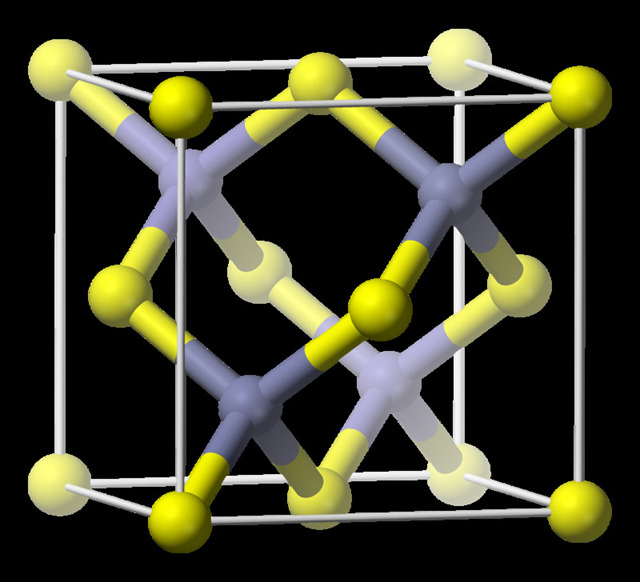 The hardness that diamond possesses comes from its chemical structure, which is made up entirely of carbon, with very few impurities. In diamond, the carbon atoms are arranged in a cubic crystal structure, which is a pattern of 8 atoms that repeat to form a lattice. This, mathematically, forms a perfectly structurally sound arrangement, the likes of which have been copied by engineers when building large structures (Shelah, 2010). This makes diamond the hardest naturally forming material on earth, and is the reason that these days, it is prized not just as a gemstone, but also used in many industrial applications for cutting and drilling (Schreiner & Eisenberg, 2012).
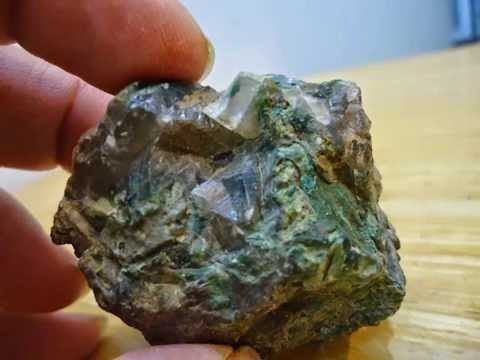 Most diamonds formed on earth were created between 1 billion and 3 billion years ago. They were formed deep in the bowels of the earth, between 200 and 800 kilometres below the surface where the temperature and pressure allow carbon containing material to dissolve off other impurities and form diamond (Tappert & Tappert, 2011). Then, volcanic eruptions bring the diamonds to the surface, embedded within igneous rocks known as kimberlites. Kimberlites on the earth’s surface are rare, and not all contain diamond, but they are well sought after by humans for the chance that they might. Most diamond mines today are built around kimberlite deposits (Smillie, 2014).
Diamonds in space however are quite common, approximately 3% of the carbon found in meteorites are found as nano diamonds, which are extremely small diamonds with a diameter of only a few nanometres. Space diamonds are thought to be formed in collapsing stars, where the temperature and pressure are adequate for their creation. For an excellent earthcache about space diamonds in meteorites, see GC6EK8H, Murchison Meteorite – The building blocks of Life.
Up until the discovery of diamonds in the 1700s in Brazil, the only commercial source of diamonds in the world was India. India traded diamonds all over the world for their use as both gems and for engraving. The Chinese were known to use diamond to engrave jade as early as the 3rd century BC and there is evidence of India trading diamond to ancient Rome. The use of diamonds in rings can be traced back to the Roman times, where the natural properties of light reflection were said by the naturalist and philosopher, Pliny, to “baffle poison, keep off insanity, and dispel vain fears”. However, during this time, the use of diamonds in engagement rings was rare as other gemstones such as ruby and sapphire were more desirable.(Oldershaw, 2003)
By the middle ages though, their use as an engagement ring was much more common, particularly amongst the aristocracy. The worldwide value of diamonds sored as there were very few places where they could be sourced(Ethan 2011).
This continued up until the 1860s when diamonds were discovered in abundance in South Africa and the formation of the world-famous company DeBeers. Through the 1860s, 1870s and 1880s the South African diamonds flooded the market, however, this only succeeded in drastically dropping the value of diamond to the point where in the 1880s, they were a relatively common gemstone(Falls, 2014).
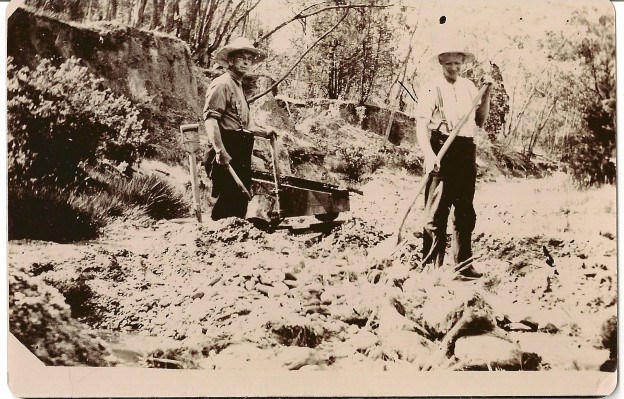 Which brings us to the location of this earthcache. Reedy Creek, near Eldorado. Imagine this spot in the 1880s, full of miners digging away at the banks, running sand and sediment through sluices and pans, all in the feverish search of that rare commodity, gold. However, occasionally in the gold miners’ pans as they swished the water and sediment around, they came across a brilliant sparkling rock which no doubt caught their attention. Most gold miners wouldn’t have even known what it was, after all it wasn’t gold, it wasn’t what they were looking for. Those few miners who may have known what it was might have picked it out and pocketed it, more for novelty value than financial. Those that didn’t recognize it probably threw it back in the creek. It was diamond, but at the time its value was insignificant when compared to the gold that the miners sought.
 The DeBeers company, who owned more than 80% of the diamond market at the time had learnt a valuable lesson from the sudden price drop due to the flooding of the market. The economic truth of the supply and demand concept was the reason behind the fall in value. But the solution was simple. DeBeers began regulating the supply of the diamonds through closing many of its diamond mines and essentially locking up most of the world’s diamonds (Gregory, 1962). Over the ensuing decades the price of diamonds began to rise again.
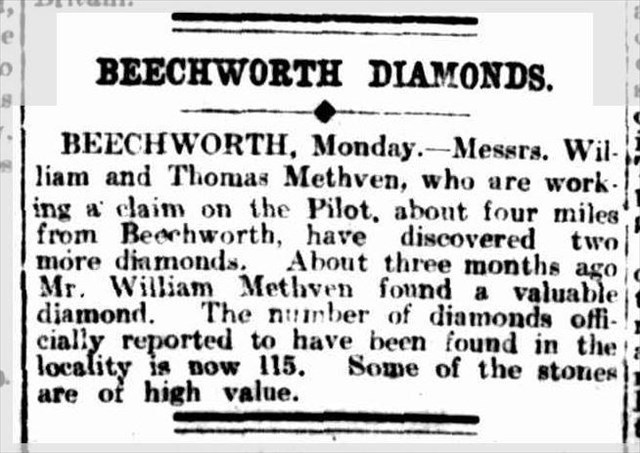
By 1917, prospectors who were still tilling over the sands of Reedy Creek for gold, were continuing to discover diamonds, but instead of tossing them back in the water, their discoveries were being reported in the newspapers (see article right, The Argus newspaper 25th Sep 1917)with some 5 ca diamonds that were discovered selling for as much as £175. These days similar diamonds would sell for as much as $50,000!
 As the demand for diamonds continued to skyrocket, mainly due to an extremely effective advertising campaign by DeBeers that extended from the 1930s right through to the 1980s, the value of diamonds increased as well(Falls, 2014). To the point now where the most expensive diamonds in the world are valued in the hundreds of millions of dollars and the most expensive diamond, the Koh-i-Noor, meaning “mountain of light”, a 105 ca white diamond discovered in India in 1294 is estimated to be currently worth nearly 2 billion dollars.
So why are diamonds being found in Reedy Creek of all places? Well, the Victorian State Government, on its earth resources website explains that there is likely an undiscovered kimberlite resource upstream, causing the now hundreds of diamonds that have been discovered to be washed down by the creek. The website goes as far as to say that the Beechworth diamonds represent the only possible potential commercial production of precious or semi-precious gems in the entire state of Victoria (see https://earthresources.vic.gov.au/geology-exploration/gemstones).
So now you know how diamonds are formed and why they are so valuable. To claim this earthcache as a find, you need to send the answers to the following questions to me. You are welcome to log this as a find straight away but if I have not received your answers within 2 weeks, your log may be deleted.
Question 1 – Describe the chemical structure of diamond, how and where on earth is it formed.
Question 2 – Standing at the GZ location, which direction (North, South, East or West), do you think the diamonds come from and how do they get here from where they are formed?
Question 3 – Check out the sand in the creek. Using the Wentworth scale detailed below, classify the sand in the creek according to grain size and tell me how easy you think it would be to spot a tiny diamond in this sand.
- 0 = Very coarse sand
- 1 = Coarse sand
- 2 = Medium sand
- 3 = Fine sand
- 4 = Very fine sand
- 5 = coarse silt
Question 4 – If you happen to find a diamond, describe the four C’s to me. Remember though that fossicking for minerals in Victoria technically require a licence. If you want to have a good hunt around for a diamond you should visit the Victorian State Governament Website on Earth Resources and Recreational Fossicking.…
- Colour – the colour of the diamond
- Carat – the weight of the diamond
- Clarity – the lack of defects or foreign material within the diamond
- Cut – the way the diamond has been shaped (probably none as any diamonds you find here won’t have been shaped yet.
You will need to send the diamond to me (for verification purposes of course). If you don’t find a diamond just tell me you didn’t find one, but let me know how long you spent looking.
Question 5 – Describe how you found Reedy Creek at the time of your visit, plus include a photo of Reedy Creek at the time of your visit, make sure you get the high bank opposite the GZ location in the shot and if you are feeling particularly photogenic, you can include yourself as well too (optional selfie).
References:
Ethan, E. (2011). Diamonds. Gareth Stevens Publishing: New York.
Falls, S. (2014). Clarity, Cut, and Culture: The Many Meanings of Diamonds. NYU Press: New York.
Gregory, T. (1962). Ernest Oppenheimer and the economic development of South Africa. Arno Press: New York.
Manutchehr-Danai, M. (2009). Dictionary of Gems and Gemology. Springer: Berlin.
Oldershaw, C. (2003). Guide to gems. Philips: London
Schreiner, E., & Eisenberg, T. (2012). Diamonds: Properties, Synthesis, and Applications. Nova Science Publishers, Inc: New York.
Shelah, S. (2010). Diamonds. Proceedings of the American Mathematical Society, 138(6), 2151-2161. American Mathematical Society: Providence
Smillie, I. (2014). Diamonds. Polity Press: Cambridge.
Swartz,C. (2019). Let’s look at diamonds. Boy Scouts of America: Irving.
Tappert R., Tappert M.C. (2011). The Origin of Diamonds. In: Diamonds in Nature. Springer: Berlin.