Velkommen til en cache med udsigt til Storstrømsbroen
English below

Historie
Fra 1886 begyndte man at undersøge mulighederne for en jernbanebro over Storstrømmen. Først planlagde man en lavbro der dog ville forhindrer skibstrafik. Da forslaget kom til afstemning i rigsdagen i 1910 manglede der en stemme da finansminister Niels Neergaard var kommet til at gå. Da antallet af biler steg, besluttedes det at der skulle bygges en kombineret jernbane og bil bro. Man indførte en afgift på benzin på 1 øre/liter til at finansierer byggeriet som gik i gang i 1933.
Broen blev indviet i 1937 og var blevet 3.199 meter lang med to vognbaner og et togspor. I næsten 30 år var Storstrømsbroen den længste bro i Europa.
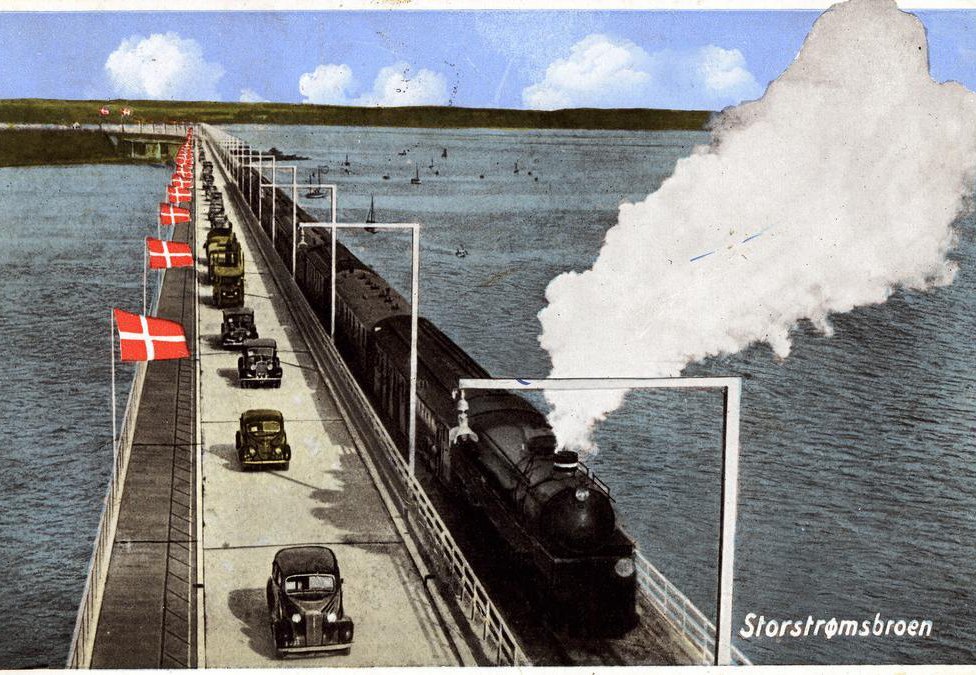
Foto fra indvielsen
I de senere år har broens tilstand været ringe og togtrafikken har måtte være indstillet i en periode pga. revner i konstruktionen.
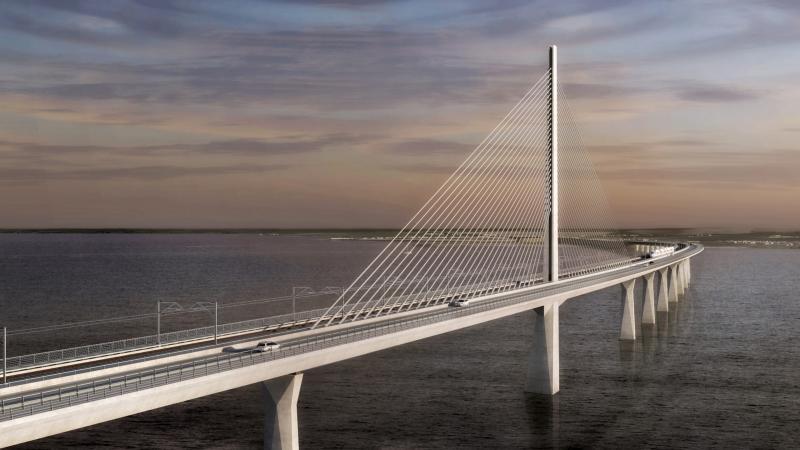
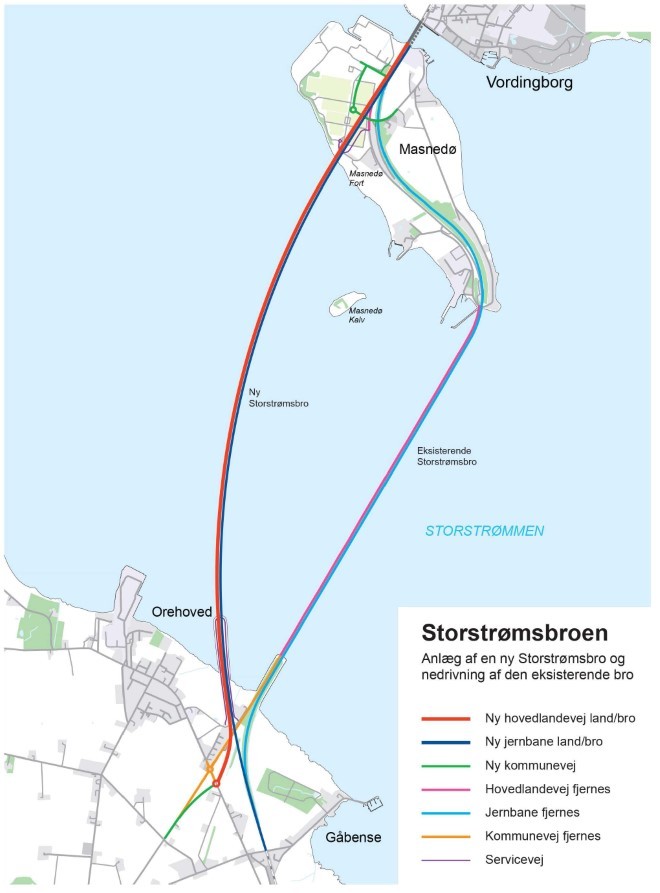
I forbindelse med den nye Femern forbindelse bliver der bygget en ny bro. Den bliver med to jernbanespor hvor der kan køres op til 200km/t.
Gammel film om Storstrømsbroen'
English:
Welcome to a cache with a view of the Storestrøm bridge
History
Plans of a railroad bridge across the Storestrøm began in 1886. The first plan was to build a low bridge that would obstruct shipping. The proposal lacked one vote when it went to parliament because the secretary of finanse, Niels Neergaard, had just left the parliament hall. As carnumbers rose it was decided to build a combined rail- and roadbridge and it was decided to tax gasoline with 1 øre/liter to fund the building project which commenced in 1933.
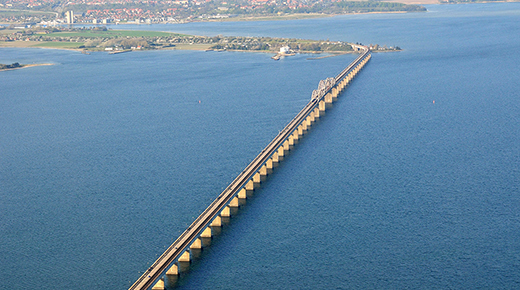
The bridge was opened in 1937 and totalled 3,199 meters with two car lanes and one set of rails. For almost 30 years the Storstrømsbro was the longest bridge in Europe.
Over the later years the condition of the bridge has deterioated and rail trafic has been holded in periods due to cracks in the construction.
As part of the new Femern connection a new bridge is being build. It will have two sets of rail where the trains can drive up to 200km/h
History
Plans of a railroad bridge across the Storestrøm began in 1886. The first plan was to build a low bridge that would obstruct shipping. The proposal lacked one vote when it went to parliament because the secretary of finanse, Niels Neergaard, had just left the parliament hall. As carnumbers rose it was decided to build a combined rail- and roadbridge and it was decided to tax gasoline with 1 øre/liter to fund the building project which commenced in 1933.
The bridge was opened in 1937 and totalled 3,199 meters with two car lanes and one set of rails. For almost 30 years the Storstrømsbro was the longest bridge in Europe.