Be careful when approaching this earthcache. The rocky terrain can be slippery. The footing is uneven so please use care when exploring the area.
To log this earthcache, please don’t stress about answering the questions. Simply send your best attempts in a private message to me, (the cache owner), and then go ahead and log it as found.
You don’t need to wait for my approval. All attempts will be accepted.
Go ahead and have fun learning! 
- [REQUIRED] Please post a photo in your log of yourself or a personal item with the lava columns to prove you visited the site.
- Are the columns all similar, or varying shapes and sizes?
- Are most of the columns hexagons or are they any other shapes? Do any have four or eight sides?
- Do you think this lava was fast cooling, or slow cooling? Why?
This earthcache has been submitted for the Planetary Geology on Earth series of EarthCaches created to give geocachers the opportunity to view and learn about geological features on Earth that also exist on Mars, or other planets with documented geology.
The basalt columns found here in Prim Point have also been found on Mars.
The High Resolution Imaging Science Experiment on the Mars Reconnaissance Orbiter discovered multi-tiered columnar jointing on Mars as shown in the photo below.
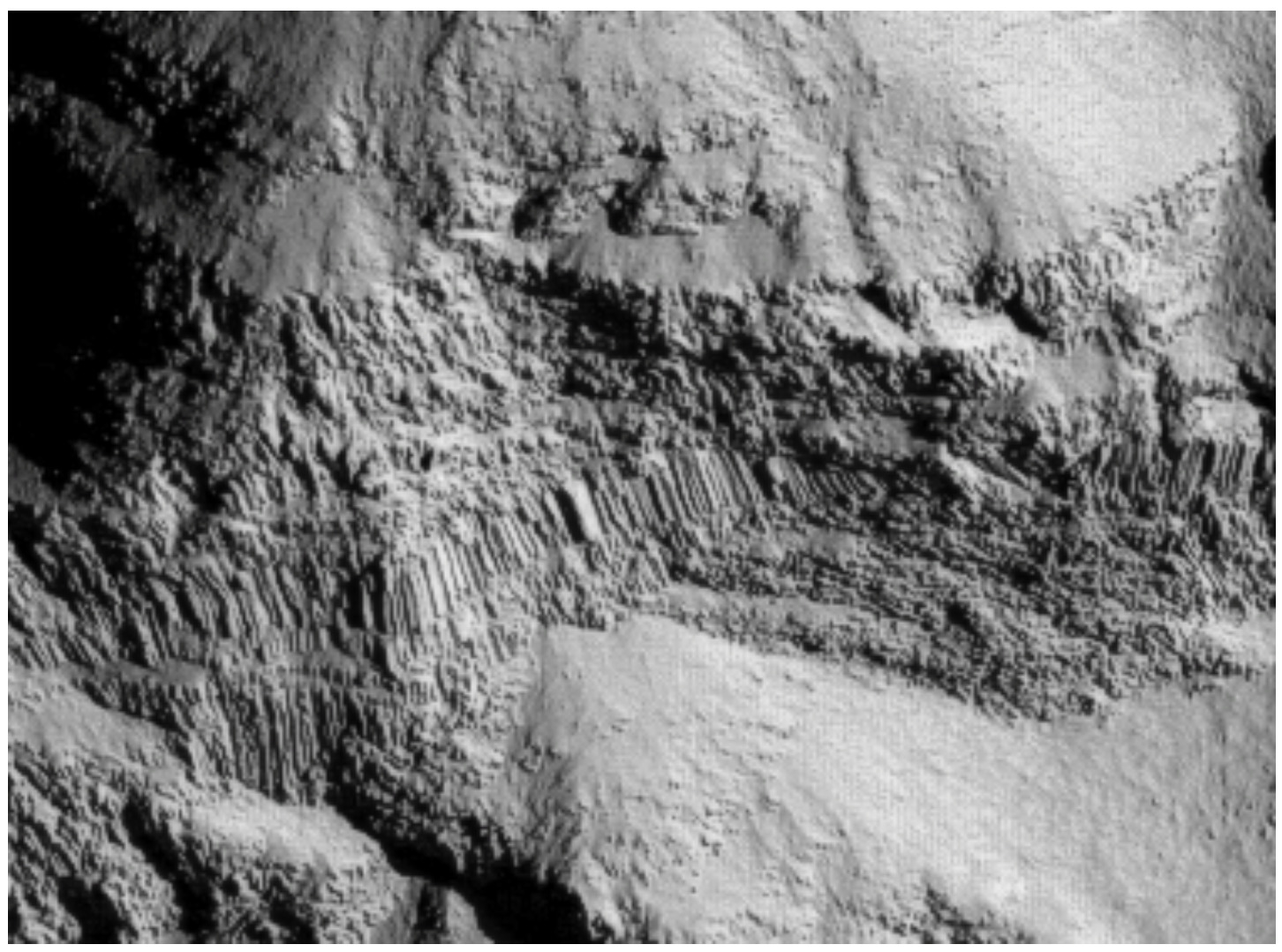 Columns above seen in the wall of an impact crater on Mars at the discovery site, in Marte Vallis between Elysium and Amazonis plana.
Since the initial discovery image, more columns, some with entablature, have been observed at multiple sites on Mars. Nearly all of these sites occur in the uplifted walls of impact craters in regions with histories of flood volcanism. The local geologic history leads to the suggestion that these are columnar basalts.
In terrestrial columnar lavas a major factor controlling the width of columns is the cooling rate of the layer of plastic lava just beneath the solidified lava.
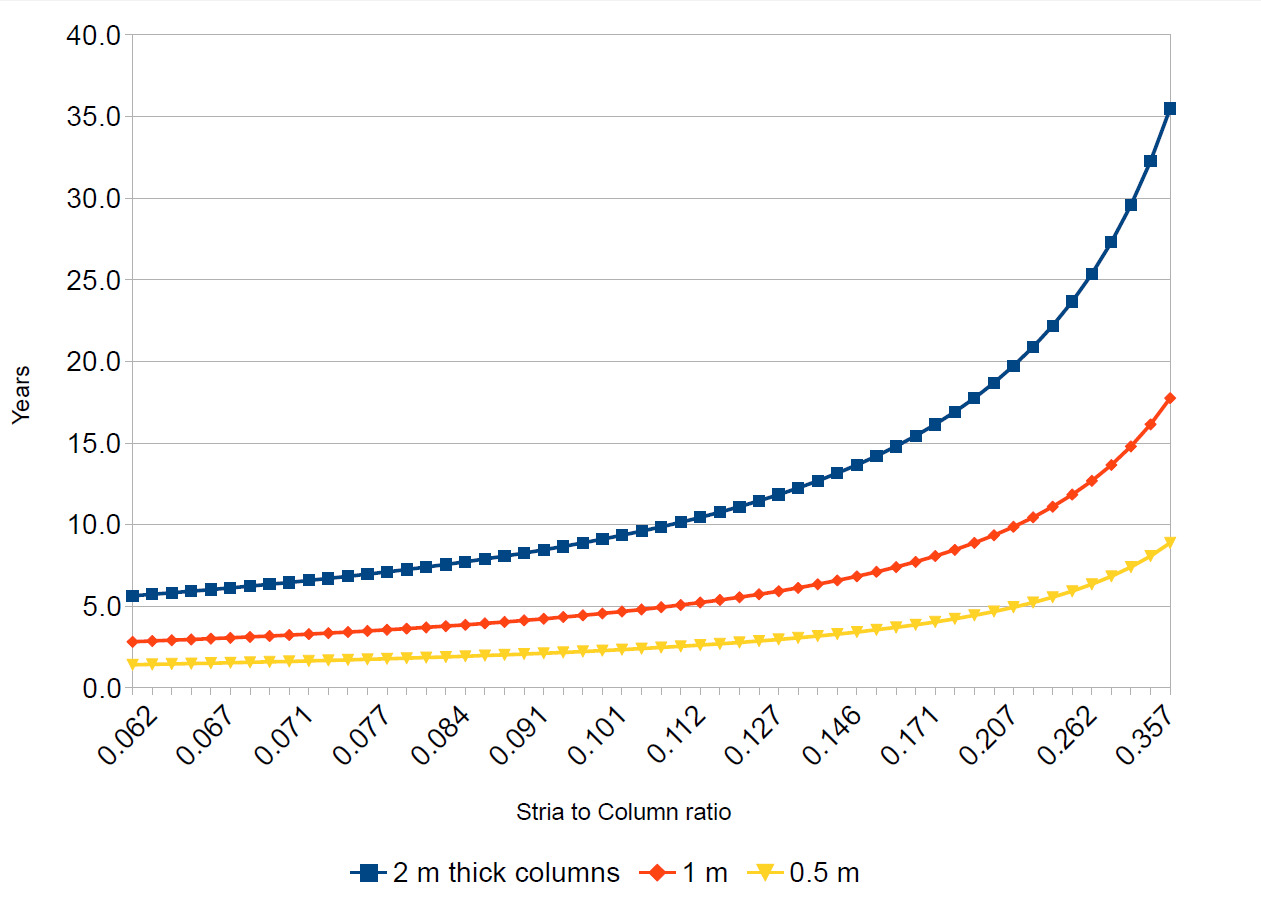 Stria to joint spacing ratio vs time to form 40 meters of colonnade. The different color plots show the times required to form 2-meter, 1-meter, and 0.5-meter thick columns over the entire height of a 40-meter-thick flow.
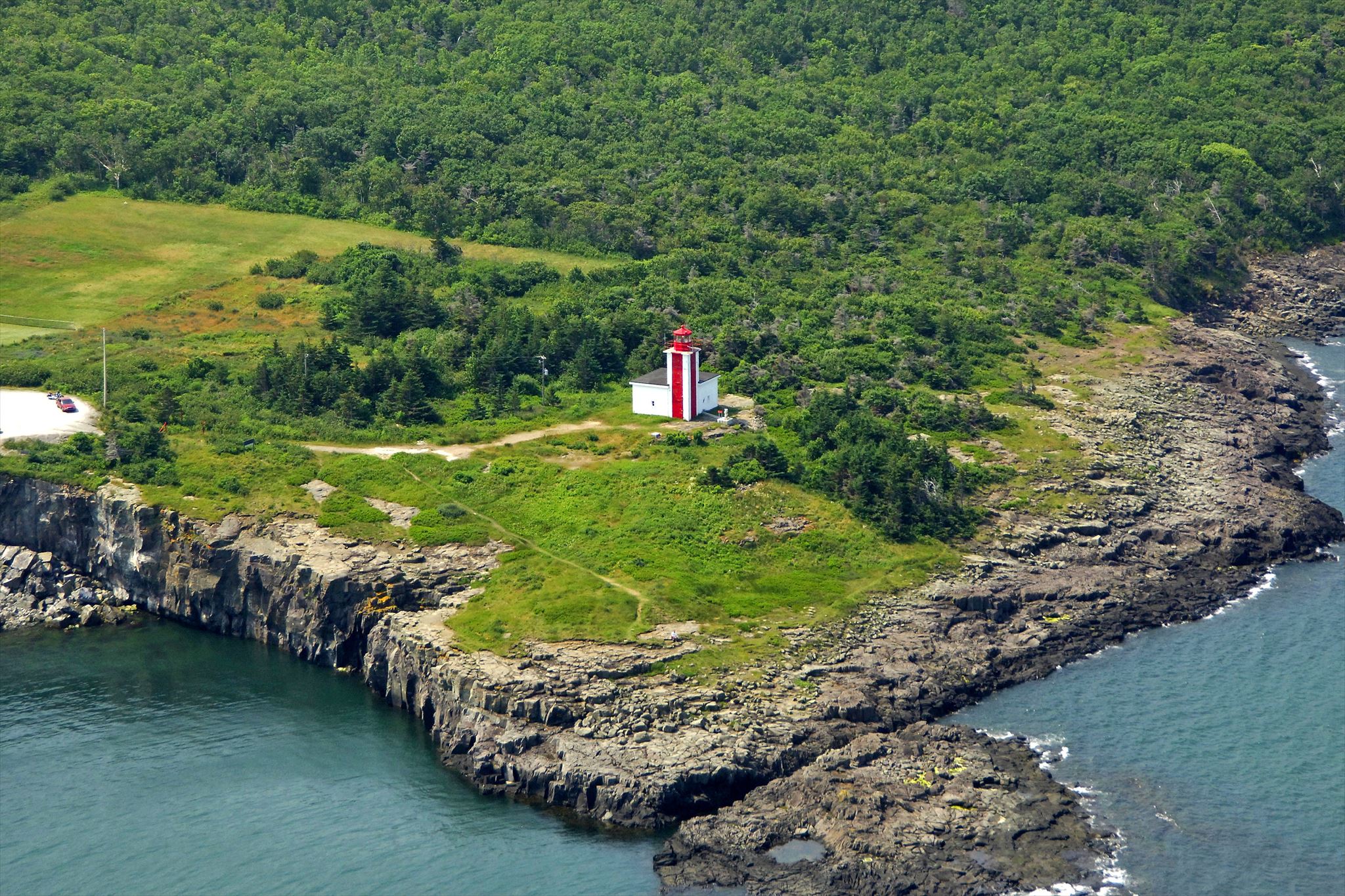
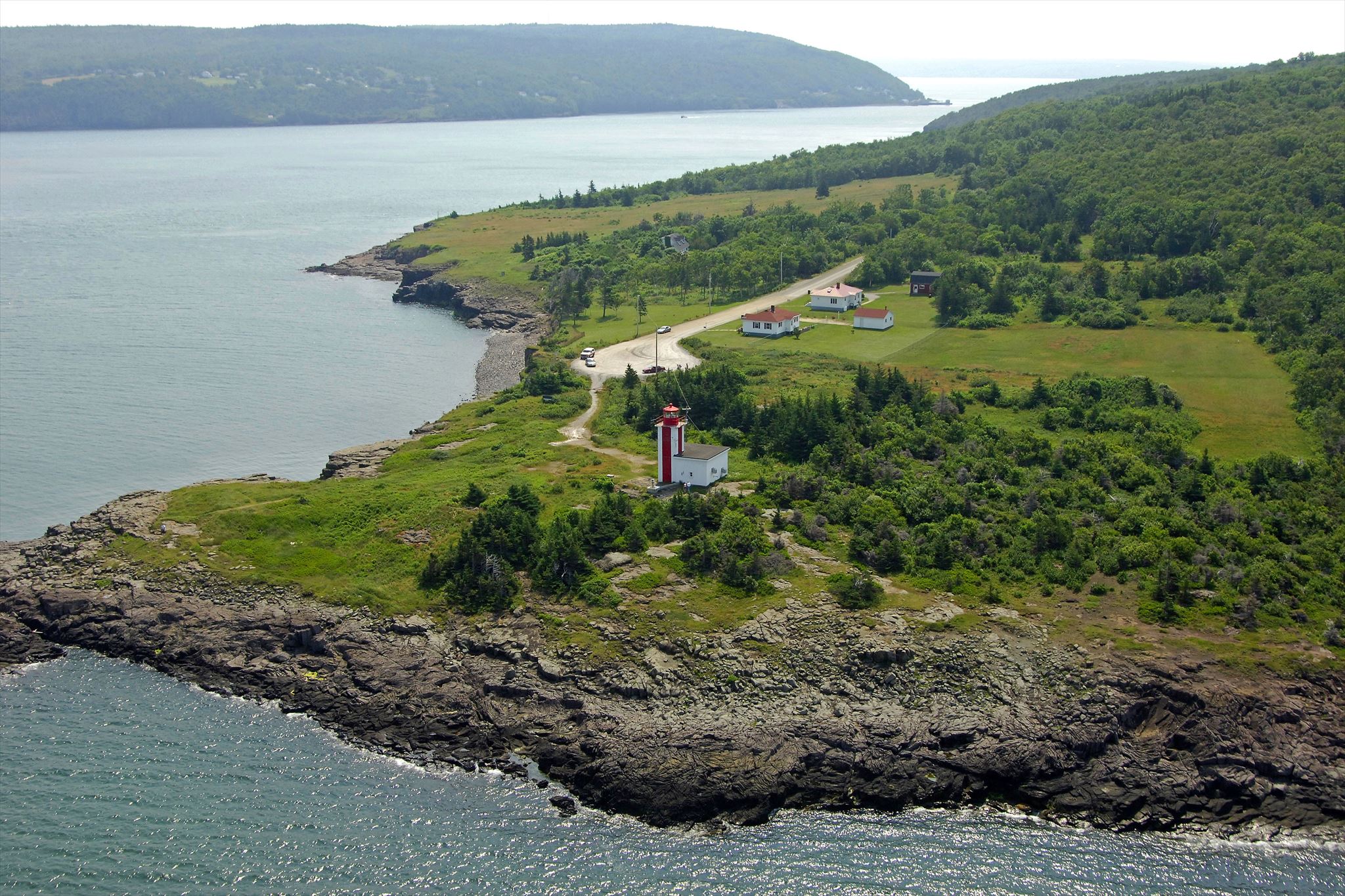
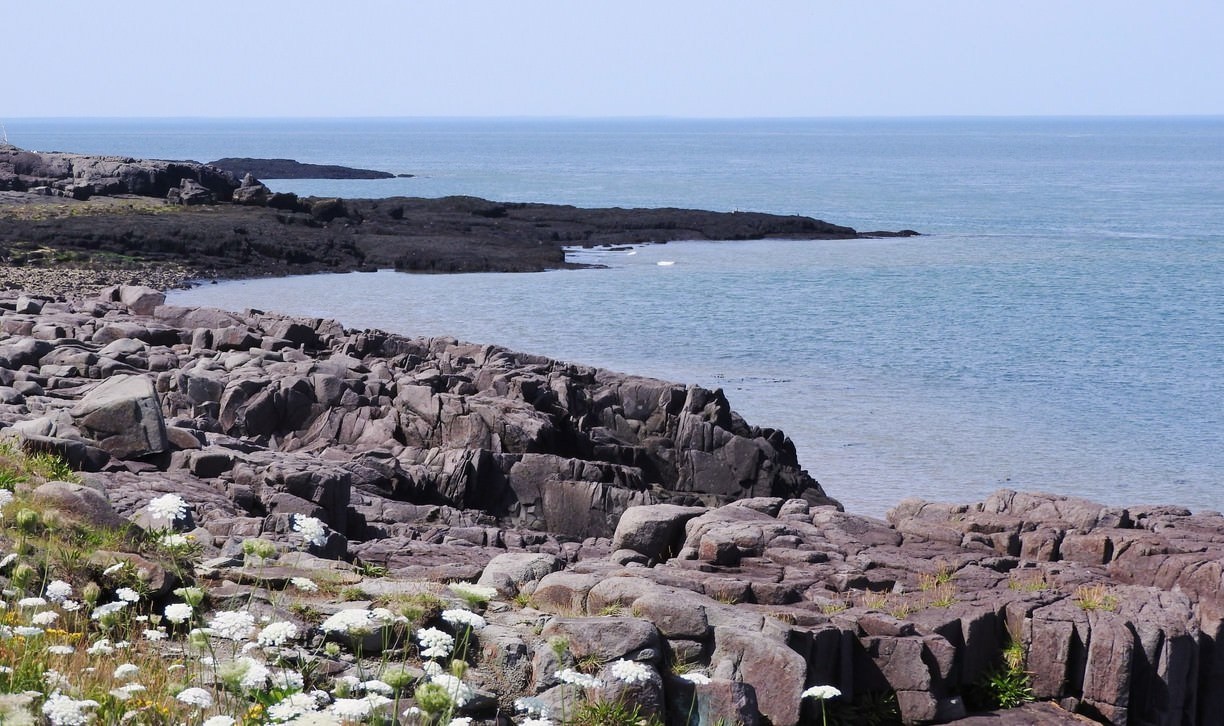
The lighthouse here at Prim Point sits upon thousands of other, smaller basalt columns, not quite so regular in form and mostly hidden underfoot.
At the end of the Triassic period, which spaned 50.6 million years from the end of the Permian Period 251.9 million years ago, deep faults opened in this part of the Pangaean supercontinent. Pangaea was a supercontinent that existed during the late Paleozoic and early Mesozoic eras. It assembled from earlier continental units approximately 335 million years ago, and it began to break apart about 175 million years ago. In contrast to the present Earth and its distribution of continental mass, Pangaea was centred on the Equator and surrounded by the superocean Panthalassa. Pangaea is the most recent supercontinent to have existed and the first to be reconstructed by geologists.
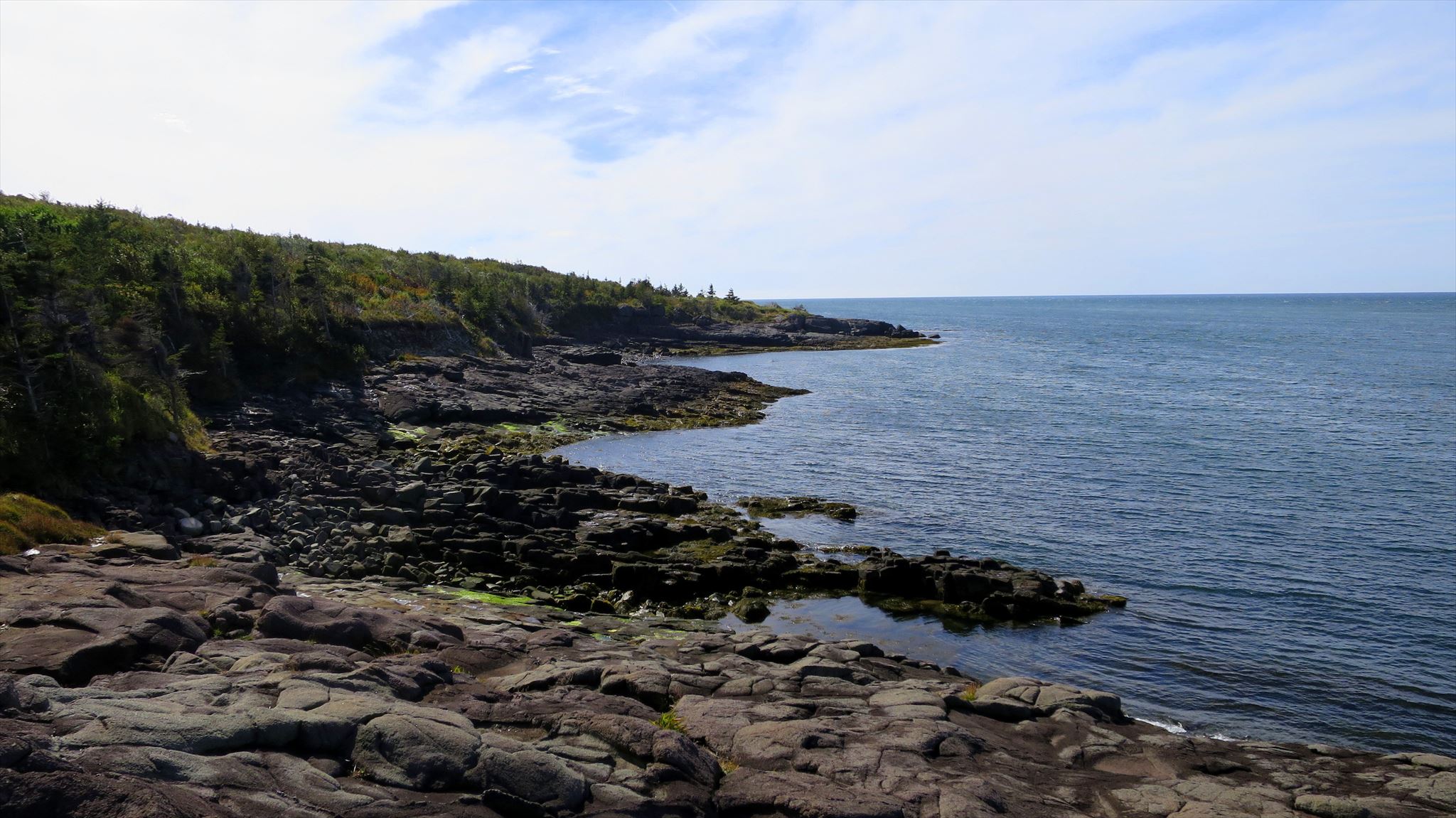
From the Pangaean period, red-hot lava poured out into a rift valley known as the Fundy Basin. The rock at Point Prim is basalt, formed as a final, vast sheet of lava covered the region to a depth of 150 metres.
Cooled by the ground below and the air above, the sheet of lava - initially about 1200*C - slowly lost its heat. The molten rock lava is generated by geothermal energy and expelled through fractures in planetary crust or in an eruption, usually at temperatures from 700 to 1,200 °C (1,292 to 2,192 °F). Most solids shrink slightly as they cool, and rock is no exception. The slowly dropping temperature and even texture of the basalt caused cracks to form in a regular, roughly hexagonal pattern. The cracks spread vertically through the rock as the temperature dropped, eventually forming columnar basalt, a type of rock formation beautifully preserved here.
Weathering along vertical column edges emphasizes the polygonal pattern of cracks in the basalt.
Geologists watched and measured a cooling lava lake in Hawaii for several months in the 1960s. Cracks formed on the surface within minutes once the lava stopped flowing. For months as the lava continued to cool, cracks spread downward, creating small seismic tremors and audible snaps and booms, mostly during the cooler hours between 11:00 pm and 3:00 am.
A similar process happened right here, long ago. Look for areas where the basalt is divided by cracks into a tile-like pattern. In some outcrops weathering has revealed how the cracks extend vertically, creating sets of closely packed columns. The columns are typically hexagonal but may have four to eight sides. You may find examples where individual columns cluster to form a larger, approximately round group 1 metre or more across - megacolumns that subdivided as cooling continued.
Silica-rich fluids circulating along the cracks bleached and hardened the margins of some columns. Where weathering has emphasized this effect, the addition of silica has left each column with a rim of harder, more resistant rock encircling a little basin formed by the more easily worn centre.
Slower cooling of lava leads to a higher proportion of regular, six-sided columns with larger diameters. Faster cooling leads to irregular, small column shapes.