ROCK CITY PARK
Adults $5.00 / Seniors $4.00 / Children 6-12 $3.00
Open Memorial Day to Labor Day from 9 to 5
THIS IS SEASONAL, BUT KEEPING IT ACTIVE FOR THOSE PLANNING A VISIT.
THANK YOU Cindy Smith (Park Director) and Dale Smith (Park Ranger) for permission to share this earthcache site.
THANK YOU Dr. Ovidiu D. Franţescu @ Pitt Bradford for your help with this earthcache.
THANK YOU University of Pittsburgh Bradford for the educational guide.
Enjoy your stroll and learning adventure as you wind your way around "gigantic rock formations". If you have all the required pictures, see Cindy or Dale for a special gift.
EARTHCACHE REQUIREMENTS
Each cacher must send his/her own answers BEFORE logging a find. ... "Geocachers must complete the tasks before they log the EarthCache as found." (4.3. EarthCache logging tasks)
Enjoy the journey (learning adventure) as well as the destination (smiley earned). Remember to take only pictures and leave only footprints. To get credit for this Earthcache, complete the following tasks:
1. MESSAGE …. As you descend the iron stairs, look at the rocks. Describe changes in the depositional layers.
2. MESSAGE …. Where did the major amount of eosion of the sandstone occur - top / middle / bottom?
3. MESSAGE …. Visit the Half Sphinx. It is made of both conglomerate and sandstone. a. Describe location of conglomerate. / b. Describe location of sandstone.
4. LOG …. Post a picture anywhere along the route that shows where a large bed of sandstone once existed. This picture is your log signature.
OPTIONAL - Please respect the time and effort involved in creating this earthcache by adding A and B to your log.
A. JOURNEY OF THE MIND ... Science explains what we observe. Relate (in your own words) something you found interesting in the reading. This adds to your learning adventure and your log.
B. JOURNEY OF THE HEART ... Art shares our personal experience of what we see. Share something special you found on site, and why it is special to you. This is a memorable addition to your log and will make other hearts smile.
Journeys of Heart and Mind ...
Stories to Touch the Heart and Puzzles to Challenge the Mind / Rainbow Tree Story
AGE OF ROCKS
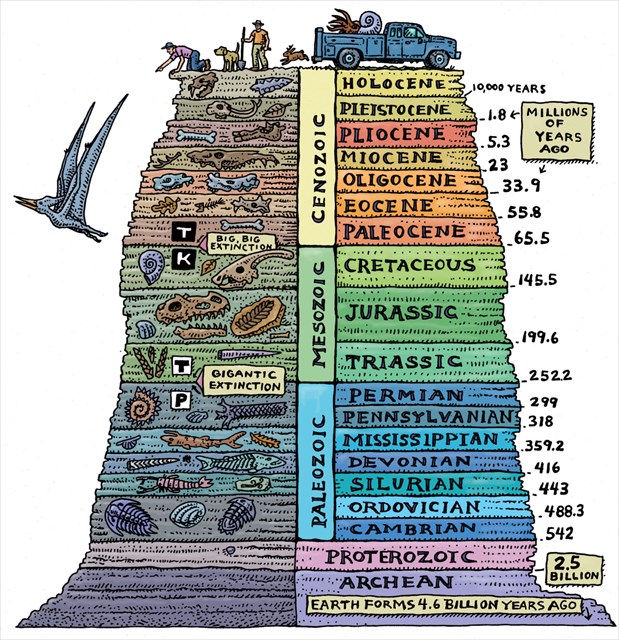
The age of the rocks is of the Early Pennsylvania Period which was 320-315 million years ago (mya).
DEPOSITIONAL RECORD
The rocks at Rock City Park were deposited by a river system that flowed throughout this area.
Changes occur due to fluctuations of the depositional agent (water) and/or changes in the source of the sediment.
EROSIONAL UNDERCUTTING
The two main types of rocks you see at Rock City Park are conglomerate and sandstone. Since sandstone is the softer rock, it will erode faster leaving behind the more resistant conglomerate. This entire area was once a river system, so deposition and undercutting along the banks was prevalent. Erosion of the sandstone will result in gaps, crevices, etc. indicating that sandstone was once deposited in the area.
ROCKS
The two main types of rocks found at this park responsible for the formations you see are conglomerate and sandstone. Both sediments were deposited together, in alternating sequences. Sandstone is the softer rock and is weathered more compared to the harder conglomerate. Although it is called The Olean Conglomerate, the sandstone in this particular place is the dominant type of rock.
CONGLOMERATE (Pieces of other rocks)
What Does It Look Like? Conglomerate looks like a mixture of sand and different sizes of rounded pebbles. The pebbles are the important observation.
What Minerals Make Up the Rock? mostly quartz
How Was It Formed? Sand and pebbles collect along sea shores, lake shores, or river banks. They are compacted by the weight of sediments that collect above them and cemented by material dissolved in the water that seeps through them.
SANDSTONE (Cemented sand)
What Does It Look Like? Sandstone is often red to brown, light gray to nearly white. Sometimes it is yellow or green. It usually is composed of rounded grains that are all of the same size; and it is usually medium grained. Some sandstones show slight color variations in layering.
What Minerals Make Up the Rock? Quartz; Sometimes contains: feldspars, mica, glauconite (in green colored sandstone), magnetite, garnet, rutile, ilmenite. FEELS GRITTY.
How Was It Formed? Quartz sand that is produced by the weathering of other rocks (such as granite, gneiss, and other sandstones) is deposited by rivers, waves, or wind. The sediment may have been a sand bar, an ocean beach, or desert sand dunes. The sand is buried under other sediments, compacted by the weight of those sediments, and cemented by material dissolved in water that seeps through it.
RESOURCES
Rock City Park ... University of Pittsburgh Bradford Educational Resource Guide
https://www.catchmentsandcreeks.com.au/docs/Watercourse-erosion-1.pdf