Fink Park Sandst🌎ne EarthCache
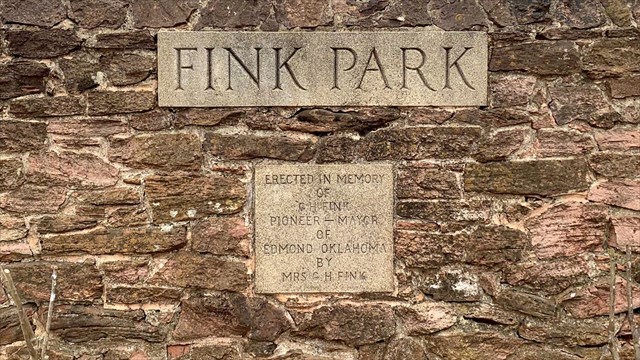
Located in the heart of Edmond, OK, Fink Park has an excellent outcropping of sandstone right in the middle of the park and is a great spot to make some geological observations.
To get credit for this EarthCache, be sure to complete the logging tasks at the bottom of this page.
As this is an EarthCache, there is no container to find. Instead you will have an opportunity to learn about weathering and how it is different than erosion. But before we begin, please note the following:
- Fink Park is open from sunrise to sundown all year round.
- There are two parking areas provided for your convenience.
What is weathering?
Weathering is a natural process that breaks down rocks into smaller pieces. There are three main types of weathering – physical, chemical and biological.
Physical Weathering
Physical Weathering
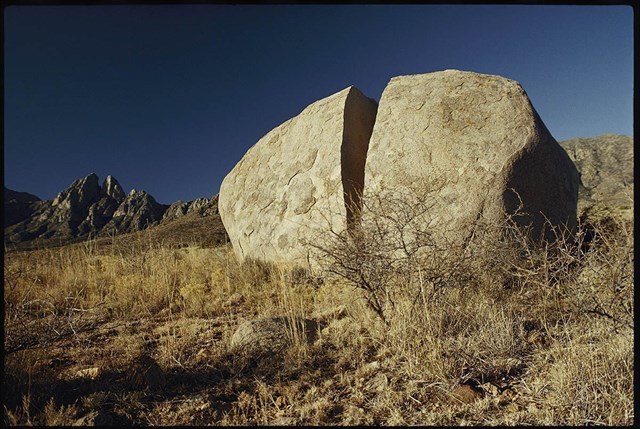
Physical weathering is caused by physical processes such as changes in temperature, freezing and thawing, and the effects of wind, rain and waves.
Temperature Changes: When a rock gets hot, it expands a little and when it gets cold, it contracts a little. When this happens many times, cracks can form and pieces of rock can fall off. This type of physical weathering occurs often in desert environments due to the temperature swings from hot during the day to cold at night.
Wind, Rain and Waves: Wind, rain and waves can all cause weathering. The wind can blow tiny grains of sand against a rock which in turn can wear the rock away. Additionally, over long periods of time, rain and waves hitting against a rock can also wear it away.
Freeze-Thaw: Water expands a little when it freezes to form ice (think water pipes bursting in the winter). If water gets into a crack in a rock and then freezes, it expands and pushes the crack further apart. When the ice melts, water can get even further into the crack where it can start the process all over again. This process of freezing and thawing can continue until the crack becomes so big that a piece of rock falls off.
Chemical Weathering
Chemical Weathering
Chemical weathering is the weathering of rocks by chemicals. Rainwater is naturally slightly acidic because carbon dioxide from the air dissolves in it. When this acidic water hits the minerals in rocks, a reaction may occur causing the rock to be weathered.
Some types of rock are easily weathered by chemicals. For example, limestone and chalk are mostly calcium carbonate. When acidic rainwater falls on limestone or chalk, a chemical reaction happens. New, soluble substances are formed in this reaction. These dissolve in the water and are washed away, weathering the rock.
Conversely, some types of rock are not easily weathered by chemicals. For example, granite and gabbro are hard igneous rocks that are weathered very slowly. However, some of their minerals can react with the acids in rainwater to form new, weaker substances that crumble and fall away.
Acid Rain: Coal, oil and natural gas are fossil fuels. When they are used, carbon dioxide and sulfur dioxide escape into the air. When the sulfur dioxide dissolves in the water in the clouds, it makes acid rain.
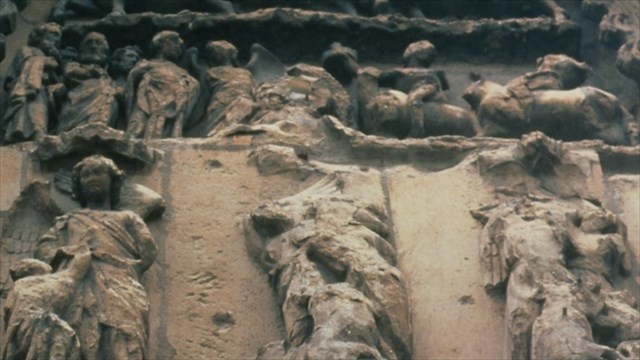
Acid rain harms fish and trees, but it also makes chemical weathering happen more quickly. As you can see from the image above, buildings and statues made from rock are damaged as a result. This is worse when the rock is limestone rather than granite.
Biological Weathering
Biological Weathering
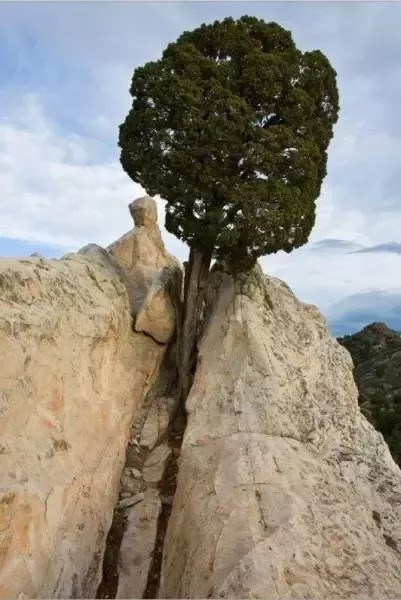
Biological weathering is caused by animals and plants. For example, animals such as rabbits can burrow into a crack in a rock, making it bigger and splitting the rock.
You may have seen weeds growing through cracks in the pavement or perhaps bushes or trees growing from cracks in rocks. This is because plant roots seek out sources of water and can grow in these cracks. As they grow bigger, the roots slowly push open the cracks and make them wider and deeper. Eventually pieces of rock may separate completely.
People can even cause biological weathering just by walking. Over time, consistently used paths may wear away because of all the shoes walking on them. The same goes for more intentional acts such as carving symbols or words into rock. This can weaken the edges causing additional pieces to fall away.
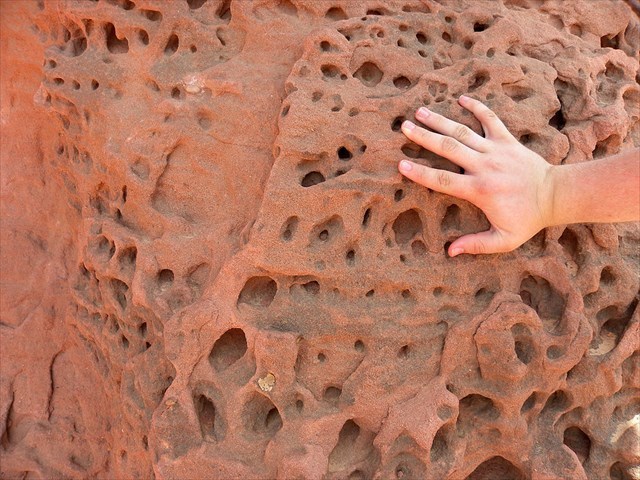
Honeycomb patterns
Honeycomb Weathering
One great example of weathering you can observe here is called honeycomb weathering. Many explanations have been proposed for the way this weathering occurred.
These explanations include water abrasion, wind corrosion, short-term temperature variations, biogeochemical weathering by lichens, and finally chemical softening of the interior of the rock followed by mechanical removal of this softened material.
Currently, honeycombing is considered to be polygenetic in origin resulting from complex interactions of physical and chemical weathering processes over time.
How is erosion different than weathering?
Erosion is the process by which soil and rock particles are worn away and moved elsewhere by wind, water or ice. Weathering itself involves no moving agent of transport.
To Get Credit For This EarthCache
Copy the questions below and send your answers via geocaching messages.
- DO NOT post the answers in your log.
- Group answers are fine, just let me know who all was there.
- Note: The photo task is a requirement for each account claiming a find. See acceptable EarthCache logging tasks effective June 10th, 2019. If you don't want to post the photo with your log, you may send it to me with your answers instead.
- Please send the answers in a timely manner or it may result in the deletion of your log (no offense intended).
Logging Tasks
1| The name of this EarthCache: Fink Park Sandst🌎ne
2| In your log, provide a photo of yourself with the sandstone formation.
- If you prefer, the photo can be of a personal item here instead. Just make the photo unique to you and your visit. Feel free to have fun with this!
Look all around this sandstone outcropping and answer the following questions from your observation:
3| Based on what you've read above and what you see, describe at least two examples of weathering you find here. Give detail in your description. Bonus points for additional examples you can locate. 
4| How do you think this weathering is affecting the sandstone?
5| In your opinion, which type of weathering you found here is making the most impact? Why do you think that?
Optional: I'd love to see other photos you took from your visit here!
*IF YOU ENJOYED THIS EARTHCACHE,
CONSIDER GIVING A FAVORITE POINT!*
Sources:
Permission for this EarthCache was granted by the City of Edmond Parks and Recreation Dept.