








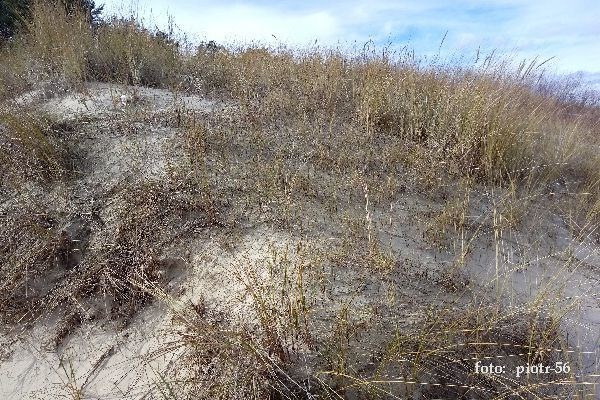

has dunes are formed
Baltic dunes began to be built at the end of the North Polish glaciation, after the Scandinavian ice land had disappeared, about 20,000 years ago. The process of creating them continues to this day.
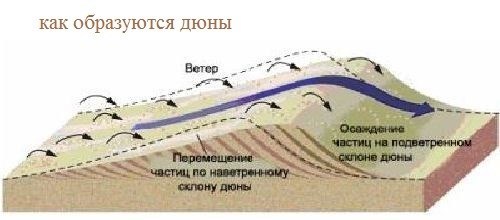
Dunes are created as a result of seawater and wind. Sea waves hitting cliff-rise stretches of the coast, flush out sand-gravel material, move it and settle it on sections of the low, flat coast. Wind, its strength, frequency and direction are of great importance in the process of formation of dunes.
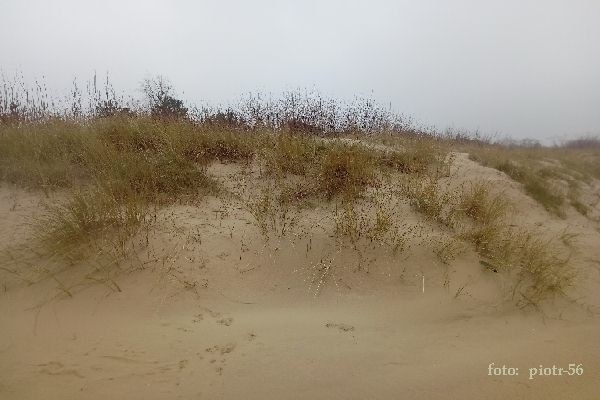
In the coastal zone there are eonumerous processes (wind activities on terrain sculpture) and abrasive, that is, abrasion of rock, cliff and other materials due to wind, tides, water heaving, mutual friction of material. The material is crushed and tipped. Sand and other small organic and inorganic materials drifted and thrown ashore by waves are transported by wind and moved towards land. Thus, at the end of flat terrain (beach) or due to encountering even a minor off-road obstacle, a sandy beach shaft is formed. Dunes-shadows are formed if the sand settles behind an encountered obstacle, where the wind loses speed, or embryonic dunes when the sand stops on a clump of vegetation.
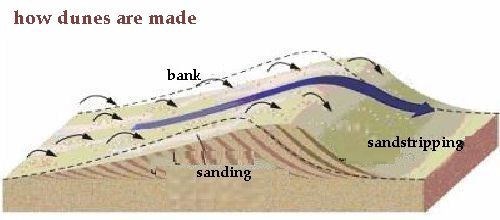
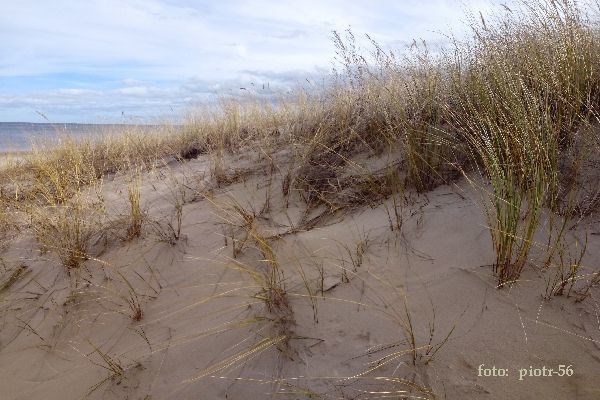
They can be from a few centimeters to 1.5 meters high. As a result of further sand supply, the original dune is formed. After a while, the dune can be poorly overgrown with fine vegetation; grasses and lichens, which we call primary plants.
Both the beach shaft and the original dune are very unstable creatures, often destroyed by strong storms and then re-awakening. Stabilization occurs after the dune has been covered by vegetation.
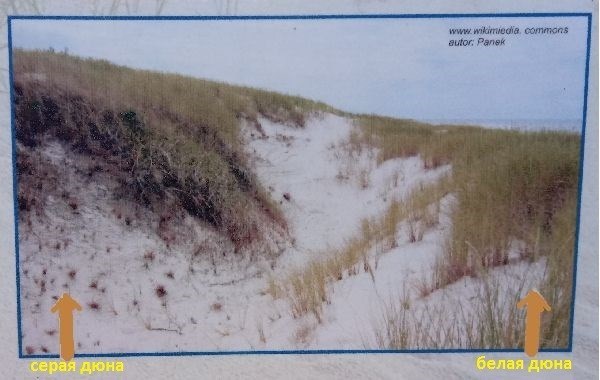
The sand carried still inland by the wind forms another sandy shaft behind the dune, which is already a more durable creation. It is a white dune, also otherwise called the front dune. It is bright, poorly overgrown. Sometimes the white dune is directly adjacent to the beach and creates a low cliff. Then another dune shaft is formed, which is more distant from the sea, sheltered from the direct action of strong wind, overgrown with grasses, shrubs and small bushes. The sand is gray, hence the name of the dune - gray dune. Moving inland, another dune is the brown dune. It is covered with pine forest. Trees are not tall, they are often distorted by strong winds.
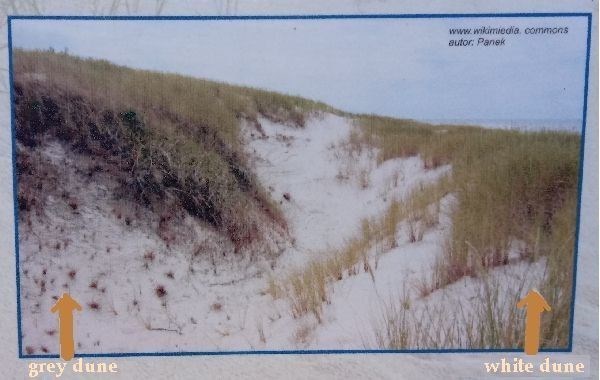
Of course, depending on the prevailing coastal conditions, coastal dynamics, eolic processes, etc., dune widths and heights can vary, there may also be temporary creations, mixed - for example, a dune shaft bearing both white and gray dune characteristics. A large influence on the size and characteristics of the dunes is affected by the vegetation that can support the accumulation of sand and perpetuate the sand forming dunes. The dynamics of dunes formation and development depend mainly on the rate of erosion - the more sandy material (more wind-borne than taken by the waves), the faster the development of dunes. The vegetation that grows the dunes is also important - they stop the sand, thereby facilitating the build-up of dunes, pouring sand into the backend of existing dunes towards the mainland and creating a new dune shaft.
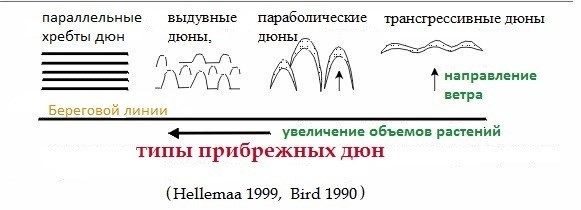
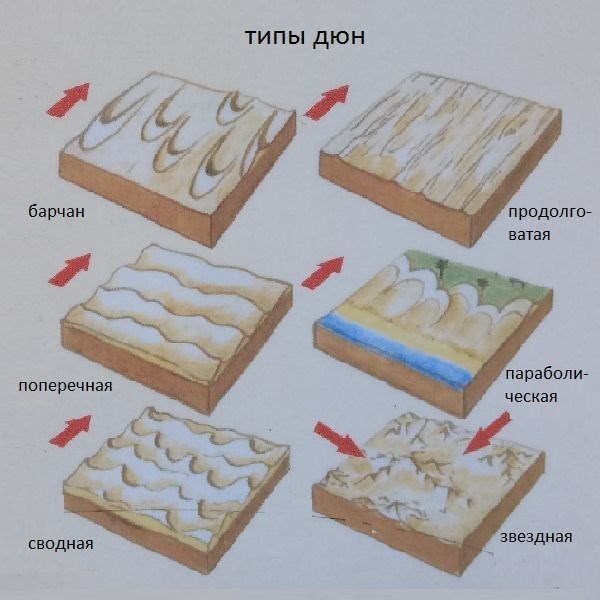
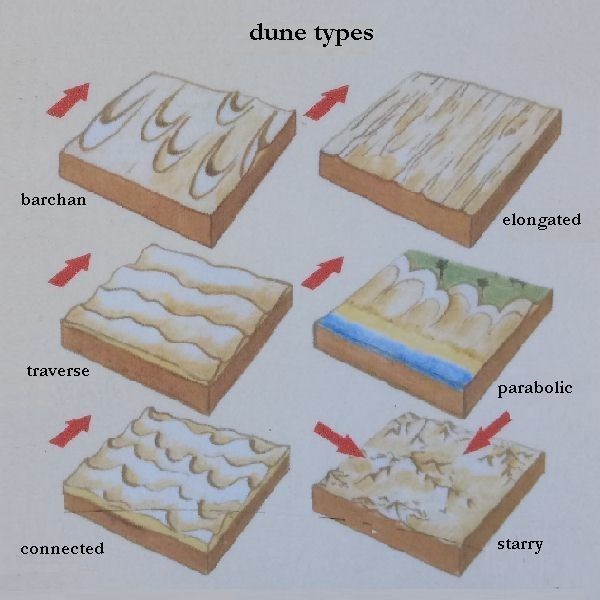
Vegetation has a big impact on types of dunes. If there is a lot of dune vegetation, symmetrical, parallel dune strips are formed. In the case of a smaller plant robe, blowing and parabolic dunes are formed, wandering. When vegetation is very poor, rare transgressive dunes can be formed, which can also be observed in Świnoujście. They resulted from human activity - the felling of trees and shrubs has led to the destabilization of existing dunes and the start of deflation processes.
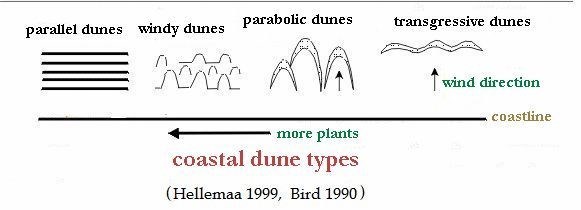
Dune processes continue to this day and are very dynamic processes; over several decades they can significantly change the topography of the site.
TASKS:
1. Where doss the sand which forms dunes come from ?
2. What granulation is the sand white and greydunes ? Why?
3. Take a photo of you with dunes in the background. Send it with your answers or attach it to your log.
Photo by the author