The Polmonty - Cheape Impact
Off the Polmont to Lauriston road is a long drive cut into the hillface, this leads to Polmont's grandest dwelling, Parkhill House. This grand building is the sole survivor of Polmont's former collection of Victorian mansions, with 1960s demolitions flattening the mansions of Polmont Park, Polmont House and Millfield among others. The present house is not the first on the site – some fragments of stones discovered in the grounds suggest that the earliest building may date from the 1400s. One has a Latin motto ‘poverty is the adversary of renown’. In 1573 the estate was called Parkend and was in the ownership of a family called Ballantyne (sometimes written as Bellenden or Bellentyne) related perhaps to the powerful Bellenden family which controlled most of the lands in the Falkirk area formerly held by the Abbey of Holyrood. This family remained here until the end of the 17th century.
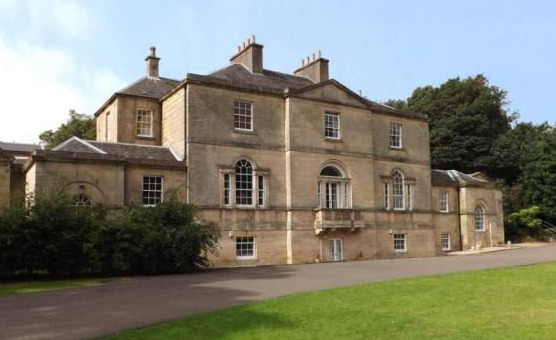
The house and estate next appears in the record in 1788 when they were acquired by James Cheape of Sauchie who seems to have changed its name from Parkend to Park Place and six years later to Parkhill. Cheape however, had more of a lasting impact in mind for his new property, and started building the present house around 1790, and it expanded in stages thereafter. The building itself is a simple three-storey oblong with a partly sunk basement. It's what the architects call a 'Palladian' mansion, meaning it has certain classical greek influences in its shape and proportions. More traditional to the architecture of the area however, is the style of the mansion's Dovecote hidden round on the west side in a courtyard.
Parkhill House
Cheape came from a successful military family with some blue blood - they were an offshoot of the Earls of Strathmore, and descended from the Lyon-Bowes family of Angus. Which makes him a distant relative of Elizabeth Bowes-Lyon, the late mother of Queen Elizabeth II, and of course the Queen herself. After the Cheape family sold the house, it would eventually fall into the hands of a notable early explorer of Australia, Thomas Livingstone-Learmonth, born in India of Scottish colonial settlers. Livingstone-Learmonth evidently had some connection to the wealthy Livingstone family living at Parkhill in the early 1800s, and after decades of exploring remote areas of Australia and amassing considerable wealth through farming there, he settled in Polmont taking up residency at Parkhill House in the late 1800s. A town and lake in Victoria, Australia were named after this influential figure during Australia's pioneering era.
For most of the present century however, Parkhill was the home of the Gray-Buchanan family, who you can find out more about in cache 5 in this series.
Cache is in an area of poor GPS reception, so a spoiler photo has been provided below. Look for this sawn off tree.

_________________________________________________________________________________________
Most of the above information was sourced from the writings of I.Scott & G.B.Bailey for the Falkirk Local History Society