 As you look at the formation in front of you, you should see multiple strata. Wait, what does that mean? Don't worry you came to the right place.
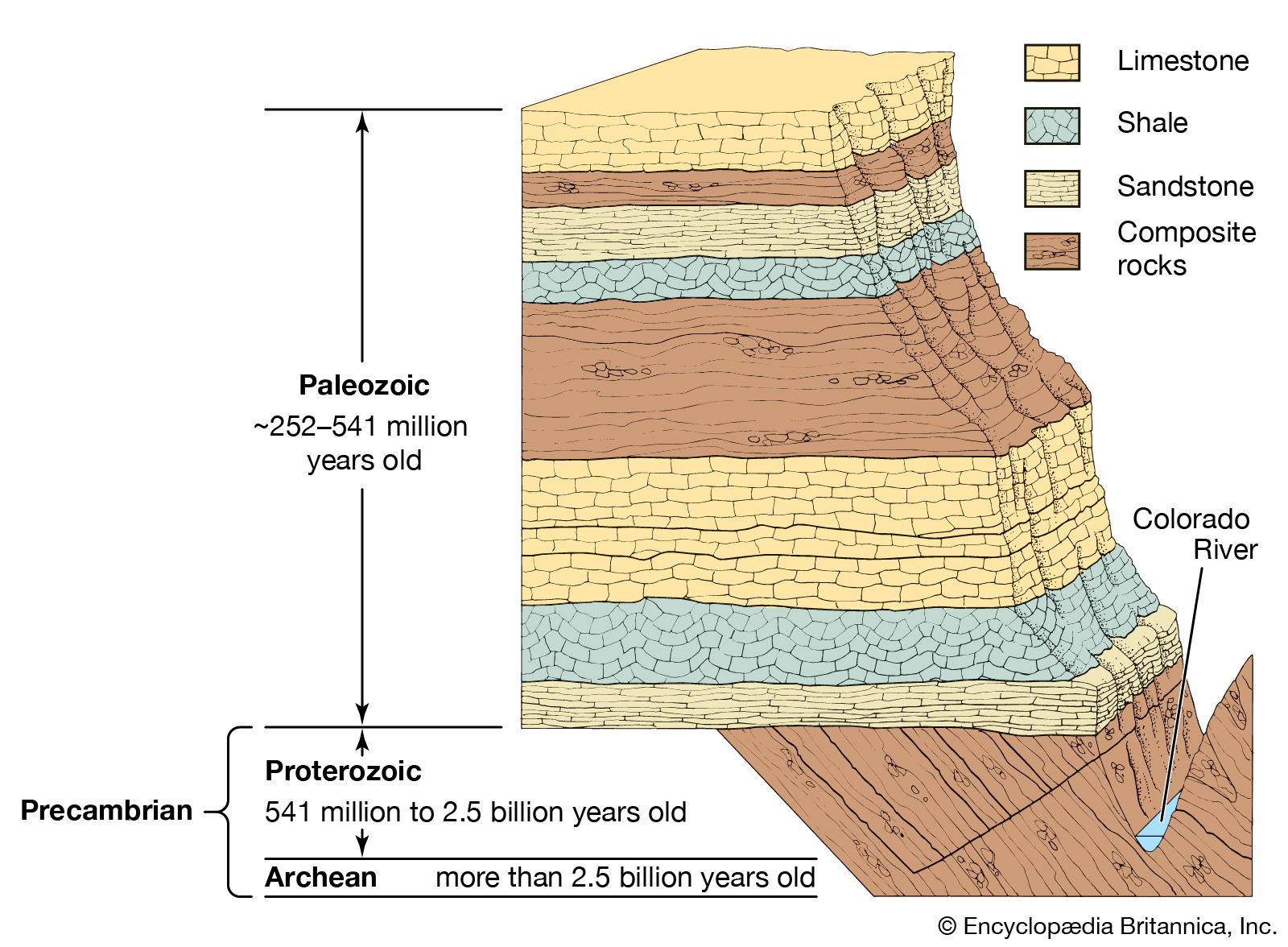
In geology and related fields, a stratum (plural: strata) is a layer of sedimentary rock or soil, or igneous rock that was formed at the Earth's surface,1 with internally consistent characteristics that distinguish it from other layers. The "stratum" is the fundamental unit in a stratigraphic column and forms the basis of the study of stratigraphy. A stratum can be seen in almost every single country in the world.
Each layer is generally one of a number of parallel layers that lie one upon another, laid down by natural processes. They may extend over hundreds of thousands of square kilometers of the Earth's surface. Strata are typically seen as bands of different colored or differently structured material exposed in cliffs, road cuts, quarries, and river banks. Individual bands may vary in thickness from a few millimeters to a kilometer or more. A band may represent a specific mode of deposition: river silt, beach sand, coal swamp, sand dune, lava bed, etc.
Geologists study rock strata and categorize them by the material of beds. Each distinct layer is typically assigned a name, usually based on a town, river, mountain, or region where the formation is exposed and available for study. For the formation in front of you, the strata have been based on local geology. You should be able to determine the layers based on physical characterisitcs such as appearance, color, and rock material composition.
To claim credit for this eaqrthcache answer the following questions:
- How many distinct layers can you observe?
- How are you able to distinguish the layers?
- Estimate the width of the layers you have observed.
- Based on the reading above, which layer is the oldest? Why?
- Take a photograph of yourself or a proxy at or near GZ to demostrate you visited the site. (Required)
Resources
- "stratification | geology". Encyclopedia Britannica. Retrieved 2017-10-23.
- "EarthCache Acceptable Logging Tasks". Geocsaching.com Retreived 2020-04-15.
- "Red Mountain Open SPace". Larimer.org Retreived 2020-04-12
- SPOONER, A. L. E. C. I. A. M. (2020). Geology For Dummies. S.l.: JOHN WILEY.