Bonus Cache til Adventure Lab Cache, Væksthusene i Aarhus.
Cachen er ikke placeret på koordinaterne.
Du finder koordinaterne ved at gennemføre Adventure Lab Cachen, Væksthusene i Aarhus ved hjælp af den særlige Adventure Lab app på mobiltelefonen.
Når I har gennemført Adventure Lab Cachen, skal I gå ind på Journaloptegnelser, hvor I vil få koordinaterne til denne cache i den sidste station.
Medbring blyant.
God fornøjelse.
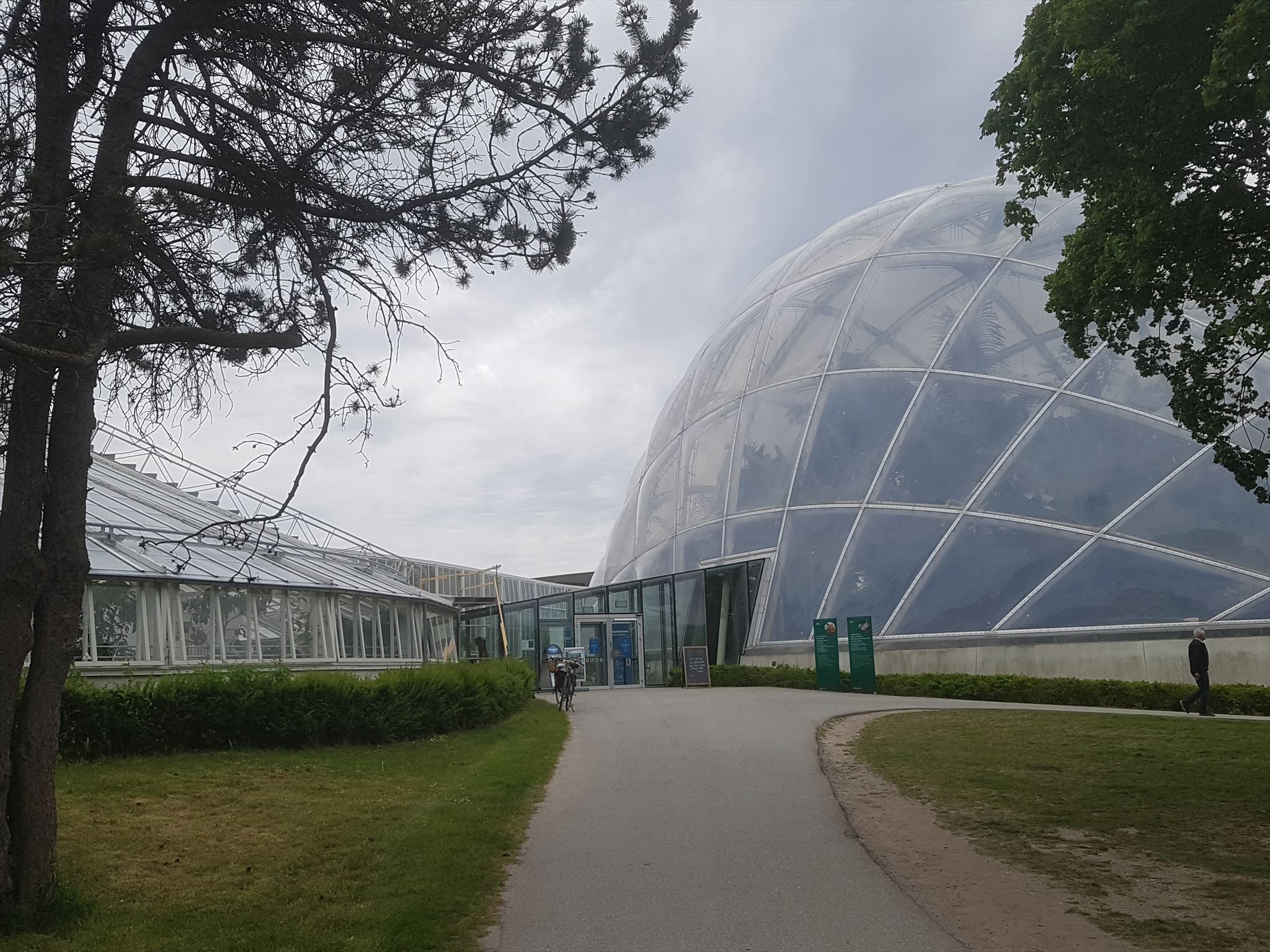
Væksthusene er én af de spændende, gratis glæder, vi har i Aarhus.
De er en del af SCIENCE MUSEERNE under Aarhus Universitet.
SCIENCE MUSEERNE i Aarhus formidler naturvidenskab i øjenhøjde. Museerne består desuden af Steno Museet og Herbariet i Universitetsparken og Ole Rømer-Observatoriet i Højbjerg.
ÅBNINGSTIDER for Væksthusene:
Åbningstider 1. september - 30. juni:
Mandag-fredag kl. 9-16
Lør-søn og helligdage kl. 10-16
Sommeråbningstider 1. juli - 31. august:
Mandag-fredag kl. 9-17
Lør-søn og helligdage kl. 10-17
ENGLISH:
Bonus Cache for Adventure Lab Cache, Aarhus Greenhouses.
The cache is not located on the coordinates.
To find the coordinates, complete the Adventure Lab Cache, Aarhus Greenhouses using the special Adventure Lab app on your mobile phone.
Once you have completed the Adventure Lab Cache, you should go to Journal Records, where you will get the coordinates for this cache in the last station.
Bring a pencil.
Good pleasure.
- 0 -
Adventure Lab Cache, Væksthusene i Aarhus (Adventure Lab Cache, Aarhus Greenhouses)
This Lab Cache takes place exclusively inside the greenhouses and therefore in a very limited area. You may have problems with the GPS signal, but based on the descriptions, you should be able to find the various places fairly quickly anyway. It is a good idea to take a folder with you. The greenhouses are one of the exciting, free joys we have in Aarhus.
In the greenhouses, knowledge about plants, climate and the relationship between people and nature around the world is disseminated. •Travel Around the World in the middle of Aarhus C - start in the Mediterranean climate with the fragrant herbs, move into the dry desert, the humid mountain forests and end the journey in the tropical rainforest •Go exploring for plants and butterflies. Smell the scent of white lemon flowers or shudder at cactus spikes and carnivorous plants. The greenhouses are part of the SCIENCE MUSEUMS under Aarhus University.
The SCIENCE MUSEUMS in Aarhus convey science at eye level. The museums also consist of the Steno Museum and the Herbarium in the University Park and the Ole Rømer Observatory in Højbjerg.
OPENING HOURS for Greenhouses:
Opening hours September 1 - June 30:
Monday-Friday 9-16
Sat-Sun and holidays 10-16
Summer Opening Hours July 1 - August 31:
Monday-Friday 9-17
Sat-Sun and holidays 10-17
1. Middelhavshuset (The Mediterranean house) - N 56° 09.622 E 10° 11.624
FROM FLOWERING BIRD OF PARADISE TO KING PROTEA
In Middelhavshuset you can experience the shapes, colors and scents of plants from areas with a Mediterranean climate. Mediterranean climates are found in five regions spread throughout the world. The areas are characterized by cool, wet winters and crisp, hot summers.
In the Middelhavshuset you can see examples of some of the many cultural and ornamental plants from the Mediterranean area, South Africa and southern Australia. Mediterranean vegetation is also found in California and Chile.
Because of the hot and dry summers, the vegetation becomes dry, and therefore there are often summer fires in areas with a Mediterranean climate. Many plants can adapt to fires. The most lush seasons in this climate zone are spring, when it starts to get warmer, and autumn, when the rains start. It's that time of year when you can see all the onion plants in bloom. The winter period is largely frost-free, but sporadic frosts can occur. The average temperature is 20-30 °C in summer and around 10 °C in winter.
Questions to be answered: At the beginning of this room there is a plant that looks like a cactus. It is not; but what is it then? Use the second word in the danish text.
2. Ørkenhuset (The Desert house)- N 56° 09.605 E 10° 11.630
DESERT PLANTS ARE ADAPTED TO EXTREME CONDITIONS
In the Desert House you can experience plants from subtropical deserts in America and Africa, where the plants are adapted to severe drought. They often have swollen leaves and stems in which water can be stored when it rains. Many of the plants are covered with a layer of wax that reduces desiccation, and thorns that prevent animals from eating them. The plants from Africa and America are similar in growth form, although they have evolved independently of each other.
In the Desert House you can see, for example, that some of the desert plants:
• is covered with a thick layer of white hairs
• are light green, as it reflects the light better
• are blue misted. This is due to a wax covering which filters out the sun's ultraviolet rays
• have drooping leaves, which make them less exposed to the Sun's rays in the middle of the day and more at the beginning and end of the day, when it is not so hot.
Among the cultivated plants, you can experience the Aloe plant, "living stone" and a 45-year-old American agave of impressive dimensions, among many others.
Questions to be answered: In this room there is a Real Prickly Pear, the fruit of which can be eaten. However, it must be peeled first. Why that? Use the last word in the danish text.
3. Bjergskovhuset (The Mountain house) - N 56° 09.592 E 10° 11.648
AMONG TREE FERNS AND EPIPHYTES.
In the Mountain House you can see plants from the moist mountain forest in the tropical mountains. It is also typically called "fog forest", as it is at the height where the clouds form. Among other things, tree ferns and so-called epiphytes thrive here.
An epiphyte is a plant that grows on top of another without parasitizing it, so it comes to light without having to make its own stem. Plant groups with many epiphytes include orchids and the pineapple family.
In Bjergskovshuset you can also experience different types of citrus fruits and two very well-known cultivated plants that are grown in this particular climate type: tea and coffee.
The plants in Bjergskovhuset come from an altitude of 1000-2000 metres.
IMPORTANT ROLE FOR EVOLUTION
Mountain forests seem to play a very important role in the evolution of new species and for the survival of species in periods of major climate change, e.g. during the ice ages.
Questions to be answered: In this room there is a large plant with large, white trumpet-shaped flowers. Angel's Trumpet. Who pollinates the flowers? Use the last word in the danish text.
4. Tropehuset - dammen (The Tropical house - the pond) - N 56° 09.602 E 10° 11.592
CLOSE TO TROPICAL RAINFOREST
In Tropehuset you can experience American, Asian and African rainforests up close.
Here there is 19 m to the ceiling and almost 20 m between the walls, so there is plenty of space for the large plants. You can see the forest from the top of the observation tower or relax by the pond with a view of butterflies, giant daffodils and water hyacinths.
The water hyacinth originally comes from the Amazon in South America. But today it is found almost all over the world because it spreads with ships and ocean currents. The species is also very invasive. In Tropehuset, it spreads at such a high speed that you can fill several garbage bags with water hyacinths every week. They are sent to Randers Regnskov, who feed them to their manatees
If you are lucky, you can also see fish spitting for insects.
Questions to be answered: In this room there is a pond with i.a. pirate fish. In the pond there are also some very large water lilies. How big can they get? Use the number.
5. Tropehuset - bækken (The Tropical house - the stream) - N 56° 09.600 E 10° 11.600
THE PLACE WHERE LIANES GROW.
The tropical house is planted so that the many forms of life mix together in a dense and lush vegetation. Among the many cultivated plants you can see cocoa, vanilla and sugar cane. You can also see how rice is grown and how the fast-growing lianas and creepers wind around the observation tower.
Unfortunately, the observation tower is temporarily closed due to COVID-19; but there are still many exciting nooks and crannies to explore in Tropehuset.
Now you have to find the brook, which you can hear in most places in Tropehuset.
Questions to be answered: Here the path crosses a stream. On both sides of the stream some very tall plants with edible fruits grow. What is the name of one fruit in danish?
perwaldi 113.