Silk Printing comes to Crayford
Augustus Applegath invented a variety of printing machines that increased the speed of printing on paper and fabric. He introduced silk printing to Crayford when he and his family moved to the area in 1826. Applegath bought 14 acres of land on which he built his family home, Shenstone House, and factory buildings.
Applegath built Shenstone House at the highest point of the site so that he and his family could enjoy great views of the new factory. Shenstone School now occupies the place where the house stood and the factory was built across the road from where the information board you are standing in front of is.
David Evans and Company
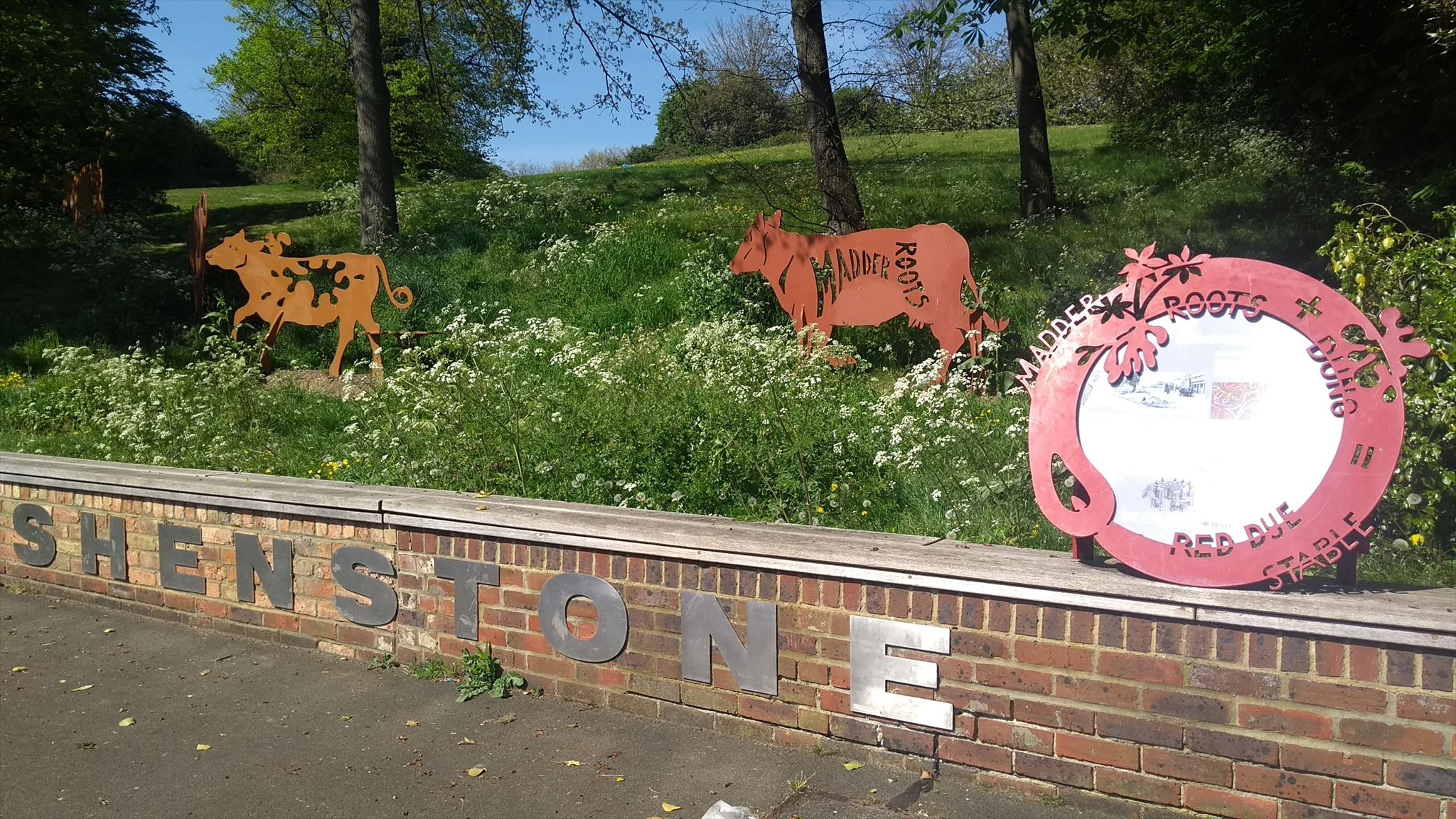
Silk merchant, David Evans, purchased Applegath's estate in 1842 and bought a herd of cows to the site. The herd grazed in the fields and occupied stables located at the printing factory. The long brick wall which runs along London Road formed part of this stable block.
Madder + Dung = Red Dye
These cows played an essential part in the further development of the silk printing process at David Evans' factory. One method of dying the silk involved using the roots of the madder plant to create red coloured dyes; the addition of cow dung was integral to Evans' formula. Washing the fabric in cow dung fixed the colours and ensured that they maintained their vibrancy over the years.
The success of David Evans' company was largely due to this use of traditional silk dyeing techniques. The silk products were prized around the world and established Crayford in the competitive world of textiles.
The last silk square was printed in Crayford on 4th July 2001, and the closure of the firm was a great loss to Crayford’s industrial heritage.
The view of the printing works was taken in cABCD.
The 1.5ml cache can be found a short walk away by substituting the numbers into the below:
N51 27. BB+AB+AD+A
E0 10. ADB+ACC+AD+D-A