WHAT IS MARBLE?
Marble is a metamorphic rock that forms when limestone undergoes intense heat and pressure of metamorphism. The rock is composed primarily of the mineral calcite (CaCO3) and typically contains a mixture of other minerals. Through metamorphism, the calcite recrystallizes to form a rock that is a mass of interlocking calcite crystals. Most marble forms at convergent plate boundaries where large areas of Earth's crust are exposed to regional metamorphism.
During the metamorphism cycle, the calcite recrystallizes and the texture changes. In the early stages of the transformation, the calcite crystals in the rock are very small. However, as metamorphism progresses, the crystals grow larger.
Recrystallization is the property that distinguishes between limestone and marble. Marble that has been exposed to low levels of metamorphism will have small calcite crystals while high levels of metamorphism create large size crystals.
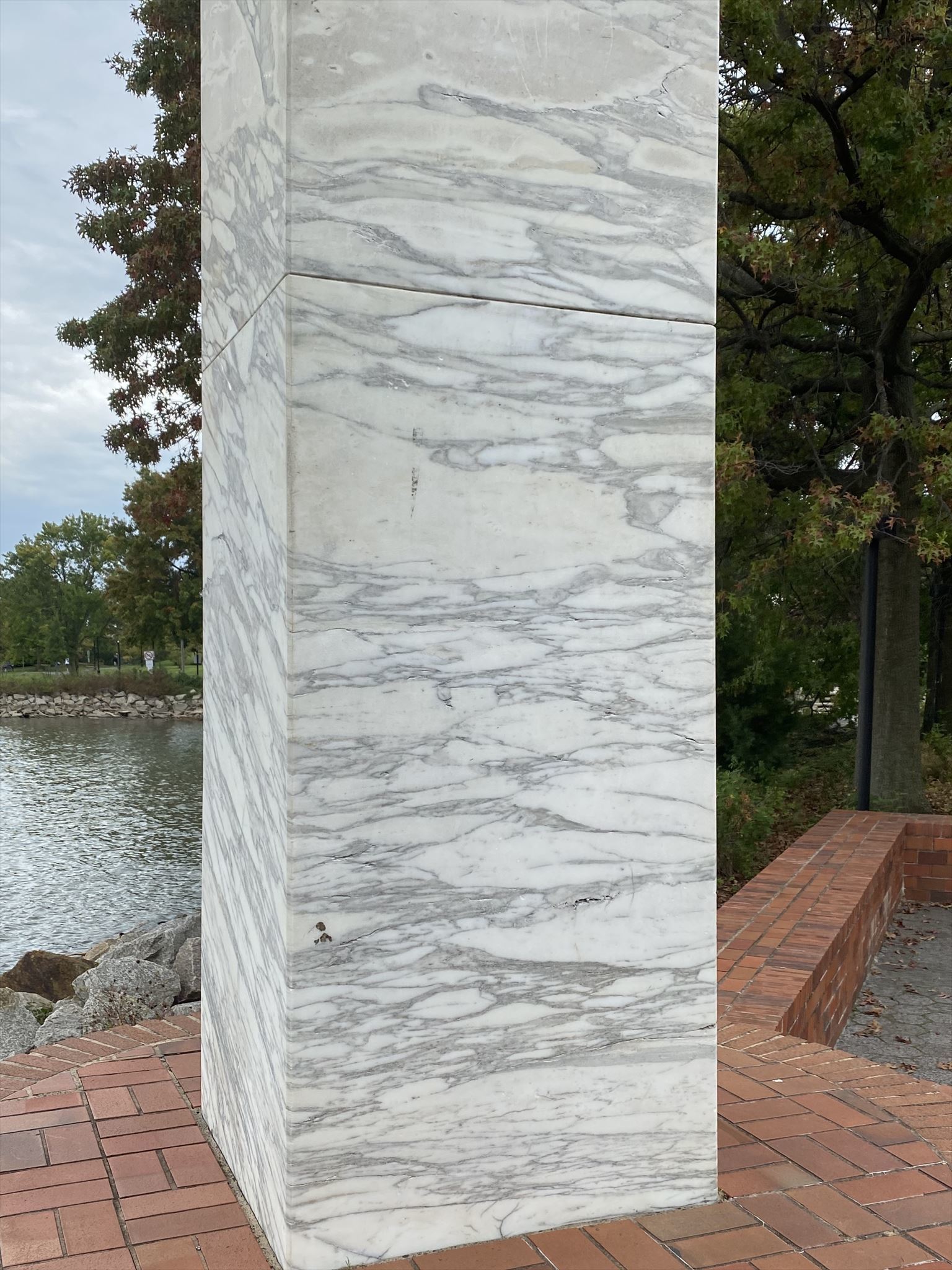
Arabescato Corchia - is a brecciated Italian marble quarried in Italy (Provincia di Lucca Toscana). Breccias are a type of sedimentary rock that form when pre-existing rocks or minerals break up and reform, cementing together into an entirely new material. When the breccia is exposed to extreme heat and pressure the sedimentary rock turns changes into marble. Abrabescato Corchia Marble is a white marble that has a gray vein texture with a light greenish hue. The classes within the grain have an elongated orientation and varying grain size.
TYPES OF ROCKS
- SEDIMENTARY - Sedimentary rocks are formed by the deposition of material at the Earth's surface..
- IGNEOUS - Igneous rocks are formed through the cooling and solidification of magma or lava.
- METAMORPHIC - Metamorphic rocks are formed when existing rock types are changed through extreme heat and pressure.
GEOLOGIC CHARACTERISTICS
COLOR:
the appearance of an object to the eye as a result of the way the object reflects or emits light.
SIZE:
- Fine - crystals too small to be seen by the naked eye.
- Moderate - visible crystals, but magnify glass needed.
- Coarse - crystals easily seen with naked eye
TEXTURE:
- Natural - cut along lines of cleavage revealing natural grain giving an undulating surface
- Honed - smooth finish with a slight sheen
- Polished - shine on stone surface
- Flamed - rough surface with an irregular textured finish
- Sand Blasted - textured surface with a matte gloss
- Sawn - semi-smooth, regular finish
- Bush Hammered - pitted or grooved surface finish
TYPES OF EROSION & WEATHERING
- Physical Weathering - is caused by the effects of changing temperature on rocks, causing the rock to break apart.
- Chemical Weathering - is caused by rainwater reacting with the mineral grains which erode the rock. These reactions occur particularly when the water is slightly acidic.
- Biological Weathering – is caused by living organisms such as plants and trees by putting pressure on the rock and causing it to weather or crack.
Complete the following tasks for this Earthcache:
1. Describe the shape of the sculpture in your own words.
2. Describe the following: rock type, color, size, and , texture based on your observations of the Abrabescato Corchia Marble.
3. Observe the markings in the marble do you see any types of weathering?
4. Post or send a picture with the monument.
Logs without submitted answers and picture will be deleted.