The Nathaniel Trail consists of 17 caches. Because all 17 are part of the geoart, please don't forget to do your homework before setting out to find these caches. For 14 of them, you'll need to enter a simple solution into Certitude in order to receive the actual coordinates for those hides. To find caches 15-17, you'll need to carefully collect information from each of the 14 caches. Some of the trails are used by equestrians, so be prepared to yield to riders. And please pay attention to hunting regulations and schedules. Wearing international orange is never a bad idea. I've never seen one in Carroll County, but a bear was sighted in this area in December 2018, and others have been reported in backyards in Carroll recently. So be careful as you hike these woods. I strongly urge you to solve all the little puzzles BEFORE you head for the trails. All 17 caches could be found in a couple or three hours and three or four miles of relatively easy walking. If you love birds, remember your binocular. And if you don't love ticks, remember your Deet or chemical of choice. As you cache, may you find joy and peace.
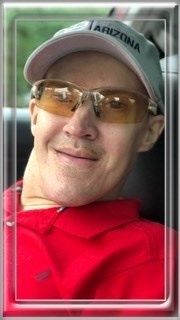
Along Nathaniel’s journey through life he crossed paths with countless remarkable people who were to become not only his friends, but his nurturers—ones who would nudge and coax him from his struggles with limitations and help him to be the beautiful person beyond those limitations: a humorous, caring, compassionate fellow who loved nearly every person and every animal he ever met. Aside from his immediate family, two people in particular were especially dear to him because of their gift for seeing and accepting who he really was. Trisha Chernock met him through the wonderful programs he participated in at Arc and Change. He seemed to thrive on her silliness and teasing. In her presence, he was nearly always smiling. Her son, a bright, gentle soul, was quite like a brother to Nathaniel; he beamed when he could help him by doing little kindnesses for him, such as pushing his wheelchair for him. Jennifer Frame knew Nathaniel since the late Nineties, when she actually babysat for him and his stepbrother Jordy. Later, I would introduce geocaching to Jennifer, and she would accompany Nathaniel and me sometimes on our weekly hawking-caching outings. When, in August of 2013, I could no longer lift Nathaniel without straining my surgically repaired back, Jennifer volunteered to be his “lifter”—and things would never be the same for him after that. Of course she drew him out of whatever was left of his shell, not just by loving him just as he was but by demonstrating that things which had to me seemed all important are really nothing at all. At the moment of Nathaniel’s birth, his mother’s obstetrician had uttered a simple but devastating truth that buckled my knees: “Oops, there’s a little defect.” That word defect had instantly become a sort of label to me for what was not just wrong with my son, but what was not right with the world: How could such a thing happen? How could there be such wrongness in the world? But people like Trish and Jennifer weren’t overwhelmed by something like a birth defect. Of course, in caring for him, they had to take the defect into account: Nathaniel would forever be greatly dependent upon others for things most of us take for granted, things we do for ourselves, like bathing and going from here to there, and even going to the bathroom, and getting into bed. But Trish and Jennifer saw far beyond such limitations. And they understood better than most of us what love in action really amounts to: perceiving the things which need to be done, and doing them. It is the essence of loving relationship to our fellow human beings.
Be the Song, by Friends with the Weather (formerly Mutual Kumquat)
A couple of weeks before Nathaniel died, he began to struggle with his breathing. His primary care physician suggested that going to the hospital might not be his best option. I suppose we shall never know if following his PCP's advice was the wisest choice. In the age of coronavirus, hard choices need to be made. We do the best we can. By the time Nathaniel reached the hospital, his family and friends knew that his situation was dire. We had to beg to have at least one parent be with Nathaniel in the hospital, since he clearly couldn’t advocate for himself. Later, as it was clear only hospice care was called for, an exception was made, with the help of Leslie Simmons, Executive Vice President of LifeBridge Health and Carroll Hospital President, to allow both parents to be with Nathaniel. And, of course, the sad but loving duty to care for him after he was transferred from intensive care to hospice care fell to his dear friend Nurse Jennifer. Was it mere luck that she was working that day, or was some higher power involved? Who knows. But we do know it was a blessing that Nathaniel’s passage from this life was made with whatever comfort his parents and Jennifer could provide him. As you complete this trail Jennifer (JAF430) and I (Phos4s) have created in Nathaniel’s memory, we hope you will think about how you, too, might overcome seemingly insurmountable obstacles, how you, too, might reach out in love to those in great need, and how you, too, no matter your limitations and challenges, might dwell in abundant joy.
I recently watched the movie The Healer, which is in part about a teenager dying of cancer and also about a young man's attempt to escape his fate, which is to be the every-other-generation healer within his family--a preposterous role for him, especially since he doesn't believe in God and doesn't believe in healers. The movie eventually took on the quality of an allegory about fixing things, of simply choosing what is good to do. It reminded me of one of my favorite novels, Pirsig's marvelous Zen and the Art of Motorcycle Maintenance, whose preface is "What is good, Phaedrus, and what is not good--need we ask anyone to tell us these things?" In The Healer, the dying teen writes a poem in which she reflects on life and offers advice to two people who are trying to protect themselves from risks. Given Nathaniel's lifelong struggle with all kinds of issues, but especially his constant battle with pneumonias, the poem seemed an appropriate conclusion to The Nathaniel Trail: Remembrances.
Breathe
Just breathe.
We all at some point stop breathing.
What if we lived one breath at a time.
We speak as though breathing is easy because it is innate.
Half the time we don't even notice our breath.
When did breathing become the uncool kid that all the other body parts ignored?
Think about the phrase "catch your breath."
You have to catch it because you lost control of it.
Alec and Cecilia [and everyone in the world], find control over your breath.
And please live for me [or every one you love] like tomorrow is your last day.
In your logs, feel free to share some uplifting anecdotes about those you love and who've inspired you, in one way or another.

You can validate your puzzle solution with certitude.