Proud Member of SCGA

Welcome to the Grant-Valkaria Trails and Community Park!
Since this is an earthcache, there is no physical container to find. To get credit for this geocache and log your find, email or message your answers for the questions below to the cache owner BEFORE you log the find.
Getting Down to Earth!
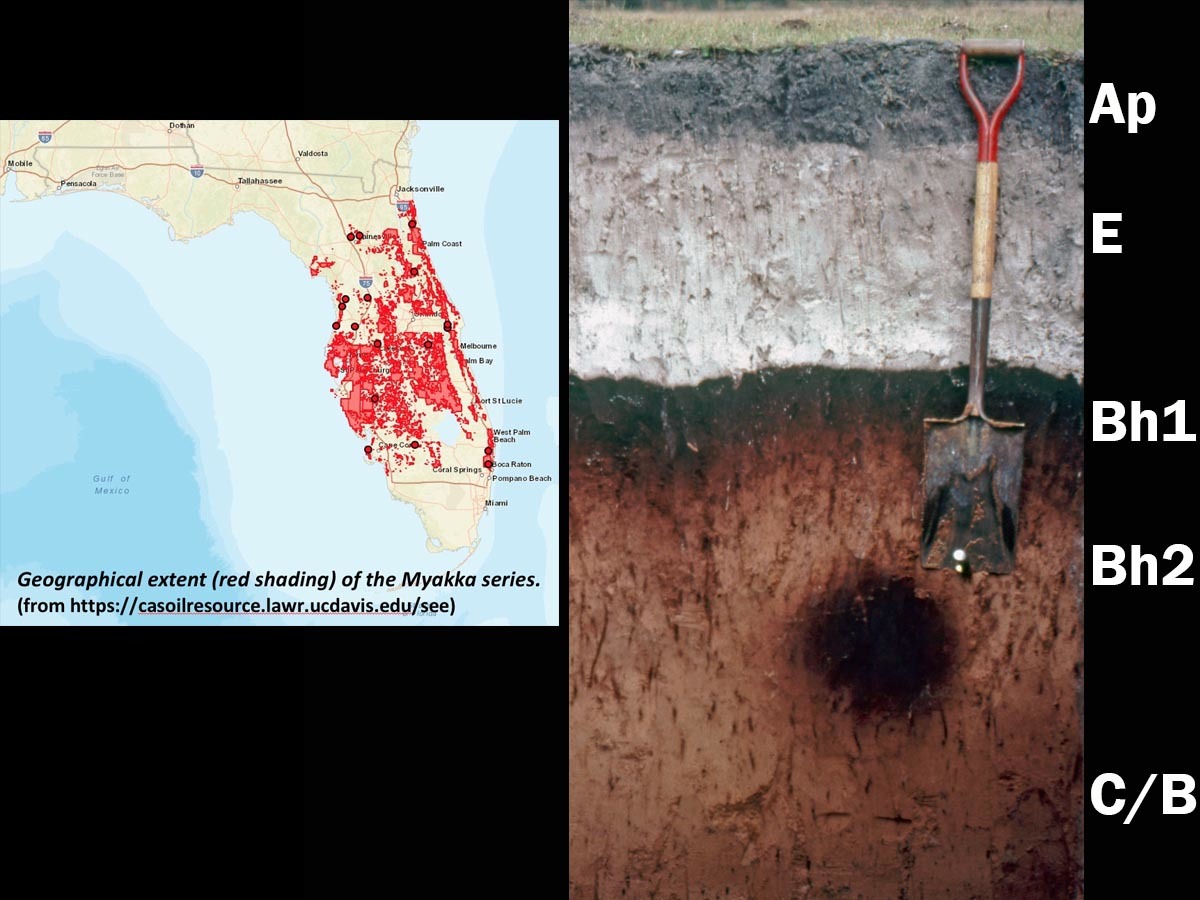
Florida's soils are not like any of its surrounding states. It has the largest total acreage of Aquods (wet sandy soils with an organic stained subsoil layer) on flatwood landforms in the nation. Myakka is not only a state symbol as the native soil, but it also does not occur in any other state.
Soils are complex mixtures of minerals, water, air, organic matter, and numerous organisms that are decaying remains of once-living things. It is in essence the “skin of the earth”. Soil performs many critical functions and there are 7 general roles that it plays:
1. Soils serve as media for growth of plants.
2. Soils modify the atmosphere by emitting and absorbing gases and dust.
3. Soils provide habitat for animals that live in the soil (such as groundhogs and mice) to organisms (such as bacteria and fungi), that account for most of the living things on Earth.
4. Soils absorb, hold, release, alter, and purify most of the water in terrestrial systems.
5. Soils process recycled nutrients, including carbon, so that living things can use them repeatedly.
6. Soils serve as engineering media for construction of foundations, roadbeds, dams, and buildings, and preserve or destroy artifacts of human endeavors.
7. Soils act as a living filter to clean water before it moves into an aquifer.
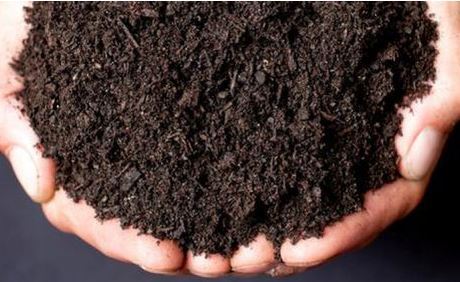
Soils are one of the basic components our lives depend on and have taken thousands of years to form. Often people view soils as an unlimited resource, but they can be easily damaged and almost completely destroyed by poor management.
The most extensive landform in Florida and also one of the most disturbed by human activity is the pine-saw palmetto flatwoods. Typical flatwood soils are somewhat poorly to poorly drained, sandy textured, and acidic.
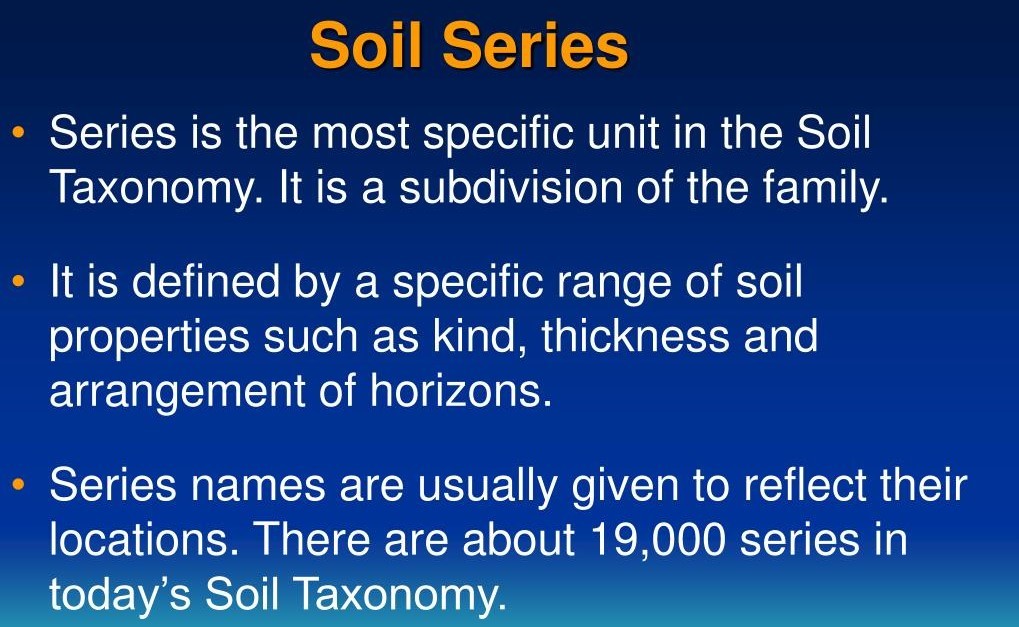
SOIL SERIES
A soil series includes the different colors, textures, layers and other morphological, physical and chemical properties unique to a given soil. There are 450 different kinds of soils recognized in Florida.
This general area has several soil types and this trail in particular has a unique aspect of crossing 4 different soil types.
17 Eau Gallie sand is found in flatwoods on marine terraces. The first 58 inches are typically sand, then the next 20 inches are comprised of sandy loam. This is poorly drained soil.
18 Eau Gallie, Winder, and Riviera soils are found in depressional landforms. This type of soil is very poorly drained and easily identified by the ponding depression areas. They consist of very deep, poorly drained and very slowly permeable soils on broad, low flats, flatwoods and in depressions.
47 Pineda sand series is very deep, nearly level and poorly drained soil found on broad low flats, hammocks, sloughs, and poorly defined drainageways and flood plains.
71 Wabasso sand is found in flatwood landforms. The first 30 inches are typically sand, then the next 30 inches are comprised of sandy clay loam. Between 60-80 inches is loamy sand. This is very deep, very poorly and poorly drained soil that formed in sandy and loamy marine sediments. Wabasso soils are on flatwoods, low broad flats, sloughs, and flood plains.
QUESTIONS
To get credit for the cache, please answer the questions below. When answering the questions do your best. It is more important that you learn a new concept about our earth and can apply your knowledge, rather than have a precise answer.
1. At the posted coordinates you will find an example of Wabasso sand (71). Take a small amount of loose soil in your hand and inspect it. What is the color and texture of the soil? Is the soil wet or dry?
2. At the 2nd stage you are standing at the edge of another soil series area. Take a small amount of loose soil in your hand and inspect it. What is the color and texture of the soil here? How does this differ from the soil you inspected at the first stage?
3. At the 2nd stage coordinates, what soil series do you think this is in front of you from the 4 described above? And what unique feature here leads you to that conclusion? (looking east, not the tree)
4. Name one role that soil plays on Earth.
5. Post a picture of you/your group or your GPSr unit at the split oak tree or at the 2nd stage coordinates.
FIELD NOTES:
►Park is open from 8 a.m. – 6 p.m. daily.
►Parking coordinates are listed for both ends of the connector trail.
►In fairness to everyone please send your answers to the cache owner BEFORE you log the find. In your log feel free to write about your experience, but don't include the earthcache answers.
►Permission for this cache placement was granted by Jason M., Town Administrator.
References:
►http://www.sfrc.ufl.edu/Extension/ffws/soicl.htm
►https://websoilsurvey.nrcs.usda.gov/app/
►https://www.education.com/resources/earth-science/?q=soil%20series
►https://soilseries.sc.egov.usda.gov/