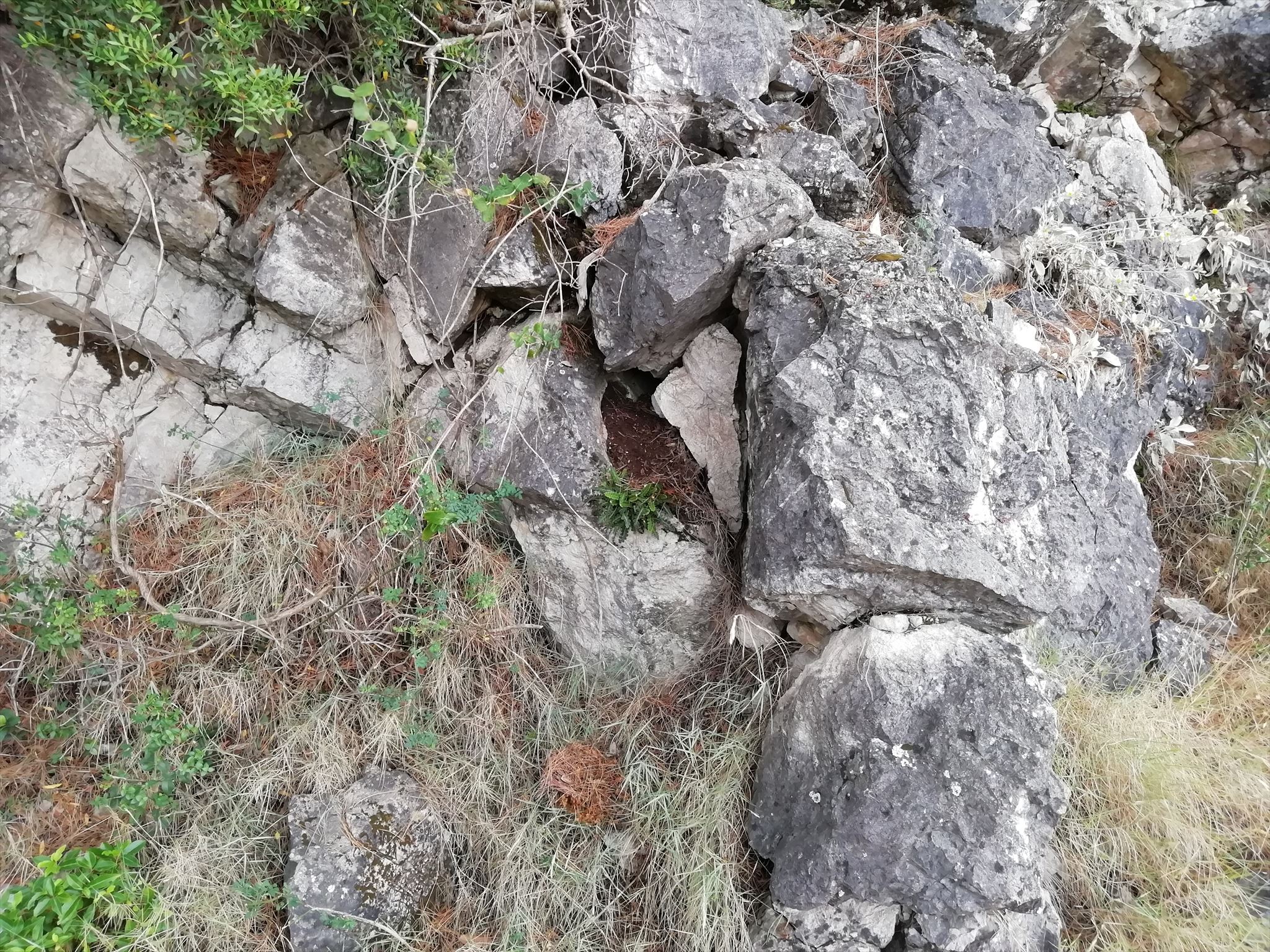
Veliki Most - Veliko jezero

Veliko jezero ima površinu od 1,45 km², najveća mu je dužina 2,5 km, a širina 1 km. Najveća dubina Velikog jezera iznosi 46 metara. Veliko se jezero spaja s otvorenim morem dugim i širokim kanalom, na mjestu koje se zove Veliki most, a od tog se mjesta širi u Solinski kanal i zatim se spaja s otvorenim morem. Veliki je most prije 1960. godine bio plitkiji i uži nego danas, što je rezultiralo stvaranjem jake morske struje, koja se mijenjala svakih šest sati. Za vrijeme plime ili oseke struje je ili ulazila ili izlazila iz jezera. Na tom su mjestu benediktinci izgradili mlin, kojeg je pokretala struja, i služio je za proizvodnju soli (mjesto Soline, u neposrednoj blizini, po tome je dobilo ime).
Veliki je most srušen 1958. godine kako bi predsjednik SFRJ Josip Broz Tito mogao ući u jezero sa svojom jahtom.
Nakon 2. svjetskog rata predsjednik novonastale države Jugoslavije Josip Broz Tito traži idealno mjesto gdje bi mogao smjestiti svoju rezidenciju, koja je morala zadovoljavati više uvjeta. Osim ljepote prirode i izoliranosti trebala je biti i dobro utvrđena, ali i omogućiti predsjedniku brzi dolazak i odlazak. Tada uz Brijune u obzir dolazi i Mljet, odnosno benediktinski samostan na otočiću u Velikom jezeru. Kako bi se Titu, omogućio brži ulazak i izlazak iz jezera 1958. godine most i mlinica su srušeni. U međuvremenu je rezidencija predsjednika ipak utvrđena na Brijunima, a nakon 1997. Samostanje vraćen benediktincima, pa Dubrovačkoj biskupiji.

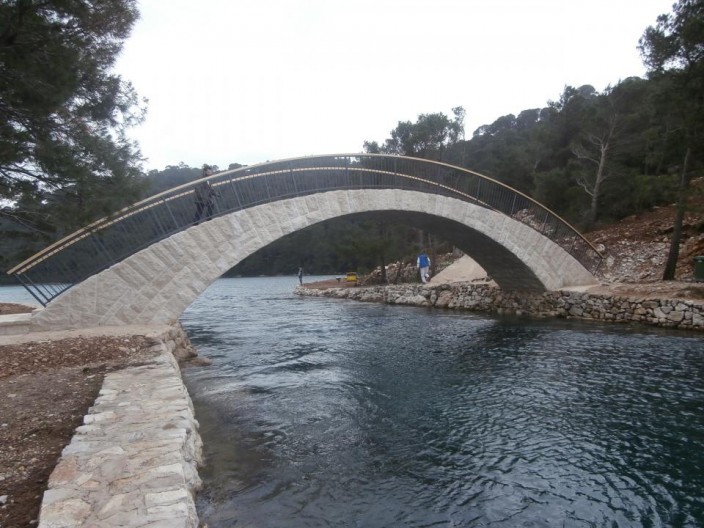
Veliki most, doživio je trenutak za svoju obnovu, na žalost bez mlinice. Uz potporu Ministarstva zaštite okoliša i prirode te Fonda za zaštitu okoliša i energetske učinkovitosti, NP Mljet pokrenuo je projekt vrijedan 12,5 milijuna kuna koji podrazumijeva rekonstrukcija Velikog mosta s uređenjem pristupnih pješačkih staza, pristaništa za brodove i kupalište prilagođenih osobama s invalititetom, izgradnju stanice za punjenje električnih vozila i brodova te nabavu električnog broda.
Njime će se povezati kružna šetnica od 11 kilometara oko Velikog jezera i omogućiti brži pristup vlasnicima zemljišta s obje strane jezera. Usto, u slučaju nepogode, vatrogasci će brže moći stići na mjesto požara.
Projekt novog mosta napravljen je još 2011. Raspon mosta 3 puta veći nego što je bio stari jer je kanal proširen s 5 na 14 metara. Most je dugačak je 17,6 metara, širok 3,2 metra, a visok 4 metra i 12 centimetara. Iako je Uprava Nacionalnog parka lokacijsku dozvolu ishodila još 2011., cijeli projekt je bio na čekanju zbog rješavanja pitanja pomorskog dobra na mjestu gdje treba biti most.
EN
The Great Lake has an area of 1.45 km², its largest length is 2.5 km and width is 1 km. The greatest depth of the Great Lake is 46 meters. The Great Lake connects with the open sea by a long and wide channel, at a place called the Great Bridge, and from that place it expands into the Solin Channel and then connects with the open sea. The Great Bridge before 1960 was shallower and narrower than it is today, resulting in the creation of a strong sea current, which changed every six hours. During high tide or low tide, currents either entered or exited the lake. At this place the Benedictines built a mill, which was powered by electricity, and was used for the production of salt (the place of Soline, in the immediate vicinity, was named after it).
The big bridge was demolished in 1958 so that the president of the SFRY, Josip Broz Tito, could enter the lake with his yacht.
After World War II, the president of the newly formed state of Yugoslavia, Josip Broz Tito, sought an ideal place where he could place his residence, which had to meet several conditions. In addition to the beauty of nature and isolation, it should have been well established, but also allowed the president to come and go quickly. Then, along with Brijuni, Mljet, that is, the Benedictine monastery on an islet in the Great Lake, comes into consideration. In order to allow Tito to enter and exit the lake faster, in 1958 the bridge and the mill were demolished. In the meantime, the president's residence was established on the Brijuni Islands, and after 1997 the monastery was returned to the Benedictines, and then to the Diocese of Dubrovnik.
The great bridge, experienced a moment for its restoration, unfortunately without a mill. With the support of the Ministry of Environmental Protection and Nature and the Fund for Environmental Protection and Energy Efficiency, NP Mljet launched a project worth 12.5 million kuna, which includes the reconstruction of the Great Bridge with access to pedestrian paths, boat docks and bathing facilities for people with disabilities, construction of the station for charging electric vehicles and ships and purchasing an electric ship.
It will connect an 11-kilometer circular promenade around the Great Lake and allow faster access to landowners on both sides of the lake. In addition, in the event of an accident, firefighters will be able to arrive at the scene of the fire faster.
The project of the new bridge was made back in 2011. The span of the bridge is 3 times bigger than the old one because the canal was widened from 5 to 14 meters. The bridge is 17.6 meters long, 3.2 meters wide, and 4 meters and 12 centimeters high. Although the National Park Administration obtained the location permit back in 2011, the entire project was on hold due to resolving the issue of maritime property at the place where the bridge should be.