First in a short series of 3 traditional geocaches on the paths that lie near the edges of Bo'mains Nature Reserve on the outskirts of Bo'Ness, just off the John Muir Way. These caches were done as an experiment to explore different ways of sourcing and creating geocache containers that would reduce the 'plastic footprint' of making physical geocache types. They are also a field test for me to see how well certain biodegradable containers might survive in the wild.
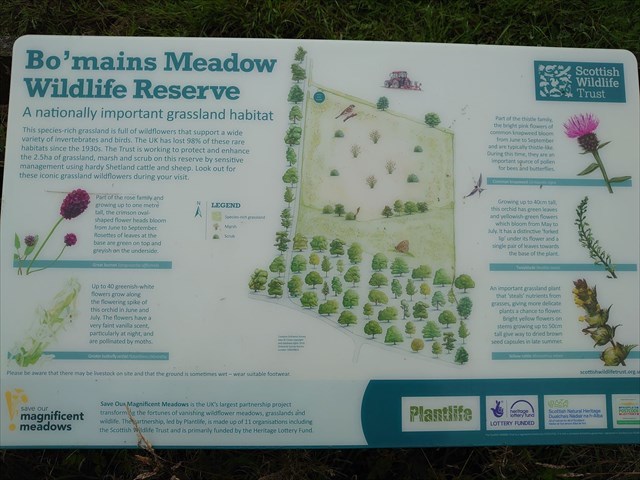
Bo'mains Nature Reserve is a Meadow Wildlife Reserve with a variety of orchids, thistles and other meadow wildflowers. The Reserve's Car Park is the parking waypoint given for the series.
___________________________________________________________________________________
About The Green Compass Experiments - I've always thought that compared to many hobbies, geocaching is a pretty eco-friendly activity when looked at in the round. Between....
- Cacher's who do a bit of impromptu litter collection as they head back from a cache
- Organised 'Cache-in-Trash-Out' events
- Caching activities linked to recording and removing invaisive species
- Cache descriptions focused on educating readers about nature and its features
- Cachers using green tranpsort such as bikes, to get to caches
....you don't have to look far to find an ecologically-themed aspect to caching. That probably helps explain why Park Rangers and Local Authorities are so supportive of the hobby taking place in woods and local parks.
Sadly, my own caching green-credentials are not as strong as they could be, so I've been thinking about ways I could change that. And that is what led to this short cache series - caches where I look at reducing the degree to which my caches lead to plastic being left in the environment.
This is not an attempt to 'eco-evangelise' or to humblebrag about my green endeavours, the container sourcing and usage in these 3 caches are more about me experimenting with container options for future placements - to see what is practical, affordable, and effective. Maybe some of these will work out and maybe they won't, but that's what experiments are for. I'm publishing them because wear and tear from finders should be part of testing some of the containers. As should cacher feedback in their logs, which I would actively encourage. If other cachers have insights into options for reducing the plastic footprint of my containers going forward, these would be very much appreciated.
THE GREEN COMPASS EXPERIMENTS 1 - WASTE PLASTIC
The first container in the series might not be an obviously ecologically-friendly one - it's a 'lock-n-lock' style plastic container. So in terms of reducing the plastic footprint of a cache, it looks like an instant fail. However, the manufacturer made this particular container from the offcuts of the production of their original, snap-lock clear tubs used so often as geocache containers.
This container is as robust as the less eco-friendly variety, and made from 100% food-grade plastic, salvaged from the production of the original clear and coloured versions of the 'lock-n-lock' style containers. The offcuts would usually come off the fabrication machine and be sold on to make single-use items that might well end up in landfill, but these eco containers avoid wasting all that perfectly good plastic – helping the environment whilst maintaining all the same robust qualities as standard snap-lock containers. They’re also free from the harmful 'BPA' chemical type.

'UNBOXING' EVALUATION
Positives
You kind of know what you're getting with these containers, because there really aren't any significant differences from normal 'lock-n-lock' style plastic containers. The only difference is in the more eco-friendly way that the plastic is sourced, which ultimately results in less one-use plastic going to landfill. The container is as robust as any 'lock-n-lock' style container, it's the same style and snaps shut for a very good water proofing. The only manufacturers of these I could find were all big-name Western kitchen equipment companies (ordering via the web), but that means the quality is good, and they actually come with a lifetime guarantee, although I suspect that's for when they are used to store food rather than being savaged by a malicious squirrel at the base of a tree.
Negatives
I sourced this container over the web, and because the plastic is a composite of whatever waste scraps are left over from making normal plastic food containers, you don't know what colour it will be when it arrives - it is genuinely dependent on whatever shades the surplus plastic were that day, and they all get mixed in together. The container I got was a transluscent purple container with a blue lid. Needless to say I had to camo that!
If sourced from a web site it's a little bit pricier than standard 'lock-n-lock' style containers of comparable size, by a couple of quid, due to the postage. Web-buying may be necessary because they are not that common on the high street, usually you can't buy these from anywere else than one of the big specialised UK kitchen equipment retailers, and the up market ones at that. So that may mean waiting a few days for delivery via the web. However compared to the other two containers in the series which were transported by snail mail from China, it's possibly not that much of a concern. As luck would have it, a 'well known high street supermarket' just started stocking these the same day this cache was placed (£4 for two x one litre containers), so if that continues then they will be more readily available, and at a good price.
Regardless of where you buy them from, there is a bit of a lack of choice in sizes and shapes, and I could only really source four options. These didn't really include a micro-size one.
Overall View
Although these are promoted by the manufacturer as an eco-container, because they reduce non-biodegradeable materials going to landfill, the same could probably be acheived by just recycling any one of a number of other old household containers for the purpose of using them as geocache containers. We have probably all seen good examples of those in the field - little metal mint containers, unused sample containers given out by the doctors, ice cream containers, etc. Like all such snap lock containers they are excellent for geocaching, and it does feels like this is a low-pain way of being more ecological with containers, even if they end up costing a quid or two more via the web. The cache placement here isn't going to tell me too much more about these containers, the learnings in this one were more about the sourcing process for them. Even though I haven't been able to protect the container with a camo bag or similar to keep some of the rain off (because those bags are not biodegradeable), I expect this container to be the most waterproof of the three in the series. Overall it feels like a good, easy, reliable option if you feel you have to buy a plastic container.
Please note that this cache is best reached from the Woods side rather than the Road side as there are some very jaggy trees if you try to approach the cache directy from the road.