In Black and White
The observations for this EarthCache are best made at low tide, although you will be able to see enough to answer the questions at all but the highest tides. Please do not attempt to find the information if the slipway is in use by the lifeboat!
The slipway for the Ramsey lifeboat, opposite the Norbury Boathouse, was built in 1890 and, as can be observed, later altered and made wider. The large slabs on each side of the slipway, and stones on the slipway surface, are black limestone brought from the Castletown area in the south of the island. This carboniferous limestone is a particularly hard and strong limestone.
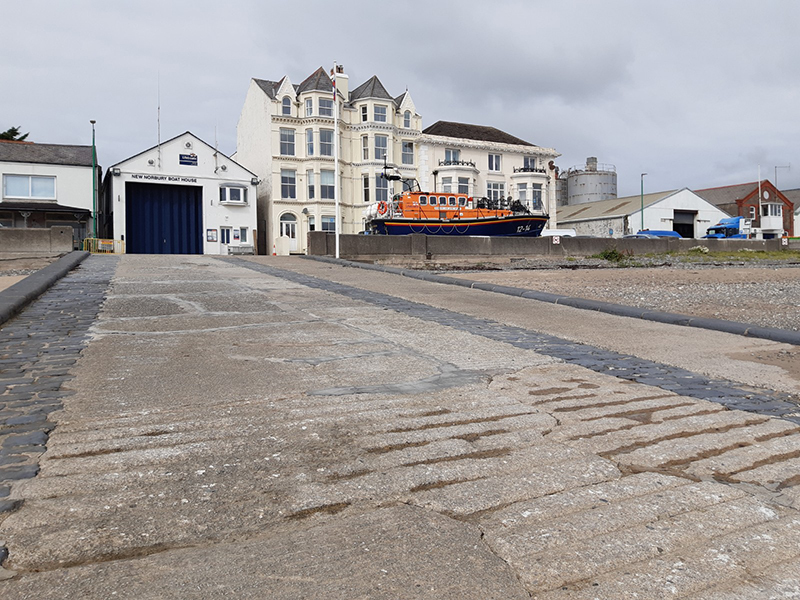
If you look to the north, you can see sandy, eroding cliffs. These were formed from glacial deposits during ice ages 70,000 to 10,000 years ago. The erosion and exposed sandy texture suggests that the area would not yield building material resistant to erosion from the sea.
Limestone is a sedimentary rock that was laid down at the bottom of shallow lakes and seas. Castletown limestone was formed during the carboniferous period around 330 million years ago when the rocks which form most of the Isle of Man were close to the equator and submerged beneath a shallow, tropical sea. The sea was inhabited by organisms including corals and crinoids but don’t take our word for it, here we can see the evidence in black and white!
Limestones vary in colour due to the presence of a variety of minerals. The dark carboniferous limestone in the slipway means the lighter coloured fossils are very easy to observe.
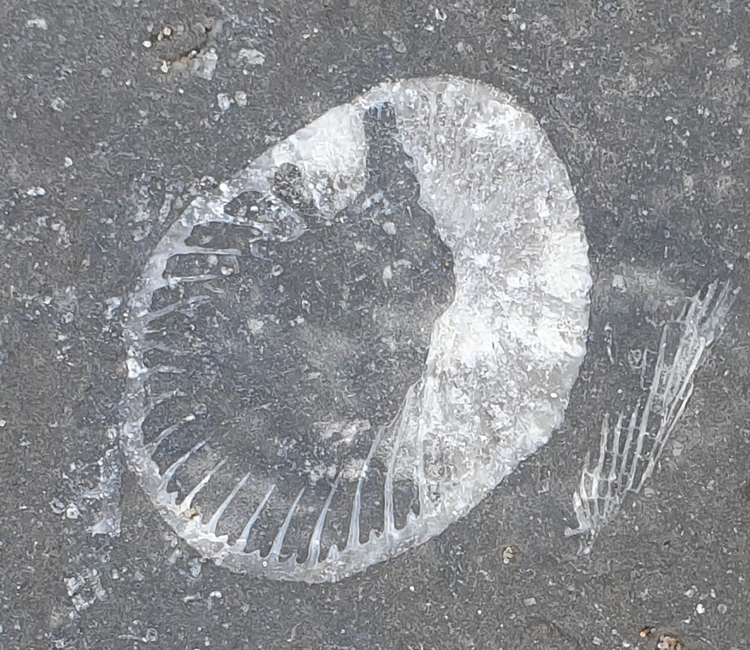
Some are solitary zaphrentid corals. Corals are still alive today, and often form great reefs in shallow tropical waters. During the Carboniferous period, corals did not form reefs and were often solitary.
Fig.1 Corals
 |
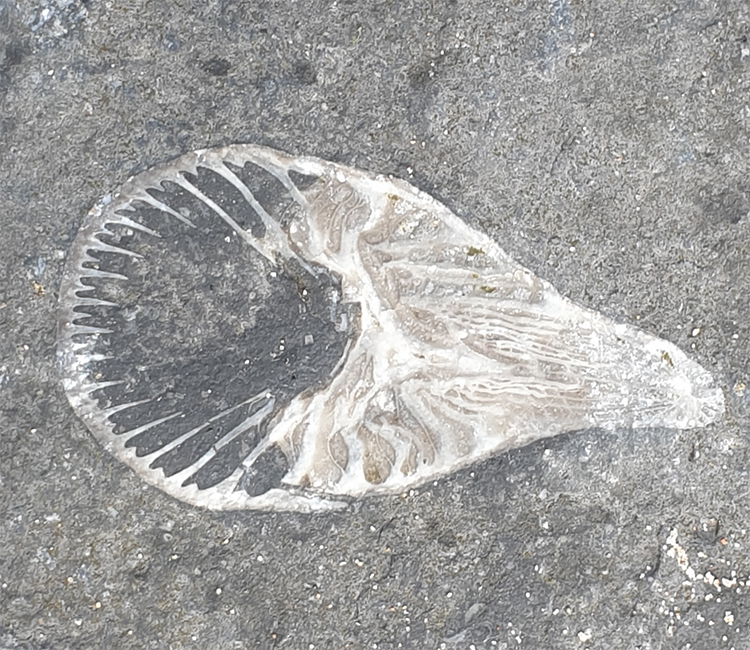 |
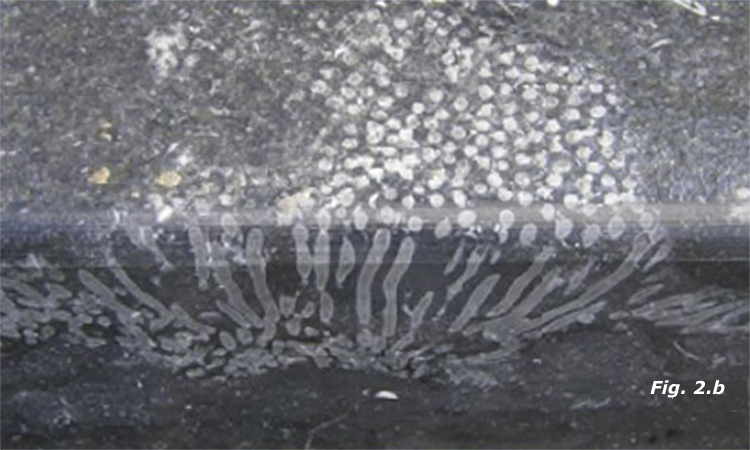
The shape of a fossil can vary depending what cross-section we can see. (Please note, photo 2b was not taken here and is for illustrative purposes).
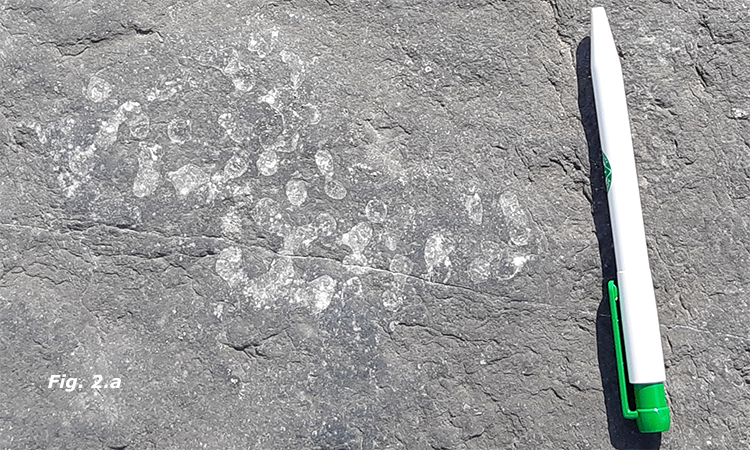
Fig.2
 |
 |
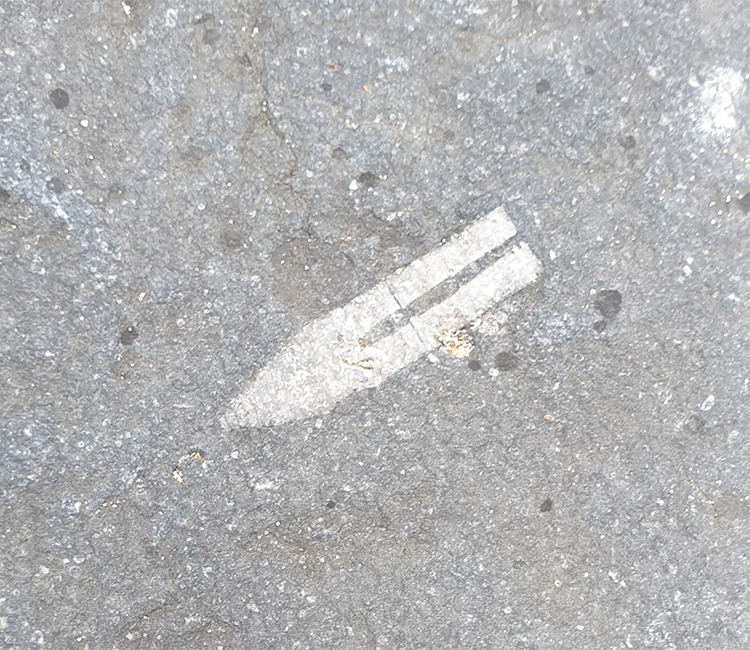
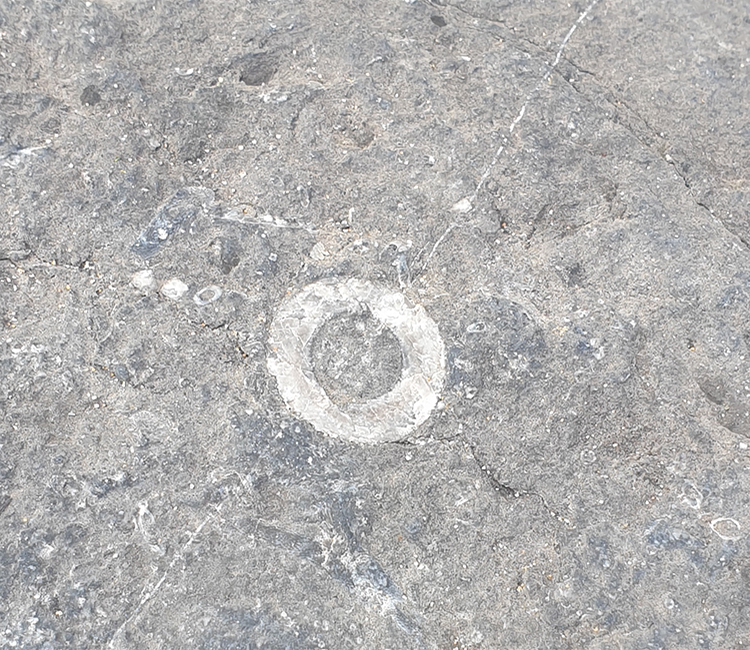
There are also fossils of crinoids here. Crinoids, or “sea lilies”, are related to starfish and sea urchins. They survived a period of mass extinction towards the end of the Permian Period, about 252 million years ago, when the number of crinoid species declined from around 6,000 to about 600 which exist today.
Fig.3 Crinoids
 |
 |
Despite appearances and a lack of mobility, both corals and crinoids are animals and not plants.
Please send your answers to the following questions in a message or email to us. Please do not answer questions 1 & 2 in your online log.
1. Look at the limestone blocks used in the slipway.
1.a How well have the blocks withstood over 130 years of weathering and the constant ebb and flow of the seawater? What, if any, signs of erosion or weathering can you see?
1.b Say whether you think the limestone is a good or poor choice here and why.
2. Now let’s look at the fossils, in particular those which can be seen in the upper surfaces of the limestone blocks. To answer this question, look at the blocks along the south side of the slipway.
2.a Counting from the road, which block contains the first coral fossil you can see?
2.b Again counting from the road, which block contains the first crinoid fossil you can see?
3. Please add a picture to your log of yourself or your geocaching equipment such as your GPS at the slipway.
If your visit is not at high tide, you might want to explore a little further, although these answers aren't required logging tasks.
There are a few fossils in the surface of the slipway itself. There is a large example almost halfway down, on the south side. Is this a coral or a crinoid?
Can you find the fossil from photo 2a? What kind of fossil do you think this is?
Look on the north side for the fossil in photo 3a. Can you find any more examples like this?