LAS PUERTAS DE CÁCERES ADVENTURE LAB: BONUS CACHÉ
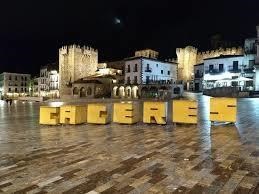
 Descripción en español, para descripción en inglés, ir más abajo. (Spanish listing, for english listing, see below)
Desde tiempos recientes los geocachers hemos conocido una nueva modalidad de juego, los adventure labs. Como sabéis, este juego se desarrolla a través de una aplicación específica y requiere la visita de los lugares señalados por su creador para descubrir las respuestas a varias preguntas que permiten la resolución del reto.
Este caché sirve de premio, o bonus, a aquellos jugadores que hayan realizado el adventure lab “PUERTAS DE CÁCERES” diseñado por nuestro amigo geocacher londontavern desde Inglaterra con una pequeña ayuda de los redtomatoes. Así mismo, el caché sirve de conmemoración de esta colaboración.
Antes de “daros la chapa” con nuestro rollo histórico, os vamos a contar cómo obtener las coordenadas finales y luego, el que quiera, que siga leyendo…
Cuando realicéis el adventure lab denominado “LAS PUERTAS DE CÁCERES”, al final de cada etapa obtendréis algunos datos que os permitirán encontrar las coordenadas finales. Estad por tanto muy atentos a los mensajes que se muestran en el adventure al responder correctamente a cada una de las preguntas.
De este modo, las coordenadas finales son N 39 28.ABC W 6 22.DEF
Aqui tenéis un vínculo para acceder directamente al adventure lab desde vuestro dispositivo móvil:

También podéis acceder desde el siguiente enlace: https://labs.geocaching.com/goto/PUERTASDECACERES
¡¡¡Esperamos que disfrutéis de la aventura y del premio final!!!
Ahora, un poco de historia, aunque lo podréis ver igualmente en el adventure, aquí no tenemos limitaciones de espacio…”
Durante la época romana, el recinto amurallado de Cáceres, que tenía una forma aproximadamente rectangular, con su cardo y su decumano, contaba con cuatro puertas, situadas en cada uno de los puntos cardinales. La más septentrional era de la de Coria (en la actualidad, todas las puertas romanas, salvo la del Río, o Arco del Cristo, en el flanco oriental de la muralla, han desaparecido). La Vía de la Plata bordeaba el emplazamiento de Norba Caesarina por el este, siguiendo la Ribera del Marco. Derivaciones de la calzada unían la vía romana con Norba a través de las puertas del Río, Mérida y Coria. La muralla fue reconstruida en tiempos del dominio almohade.
El Arco de la Estrella es la principal puerta de entrada al recinto amurallado desde el siglo XV, siendo la más conocida de la ciudad medieval de Cáceres.
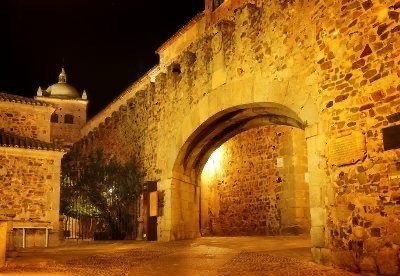
Situado al lado de la torre de Bujaco, se abrió en el siglo XV en el mismo punto donde había una portezuela para permitir el paso de los carruajes desde la Plaza Mayor; por entonces, la muralla había perdido gran parte de su naturaleza defensiva. Entonces se llamó, por motivos obvios, puerta Nueva. Ante ella juraron los fueros y privilegios de la ciudad, otorgados siglos antes por Alfonso IX, los Reyes Católicos, Isabel el 30 de junio de 1477 y Fernando el 27 de febrero de 1479.
La forma actual de la puerta se debe a la remodelación realizada por Manuel de Lara Churriguera en 1726, por encargo de Bernardino de Carvajal Moctezuma. Éste poseía el palacio siguiente a la torre de Bujaco y deseaba poder tener un fácil acceso de los carruajes a su palacio. Por ello solicitó al ayuntamiento derribar la antigua puerta y abrir una nueva con forma oblicua para poder girar holgadamente a la izquierda al entrar desde el exterior.
En la parte externa, el arco está coronado por el escudo de Cáceres, mientras que en la interna se encuentra un templete con una imagen de Nuestra Señora de la Estrella, que da nombre al arco. La imagen está iluminada por un pequeño farol en forma de estrella y, debajo de la misma, hay un escudo en piedra de la familia Carvajal.
El Arco del Cristo o puerta del Río es la puerta de entrada a la ciudad monumental de Cáceres más antigua que se conserva, construida en el siglo I. Está situada en el centro del flanco oriental de la muralla. Construida por grandes sillares romanos, la forman dos grandes arcos de medio punto, en ambas caras de la muralla. En la parte interior, una hornacina cubierta aloja un cuadro de Cristo, ubicado a principios del siglo XIX. Adosada a la puerta se conserva uno de los torreones defensivos que la flanqueaban, la Torre del Río.
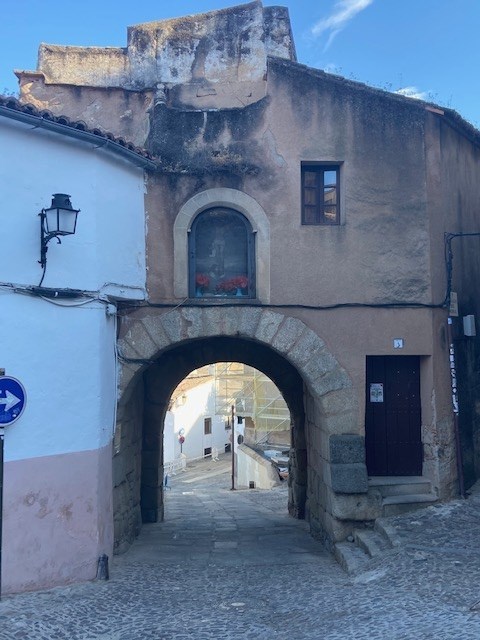
La puerta da acceso a la vaguada que forma la Ribera del Marco, de ahí el nombre de puerta del Río. Se cree que el ramal que comunicaba Norba Caesarina con la Vía de la Plata penetraba en la ciudad por esta puerta, más concretamente la ruta que conducía hasta Augusta Emerita, después de descender hasta el río y unirse con la calzada que salía de la ciudad por la Puerta de Coria.
La puerta de Coria o arco del Socorro fue una de las cuatro puertas con las que contaba el recinto amurallado de Norba Caesarina (actual Cáceres) durante la época romana. Se encontraba en el solar que actualmente ocupa la plaza del Socorro. Se mantuvo en uso hasta 1879, cuando fue derribada por iniciativa uno de los notables locales del Partido Liberal, Joaquín Muñoz Chaves.
Según la tradición, fue la puerta de Coria por donde las tropas de Alfonso IX de León entraron en la ciudad durante la conquista definitiva de Cáceres, en 1229. La puerta permaneció en pie hasta el siglo XIX. Ya en el siglo XVIII, los vecinos de la zona habían pedido su desaparición para mejorar la higiene de la zona, lúgubre y considerada un foco de insalubridad.
En 1879, Joaquín Muñoz Chaves, miembro de una de las familias que, al servicio del el Partido Liberal, gobernaban la provincia de Cáceres y que posteriormente sería senador, solicitó permiso al ayuntamiento de la ciudad para proceder al derribo de la puerta. Chaves, que vivía en una casa de la calle de las Tiendas, próxima al arco, argumentó en su solicitud que la puerta era un foco de insalubridad y que el arco no estaba a la altura de lo que la ciudad de Cáceres merecía (según Chaves, el arco «despojado por completo de todo mérito artístico que aconseje su conservación tiene en sus rincones un depósito de suciedad incompatible con la buena higiene y limpieza de esta parte de la población»; además, «constituye en sus pesadas arquerías un poderoso obstáculo al ensanche y buen ornato del sitio en que está emplazado»).
Aunque la Real Academia de Bellas Artes de San Fernando pidió al ayuntamiento que no accediera a ello, al tratarse de un acto contrario a la legislación, cuando el oficio enviado por la academia llegó a Cáceres en febrero de 1880, el alcalde, José López-Montenegro ya había aprobado la demolición y ésta se había llevado a cabo. Según respondió el ayuntamiento, «ni por la prensa ni por persona alguna entendida se le haya nunca considerado como de mérito artístico ni científico».
Actualmente, en la plaza del Socorro se ha acondicionado un jardín en el que se pueden observar restos de la muralla romana junto a la ubicación de la puerta de Coria.
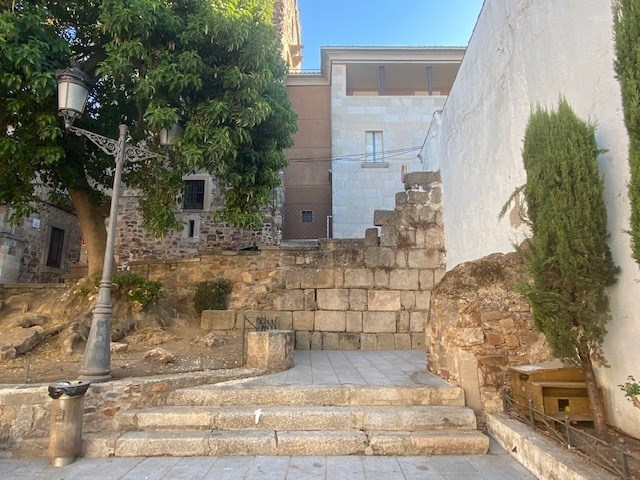
La Puerta de Mérida (gracias al blog de Jesús Sierra Bolaños por la información) fue la primera de las puertas originales romanas en desaparecer. Daba acceso a la ciudad por el lado sur y debía ser muy similar a la del Arco del Cristo. La Puerta de Mérida permaneció en pie hasta el año 1.751 cuando fue derribada por el concejal Pablo Becerra de Monroy, el cuál pretendía construir su palacio al pie del arco y aprovechando que algunos vecinos se habían quejado de las dificultades que la estrechez de la puerta provocaba al paso de los carruajes.
Entre los argumentos esgrimidos por el concejal nos llamó la atención éste en particular, al decir que la puerta no tenía “la más leve recomendación de alguna cosa particular de la antigüedad, como es aver entrado algún héroe, aver sido por el que conquistaron esta villa sus ciudadanos o otra cosa semejante”. Ya hemos visto que la Puerta de Coria, que si cumplía estas condiciones por suponer la tradición que fue por donde entraron en la ciudad las tropas cristianas, tampoco se salvo del derribo por los intereses particulares de los notables locales.
Sin embargo, durante las obras que se hicieron en el corral de los Monroy apareció una inscripción en una lápida (hoy desaparecida) donde se leía COL.NORB.CAESARIN, primera prueba historiográfica de que Cáceres fue en época romana Norba Caesarina.
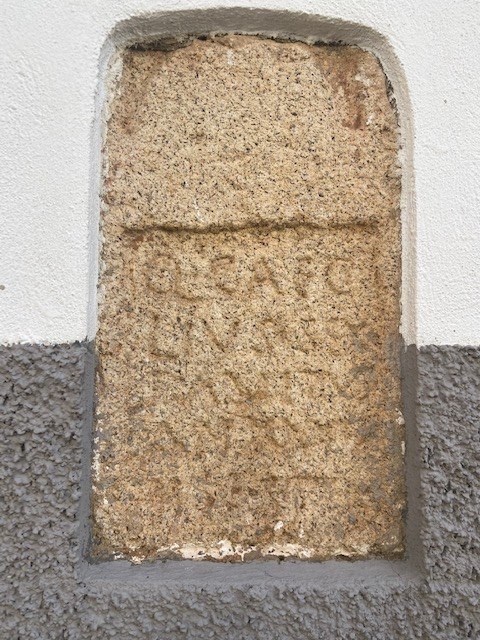
Hoy en día el único vestigio que queda de la Puerta de Mérida es una hornacina que estaba situada sobre el arco, lugar donde estuvo situada la imagen del Nazareno, divinidad que protegía la puerta en épocas cristianas. Además, debajo de ésta, se ubica una estela de origen romano.
El Arco de Santa Ana es una de las puertas de entrada a la ciudad amurallada de Cáceres.
Desde la época musulmana fue un paso menor de los que se llevaron a cabo en la muralla para acceder a la ciudad intramuros. En 1758 se reformó y se ensanchó para facilitar el paso al interior de la ciudad a través suya.
En centro del arco se abre una hornacina en la que se puede apreciar la imagen en piedra de Santa Ana que sostiene al niño Jesús en su regazo.
Algo que merece destacar en la visita a esta puerta, es la continuidad hacia la muralla de Cáceres, que es visitable en algún tramo por esta misma zona. La llegada de los romanos llevará a la construcción de una colonia: Norba Caesarina, que ocuparía el lugar de un antiguo castro celtibérico y por supuesto, a la construcción de una nueva muralla. La muralla romana, según algunos historiadores, data del siglo I y fue construida utilizando sillares graníticos.
Fue reconstruida por los almohades, como lo atestigua el uso de la mampostería en los muros y la tierra prensada en las torres. También añadirán en esta época las torres albarranas, unas 22 torres aproximadamente (algunos historiadores consideran que pudieron ser unas 40 torres). Los árabes consiguieron crear en Cáceres una fortaleza inexpugnable, a la que llamarán Hinz Qazris, que significa: el castro, la fortaleza.
Tras la reconquista, la muralla pierde valor defensivo y se comienzan a construir casas adosadas a la muralla. Además, algunos tramos de ésta son utilizados para sacar material de construcción, perdiéndose gran parte de la muralla.


GATES OF CÁCERES ADVENTURE LAB: BONUS CACHE
Since recent times, geocachers have known a new game mode, adventure labs. As you know, this game is played through a specific application and requires the visit of the places indicated by its creator to discover the answers to various questions that allow the resolution of the challenge.

This cache serves as a prize, or bonus, to those players who have completed the adventure lab "PUERTAS DE CÁCERES" designed by our geocacher friend londontavern from England with a little help from redtomatoes. Likewise, the cache serves as a commemoration of this collaboration.

Before you get bored with our historical lesson, we are going to show you how to obtain the final coordinates, and then, whoever wants, can continue reading ...

When you do the adventure lab called "LAS PUERTAS DE CÁCERES", at the end of each stage you will obtain some data that will allow you to find the final coordinates. Therefore, be very attentive to the messages that are shown in the adventure when answering each of the questions correctly.

Thus, the final coordinates are N 39 28.ABC W 6 22.DEF
Here you have a link to access to the adventure lab in your mobile device:
And you can also go by clicking in the following link: https://labs.geocaching.com/goto/PUERTASDECACERES
We hope you enjoy the adventure and the final bonus !!!
Now, a bit of history, although you can also see in the adventure, here we have no space limitations ...

During Roman times, the walled enclosure of Cáceres, which had an approximately rectangular shape, with its thistle and its decumanus, had four gates, located at each of the cardinal points. The northernmost was that of Coria (in nowadays, all the Roman gates, except that of the River, or Arco del Cristo, on the eastern flank of the wall, have disappeared). The Vía de la Plata skirted the site of Norba Caesarina to the east, following the Ribera del Marco. Derivations of the road linked the Roman road with Norba through the gates of the River, Mérida and Coria.The wall was rebuilt in times of Almohad rule.
The Arco de la Estrella is the main gateway to the walled enclosure since the 15th century, being the best known in the medieval city of Cáceres.
Located next to the Bujaco tower, it was opened in the 15th century at the same point where there was a door to allow the passage of carriages from the Plaza Mayor; by then, the wall had lost much of its defensive nature. Then it was called, for obvious reasons, New door. Before her they swore the privileges (laws) of the city, granted centuries before by Alfonso IX, the Catholic Monarchs, Isabel on June 30, 1477 and Fernando on February 27, 1479.

The current shape of the door is due to the remodeling carried out by Manuel de Lara Churriguera in 1726, commissioned by Bernardino de Carvajal Moctezuma. This one owned the palace next to the tower of Bujaco and wished to be able to have easy access of the carriages to his palace. For this reason, he asked the city council to tear down the old door and open a new one with an oblique shape to be able to turn easily to the left when entering from the outside.

On the outside, the arch is crowned by the Cáceres shield, while on the inside there is a temple with an image of Our Lady of the Star, which gives the arch its name. The image is illuminated by a small star-shaped lantern and, below it, there is a stone shield of the Carvajal family.
The Arco del Cristo or River Gate is the oldest preserved entrance gate to the monumental city of Cáceres, built in the 1st century. It is located in the center of the eastern flank of the wall. Built by large Roman ashlars, it is formed by two large semicircular arches, on both sides of the wall. Inside, a covered niche houses a painting of Christ, located at the beginning of the 19th century. Attached to the door is one of the defensive towers that flanked it, the Torre del Río.
The gate gives access to the valley that forms the Ribera del Marco, hence the name of Puerta del Río. It is believed that the branch that communicated Norba Caesarina with the Vía de la Plata entered the city through this gate, more specifically the route that led to Augusta Emerita, after descending to the river and joining the road that left the city by the Puerta de Coria.
The Coria gate or Arco del Socorro was one of the four gates that had the walled enclosure of Norba Caesarina (current Cáceres) during Roman times. It was located on the site that currently occupies the Plaza del Socorro. It remained in use until 1879, when one of the notable locals of the Liberal Party, Joaquín Muñoz Chaves, was demolished at the initiative.


According to tradition, it was the Coria gate through which the troops of Alfonso IX of León entered the city during the definitive conquest of Cáceres, in 1229. The gate remained standing until the 19th century. Already in the eighteenth century, the residents of the area had asked for his disappearance to improve the hygiene of the area, dingy and considered a source of unhealthy conditions.

In 1879, Joaquín Muñoz Chaves, a member of one of the families that, at the service of the Liberal Party, governed the province of Cáceres and who later became a senator, requested permission from the city council to proceed with the demolition of the door. Chaves, who lived in a house on Calle de las Tiendas, close to the arch, argued in his request that the door was a source of unhealthy conditions and that the arch was not at the level of what the city of Cáceres deserved (according to Chaves , the arch "completely stripped of any artistic merit that advises its conservation has in its corners a deposit of dirt incompatible with the good hygiene and cleanliness of this part of the population"; furthermore, "in its heavy arches it constitutes a powerful obstacle to widening and good decoration of the place where it is located »).

Although the Royal Academy of Fine Arts of San Fernando asked the city council not to agree to it, as it was an act contrary to the legislation, when the letter sent by the academy arrived in Cáceres in February 1880, the mayor, José López- Montenegro had already approved the demolition and it had been carried out. According to the city council, "neither by the press nor by any knowledgeable person has it ever been considered of artistic or scientific merit."

Currently, in the Plaza del Socorro a garden has been set up in which remains of the Roman wall can be seen next to the location of the Puerta de Coria.
The Puerta de Mérida (thanks to Jesús Sierra Bolaños' blog for the information) was the first of the original Roman gates to disappear. It gave access to the city from the south side and it should be very similar to the Arch of Christ. The Puerta de Mérida remained standing until 1751 when it was demolished by councilor Pablo Becerra de Monroy, who intended to build his palace at the foot of the arch and taking advantage of the fact that some neighbors had complained about the difficulties that the narrowness of the door caused to the passing of the carriages.

Among the arguments put forward by the councilor, this one in particular caught our attention, when he said that the door did not have “the slightest recommendation of any particular thing of antiquity, as it is to see a hero entered, it was by the one who conquered this town its citizens or something similar ”. We have already seen that the Puerta de Coria, which if it fulfilled these conditions by assuming the tradition that was where the Christian troops entered the city, was not saved from being demolished by the particular interests of the local notables.

However, during the works that were carried out in the Monroy corral, an inscription appeared on a tombstone (now disappeared) where COL.NORB.CAESARIN was read, the first historiographic proof that Cáceres was Norba Caesarina in Roman times.

Today the only vestige that remains of the Puerta de Mérida is a niche that was located on the arch, where the image of the Nazarene was located, a divinity that protected the door in Christian times. In addition, below it, there is a stela of Roman origin.
The Arco de Santa Ana is one of the entrance gates to the walled city of Cáceres.


From the Muslim era it was a minor step of those that were carried out on the wall to access the city within the walls. In 1758 it was reformed and widened to facilitate the passage to the interior of the city through it.

In the center of the arch there is a niche in which you can see the stone image of Santa Ana holding the baby Jesus in her lap.

Something that deserves to be highlighted in the visit to this door is the continuity towards the wall of Cáceres, which can be visited in some section through this same area. The arrival of the Romans will lead to the construction of a colony: Norba Caesarina, which would occupy the place of an old Celtiberian fort and of course, to the construction of a new wall. The Roman wall, according to some historians, dates from the 1st century and was built using granite ashlars.

It was rebuilt by the Almohads, as evidenced by the use of masonry on the walls and pressed earth on the towers. At this time they will also add the albarrana towers, some 22 towers approximately (some historians consider that they could be about 40 towers). The Arabs managed to create an impregnable fortress in Cáceres, which they will call "Hinz Qazris", which means: the fortress.

After the reconquest, the wall loses its defensive value and houses are built next to the wall. In addition, some sections of it are used to remove construction material, losing a large part of the wall.