Ci troviamo con questa Earthcache oltre il margine settentrionale della Valle dei Mulini (già trattata nella vicina cache GC9007W) in una zona molto particolare: il punto di contatto tettonico certo tra due faglie, cioè la superficie tettonica lungo la quale due corpi geologici distinti si sono incontrati (cfr.: database cartografico Ispra).
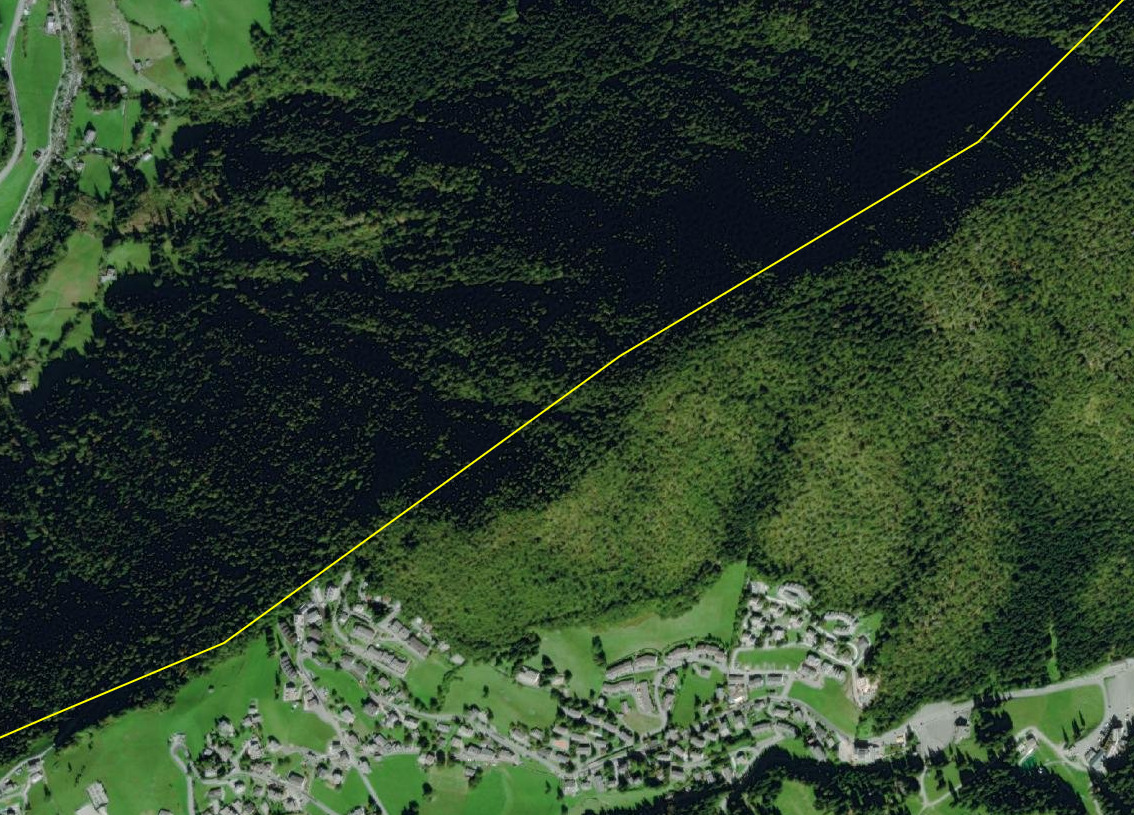
Punto di contatto tettonico certo
Qui lo scontro e la deformazione dei due corpi ha portato all'affioramento molto evidente di strutture rocciose imponenti, che caratterizzano tutta la zona circostante.
Guardando con più attenzione si può notare, tra le rocce talvolta ricoperte di muschi e licheni, la presenza di grosse venature biancastre, che indicano la presenza di un minerale particolare.
Quale lo scoprirete una volta sul posto, ovviamente, perché è questo il tema della Earthcache!
Il quarzo e la calcite sono molto diversi l'uno dall'altra, a partire dalla composizione chimica: biossido di silicio infusibile e quasi insolubile il quarzo, carbonato di calcio fusibile e solubile in molte soluzioni acide la calcite.
QUARZO
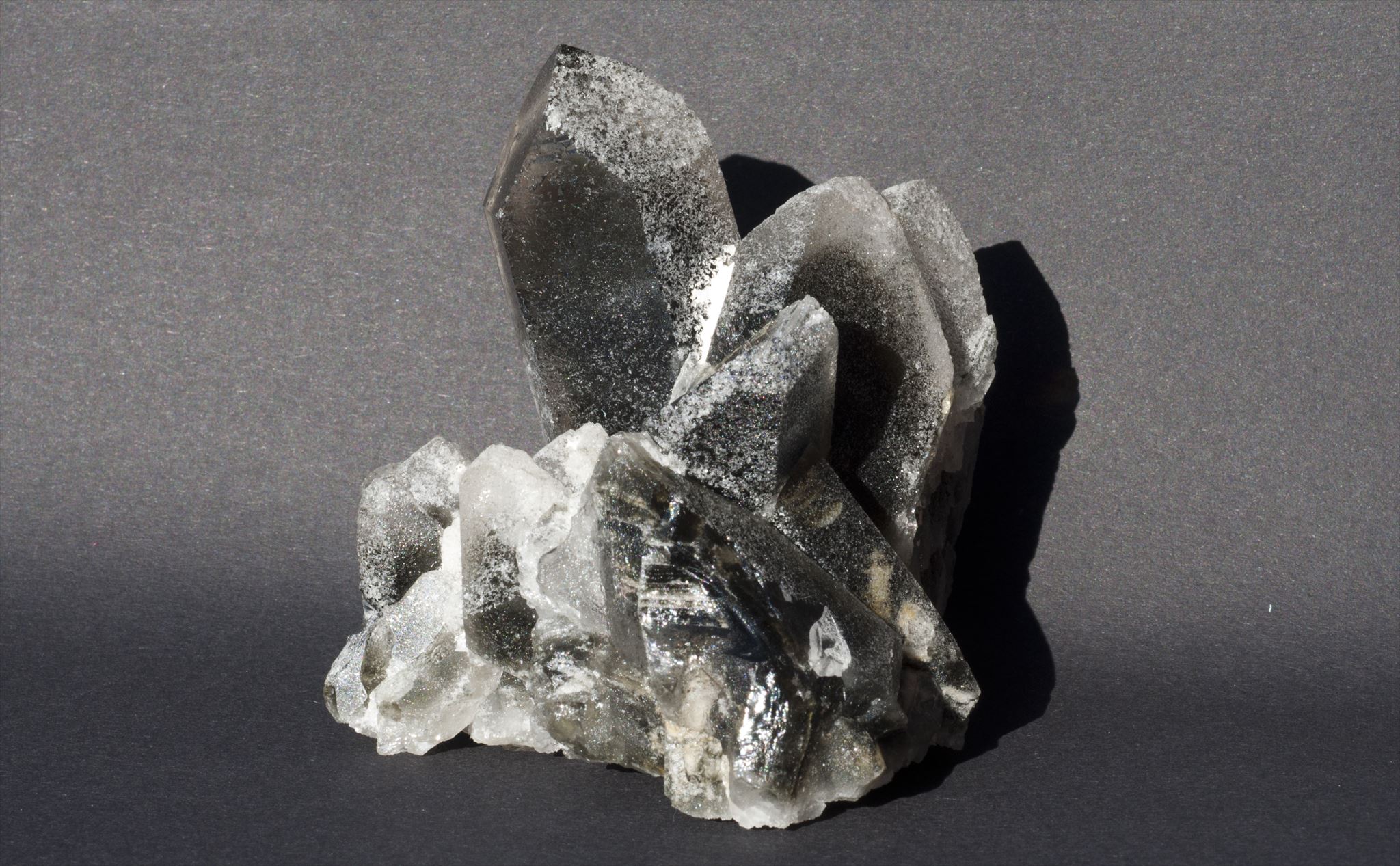
Quarzo fantasma (collezione Lord Yoruno) - Brasile (Minas de Gerais)
Il quarzo (SiO2) è un silicato caratterizzato da una struttura cristallina unica con catene a elica di tetraedri di silicio.
Il quarzo può variare da un luogo all'altro in base al colore, alla trasparenza, alla quantità di biossido di silicio e può essere incolore, rosa, rosso, nero, blu, arancione, marrone, giallo, viola.
Alcuni minerali di quarzo possono essere trasparenti, altri più o meno traslucidi e molto raramente opachi. È considerato una pietra semipreziosa e utilizzato nella gioielleria.
Secondo minerale più abbondante sulla superficie terrestre, ha un'ampia distribuzione in tutto il mondo e componente di tutti e tre i tipi di rocce: magmatiche, sedimentarie e metamorfiche.
Può avere origine magmatica, sedimentaria e metamorfica, anche se quella primaria magmatica è la più abbondante: è infatti uno dei minerali costituenti fondamentali delle rocce granitiche.
Nelle rocce sedimentarie è molto frequente in quanto è un minerale resistente all'alterazione chimico-fisica e nelle rocce metamorfiche può trasformarsi nei polimorfi del silicio di alta temperatura e pressione (Tridimite e Cristobalite, quest'ultima presente quasi esclusivamente nei crateri da impatto di meteorite, data l'altissima pressione a cui si forma).
L' "habitus" (la forma) tipico è quello di un prisma esagonale con ai vertici le facce di due romboedri disposte in modo tale da simulare una bipiramide esagonale. Se privo di impurità il cristallo viene detto "Quarzo ialino".
Il quarzo è solo una delle 19 fasi cristalline della silice e cristallizza secondo due impalcature atomiche distinte, conosciute come quarzo-α e quarzo-β. Quello comunemente rinvenuto è sempre quarzo alfa perché a temperatura e pressione ambiente anche il quarzo beta si trasforma in alfa.
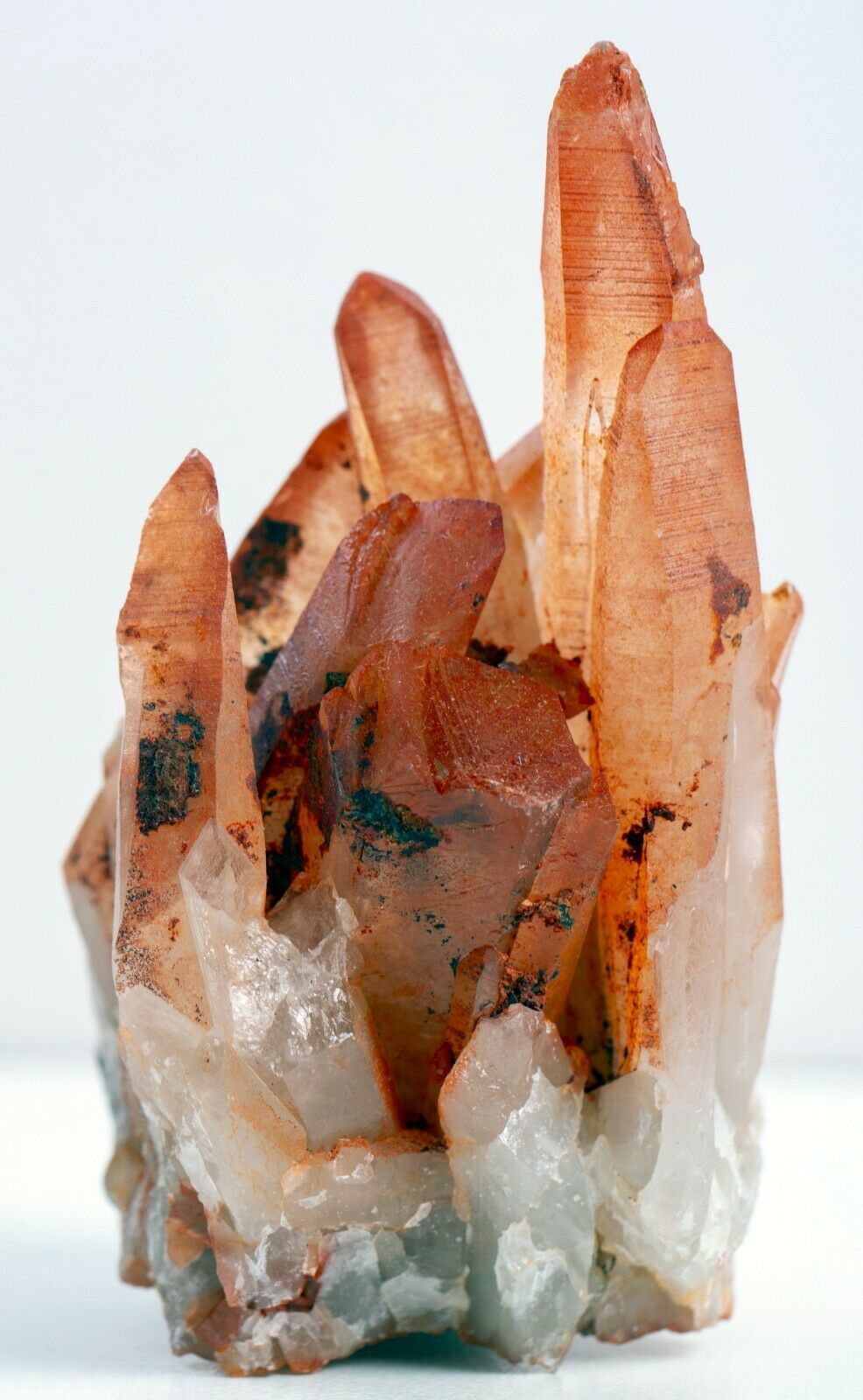
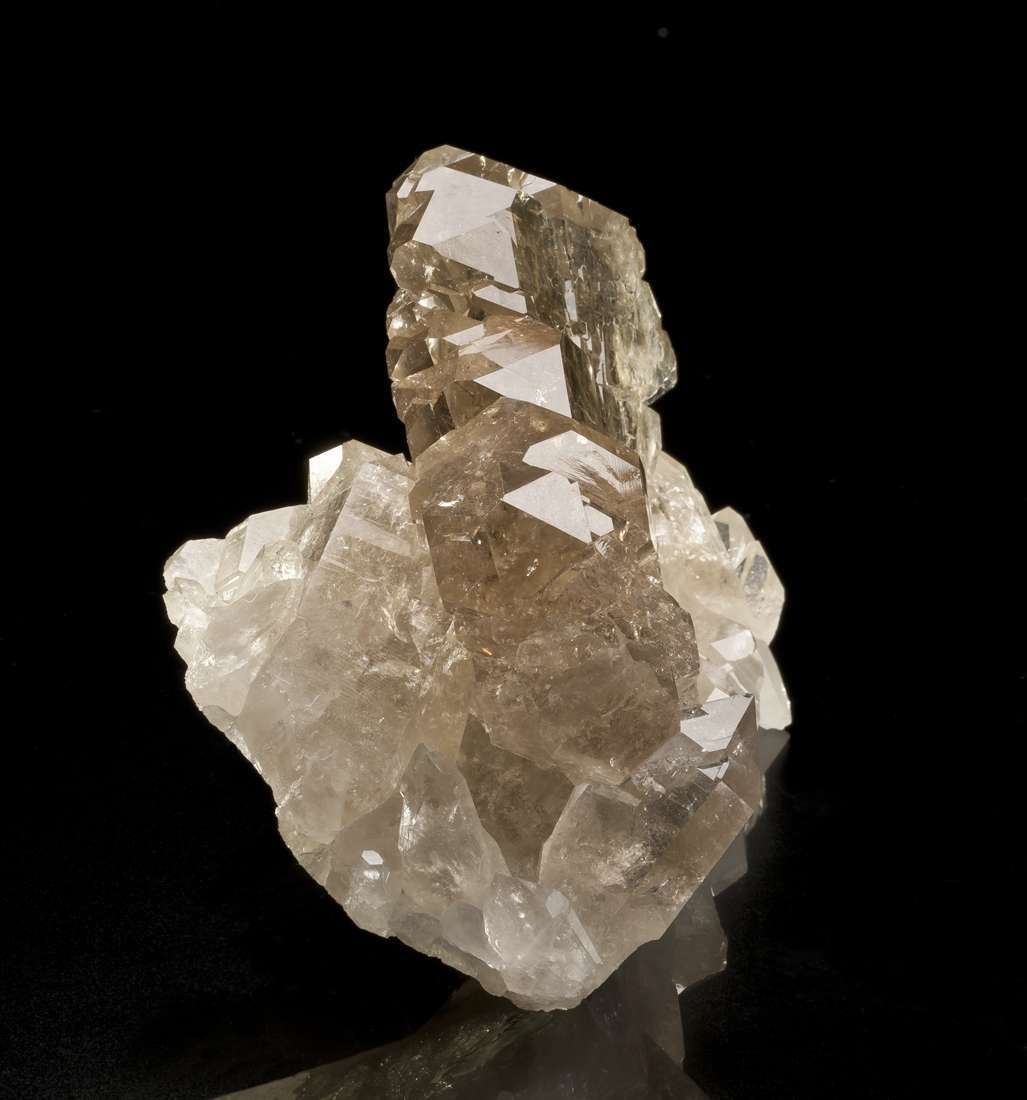
Sinistra: Quarzo di fuoco (coll. Lord Yoruno) - Marocco / Destra: Quarzo affumicato (coll. Rob Lavinsky ) - Saranpaul, Russia
CALCITE
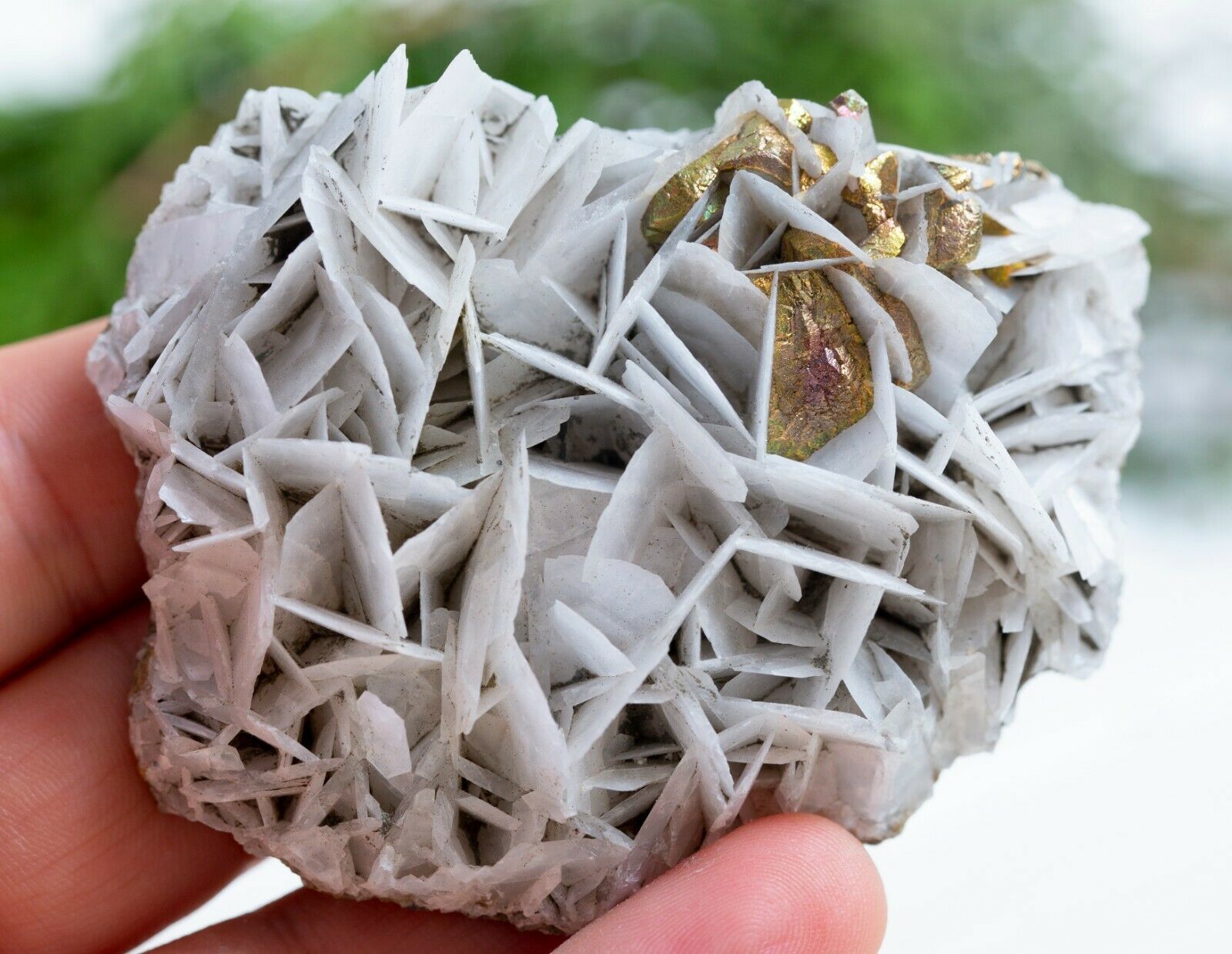
Calcite "Ali d'angelo" con Calcopirite (coll. Lord Yoruno) - Messico (Santa Barbara)
La calcite (CaCO3) è un carbonato caratterizzato da una struttura cristallina unica con catene a elica di tetraedri di silicio.
La calcite è tipicamente incolore o bianca. Se presenta impurità può dar luogo ad una moltitudine di tonalità differenti, da rosso, rosa, arancio, bruno, giallo, verdoe, grigio, nero e altri.
Minerale tipico di origine sedimentaria, sia per precipitazione chimica diretta da evaporazione di soluzioni sovrassature, sia per sedimentazione di resti organici di organismi marini che utilizzano il carbonato di calcio come costituente il loro guscio. Si può anche originare in rocce metamorfiche e magmatiche. In ambiente geotermico, i fluidi caldi circolanti tra le rocce possono contenere notevoli quantità di carbonato di clacio disciolto che precipita dando origine ad incrostazioni calcaree appena si raggiungono le condizioni di pressione e temperatura ambiente superficiali.
L' "habitus" (la forma) tipico è quello romboedrico, scalenoedrico, prismatico esagonale e varie combinazioni tra questi, sempre rispettando la simmetria del sistema trigonale. Frequenti sono i casi di geminazione. La calcite si trova comunque in molte altre forme microcristalline a causa dei molteplici ambienti in cui si può formare (in particolare sedimentario e come precipitato da fluidi idrotermali "travertino" che possono dare forme massive o vacuolari., stalattitica e stalagmitica). Altri ambienti sedimentari possono dare forme fibrosa, nodulare, oolitica, dendritica, granulare, in strati ed in mille altri modi.
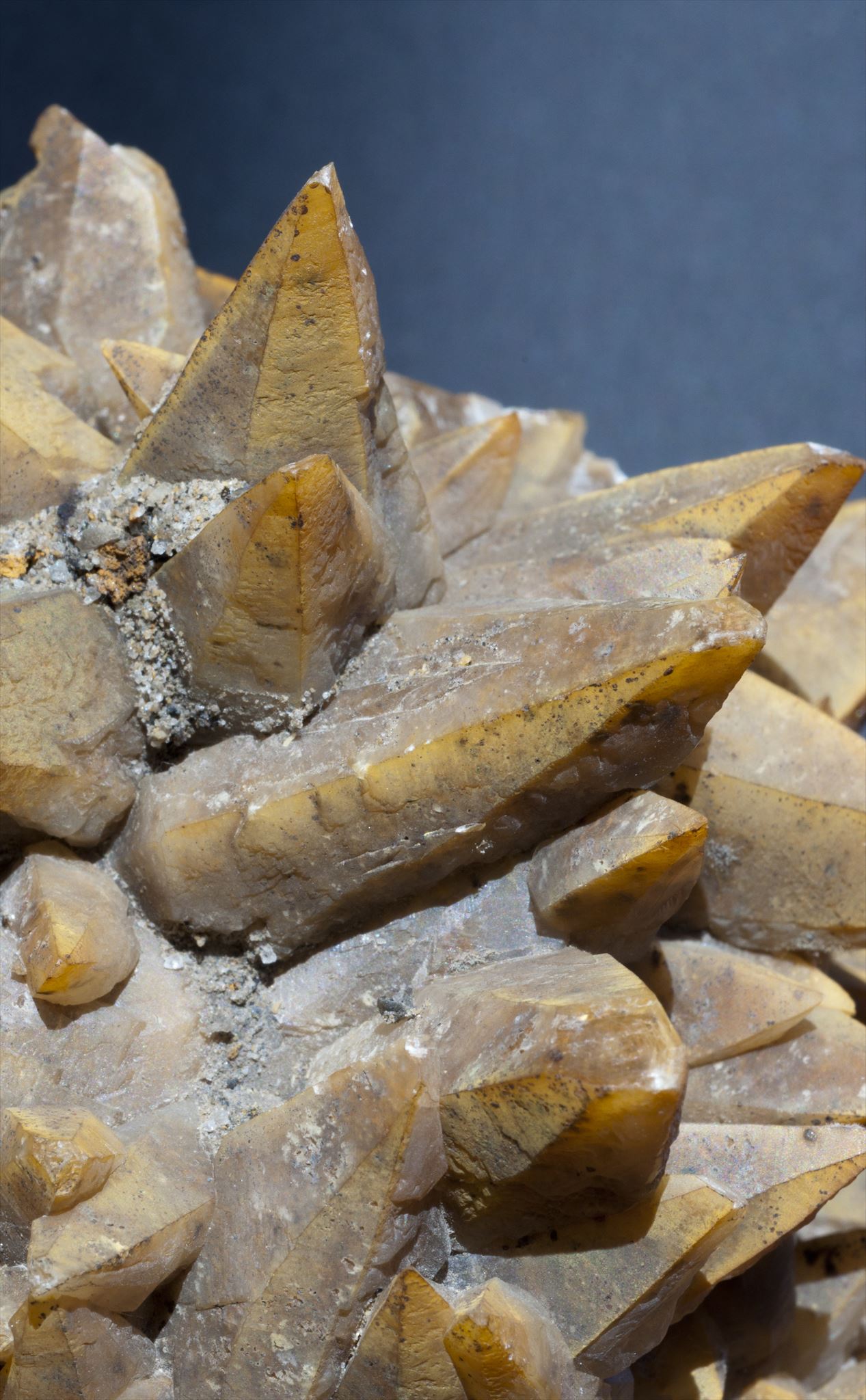
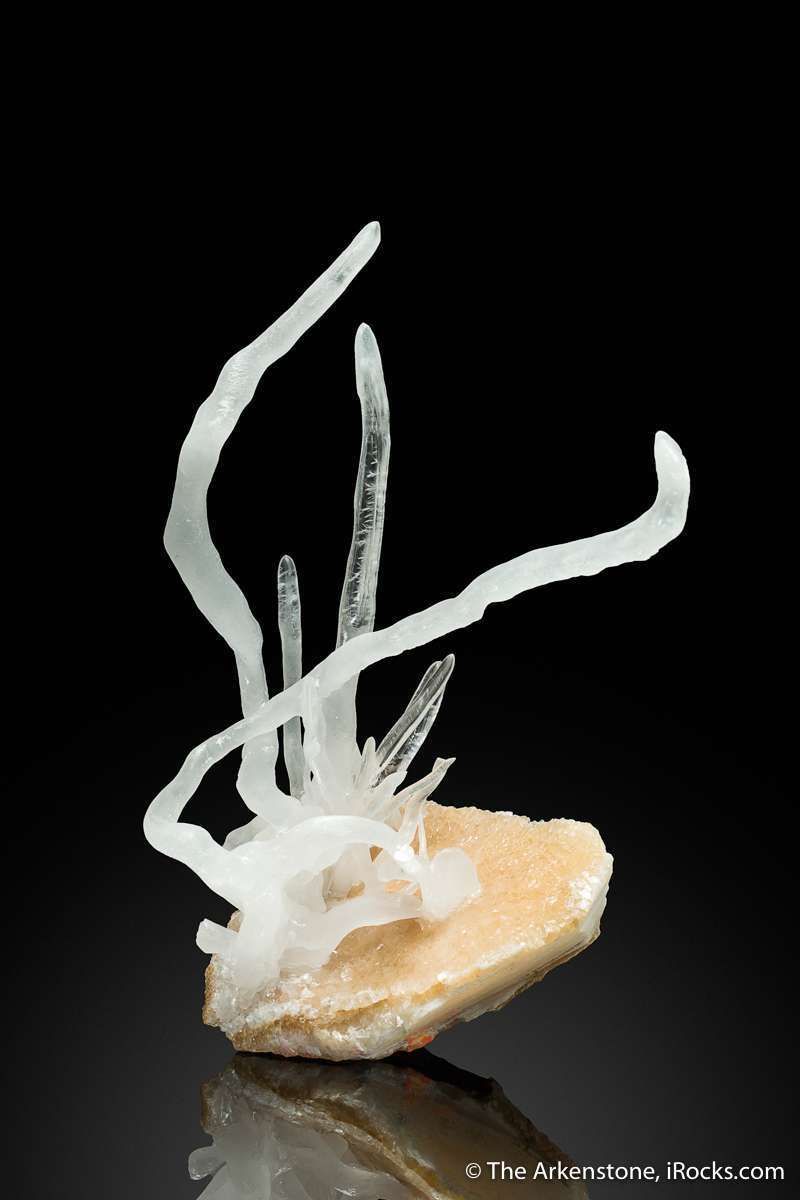
Sinistra: Calcite "Dente di cane" (coll. Lord Yoruno) - Italia (Miniera San Giovanni, Sardegna) / Destra: Calcite (coll. Rob Lavinsky ) - Wenshan, Yunnan Prov., China
QUARZO O CALCITE?
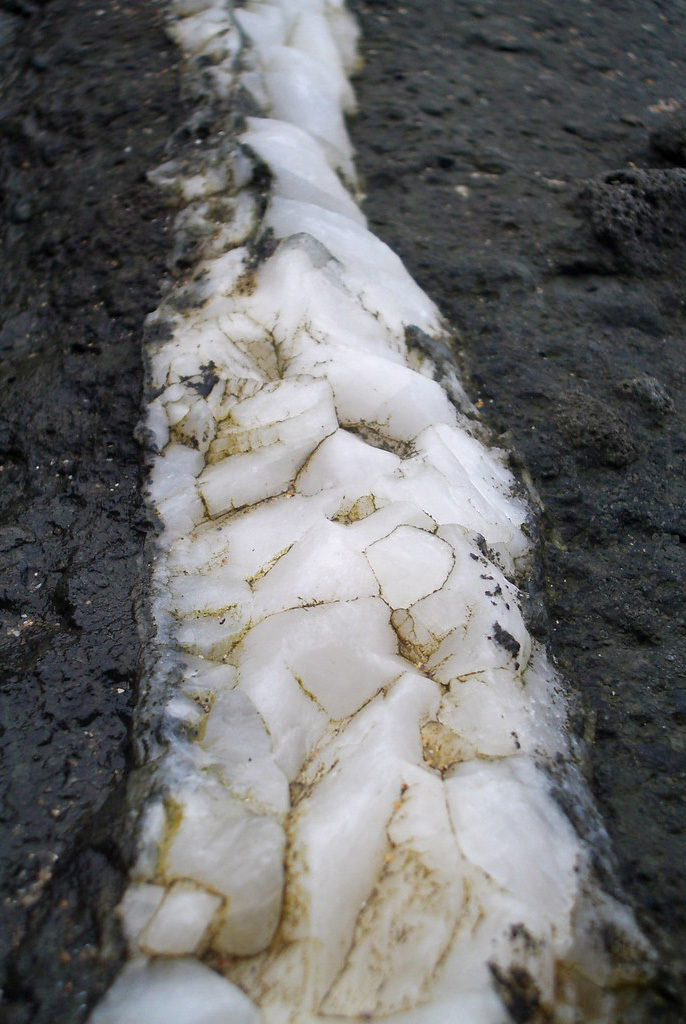
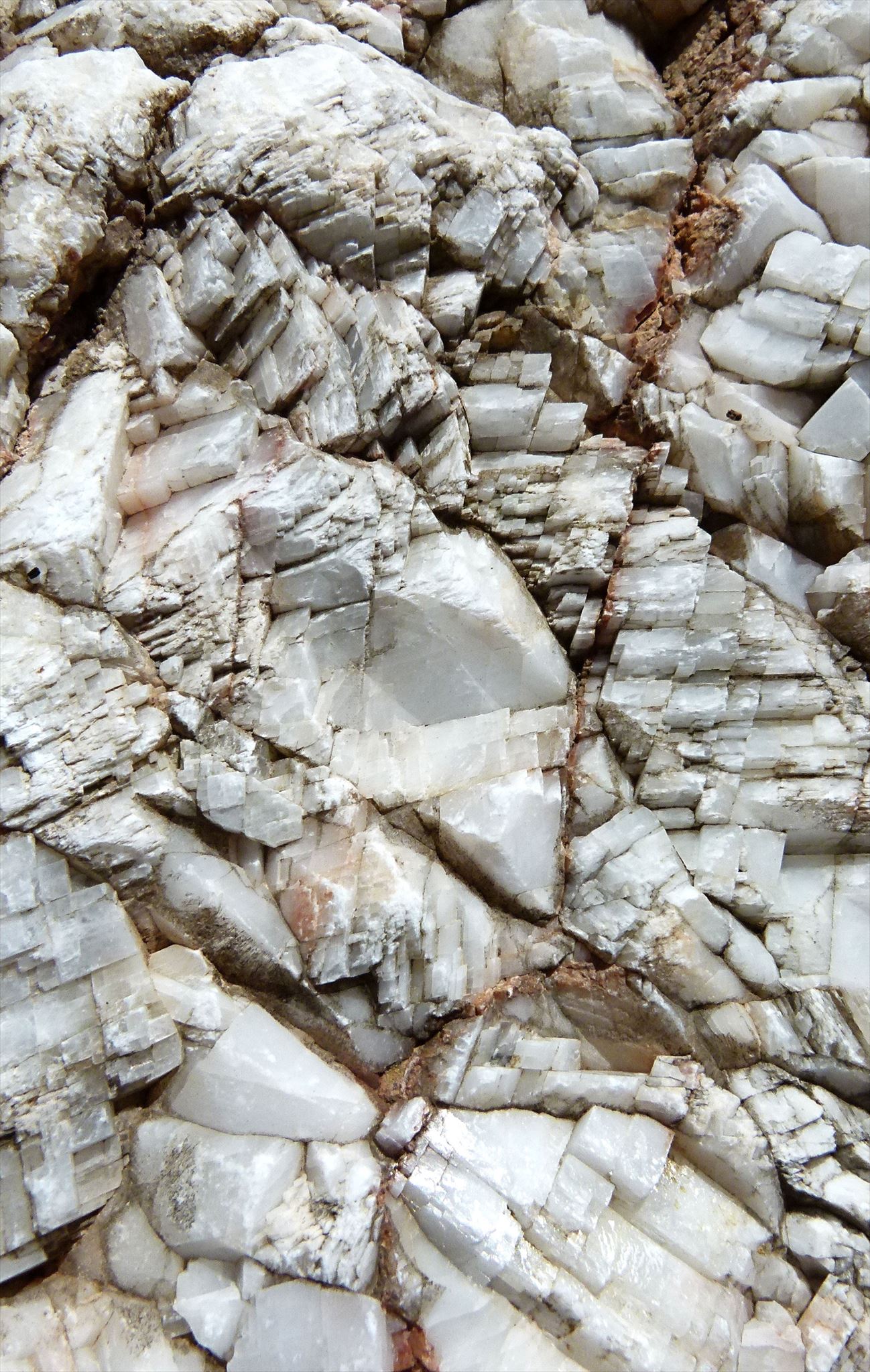
Sinistra: vena di quarzo / Destra: vena di calcite
Altre sostanziali differenze tra i due minerali sono relative alla tipologia di clivaggio e frattura e, più di tutte, alla durezza.
Per quanto riguarda la frattura la calcite esibisce la scollatura rombica, il che significa che si rompe lungo tre piani di debolezza che creano una forma rombica per il cristallo. Il quarzo non ha una fenditura forte ma può fratturarsi attraverso il cristallo, lasciando una superficie ruvida sul cristallo rotto. Le fratture di quarzo sono descritte come concoidali quando la superficie fratturata presenta un motivo di turbolenza sulla pietra.
Quanto alla durezza, questa è la differenza cruciale tra i due minerali.
Il quarzo è circa quattro volte più duro della calcite. Un pezzo di quarzo può graffiare un campione di calcite, ma la calcite non può graffiare il quarzo. Se si dispone di un campione se ciascuno, provare a grattare un campione con l'altro per osservare la differenza nella durezza.
Per testare la durezza di questi due minerali si usa, generalmente, un coltellino: la lama del coltello ha un valore di durezza compreso tra calcite e quarzo e quindi, il coltello può graffiare un cristallo di calcite ma non il quarzo.
EARTHCACHE
Per poter registrare come "found" questa eartcache devi rispondere alle seguenti domande.
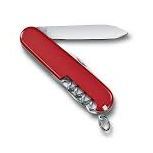
Mi raccomando, devi portarti un coltellino svizzero per poter rispondere a questa EC!
1. Stage A - venatura meridionale
Una volta alle coordinate della EC sarai di fronte ad un notevole affioramento superficiale di minerale nella roccia.
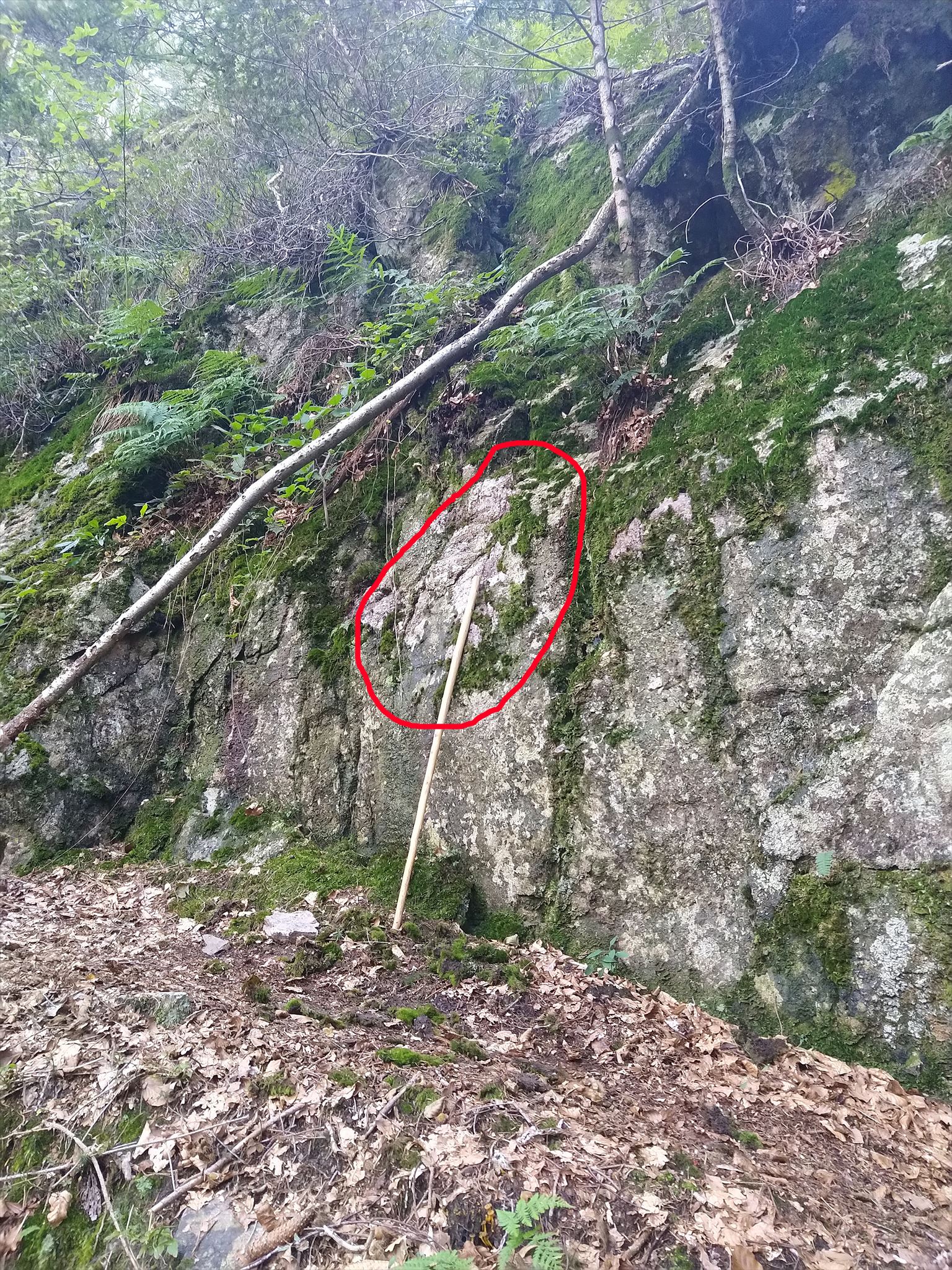
Osservandola con più attenzione puoi notare svariate venature.
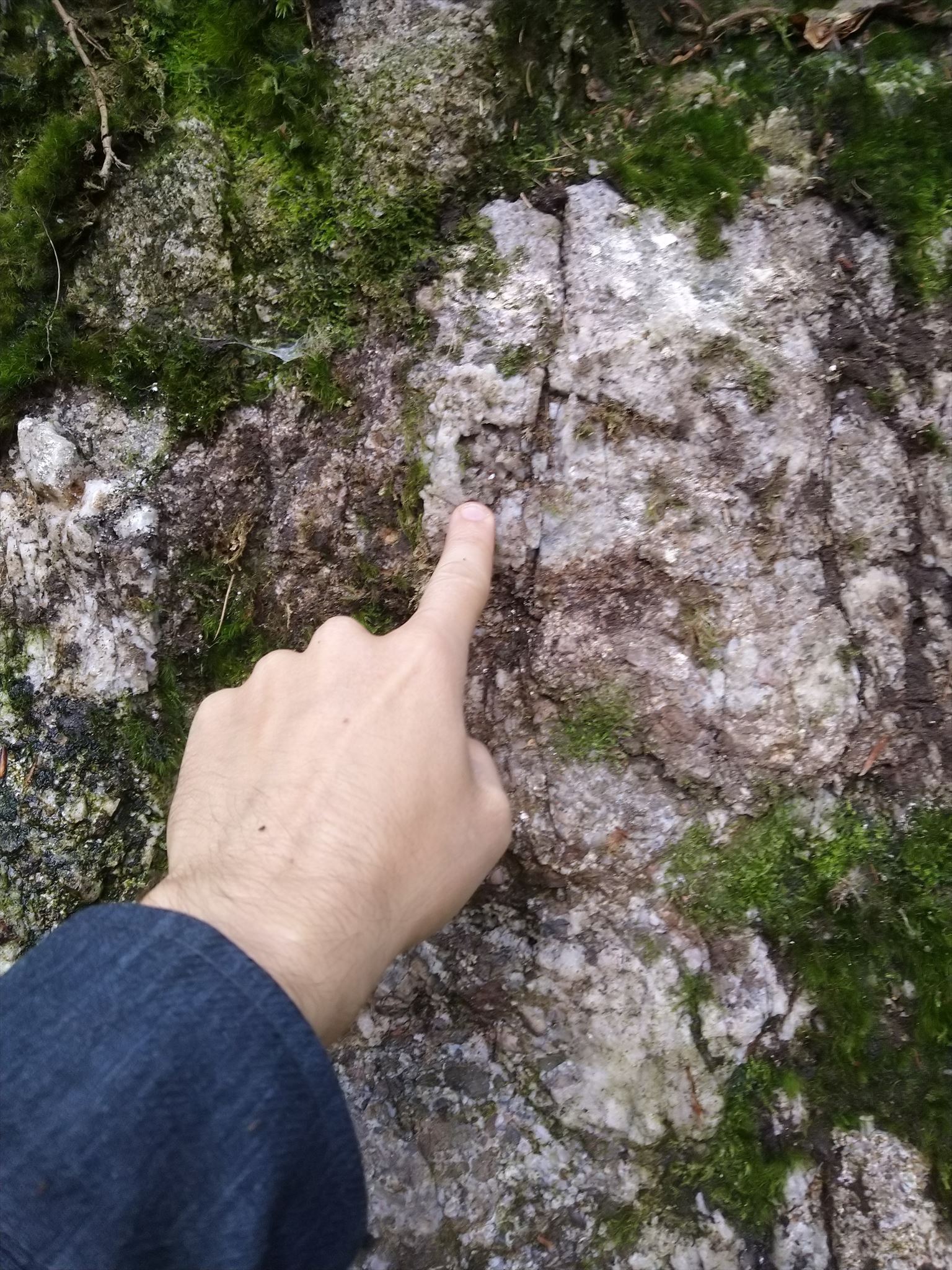
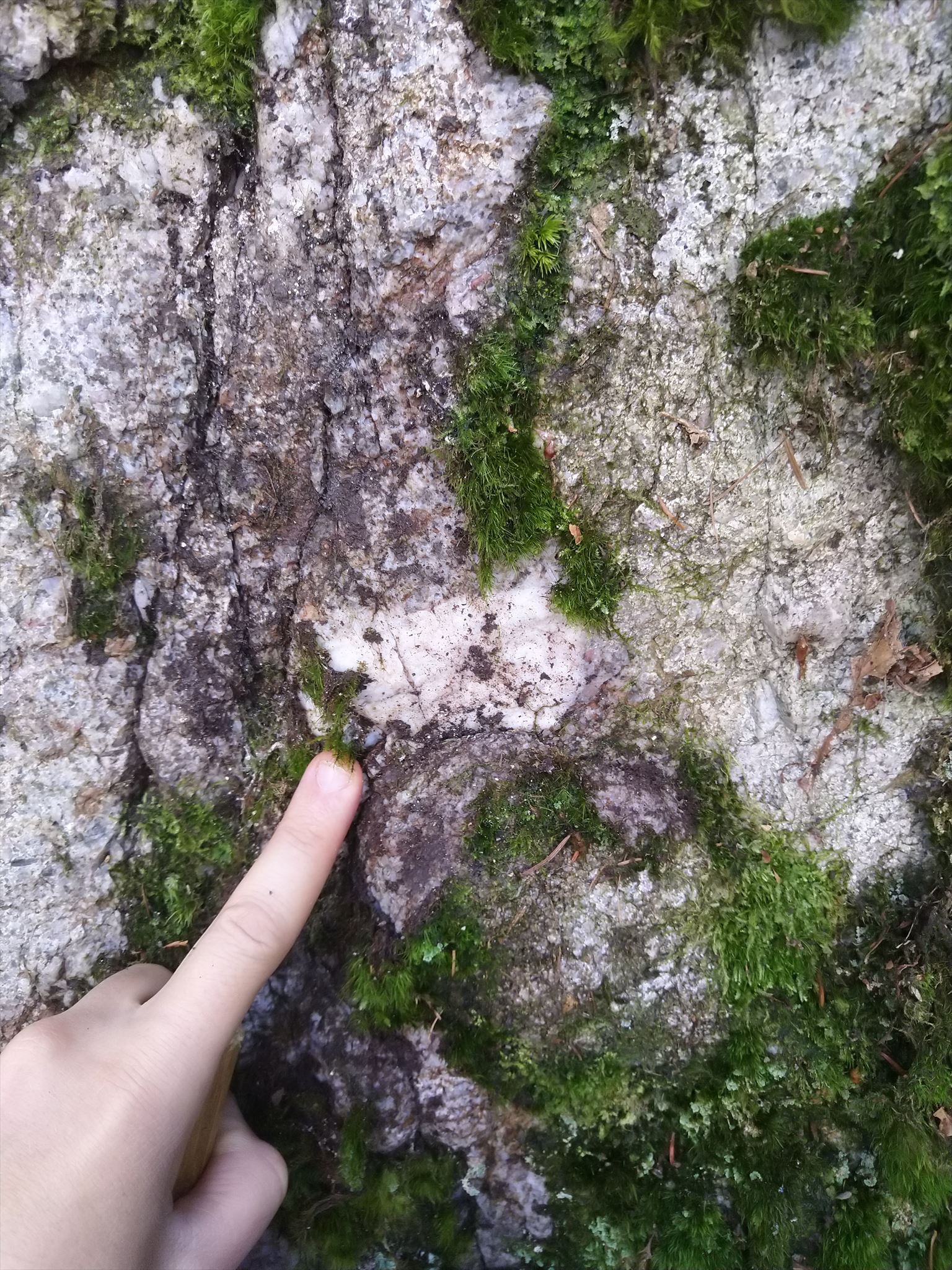
Usando il coltellino prova a rigare l'affioramento di minerale: di che minerale pensi si tratti?
2. Stage B - a fianco della grotta
Dal punto dove ti trovi costeggia il fronte roccioso tenendoti sempre in costa, e segui il sentiero.
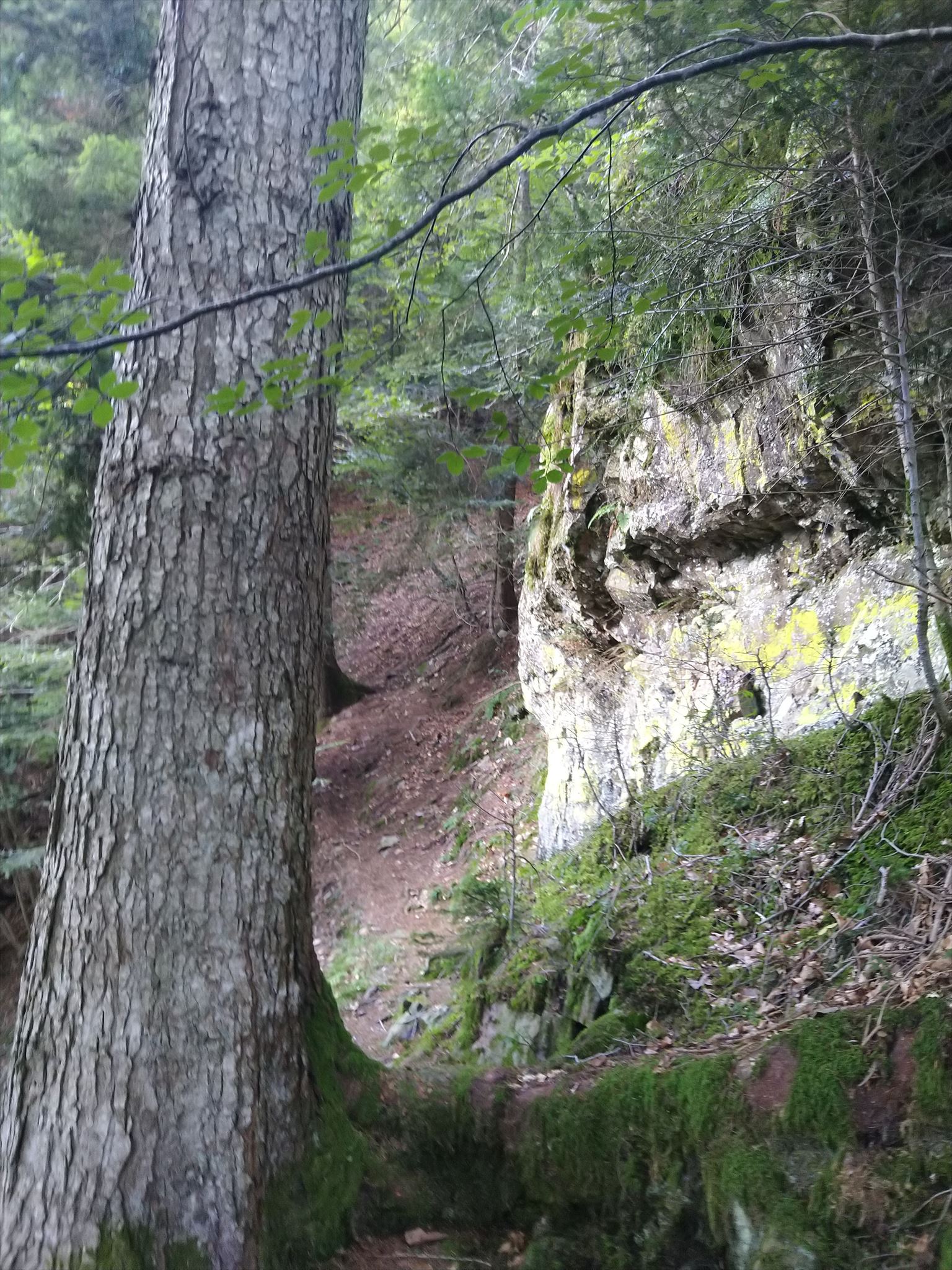
Poco più avanti, appena più a nord e leggermente più in alto, raggiungerai un altro affiormento caratterizzato da un piccolo grottino.
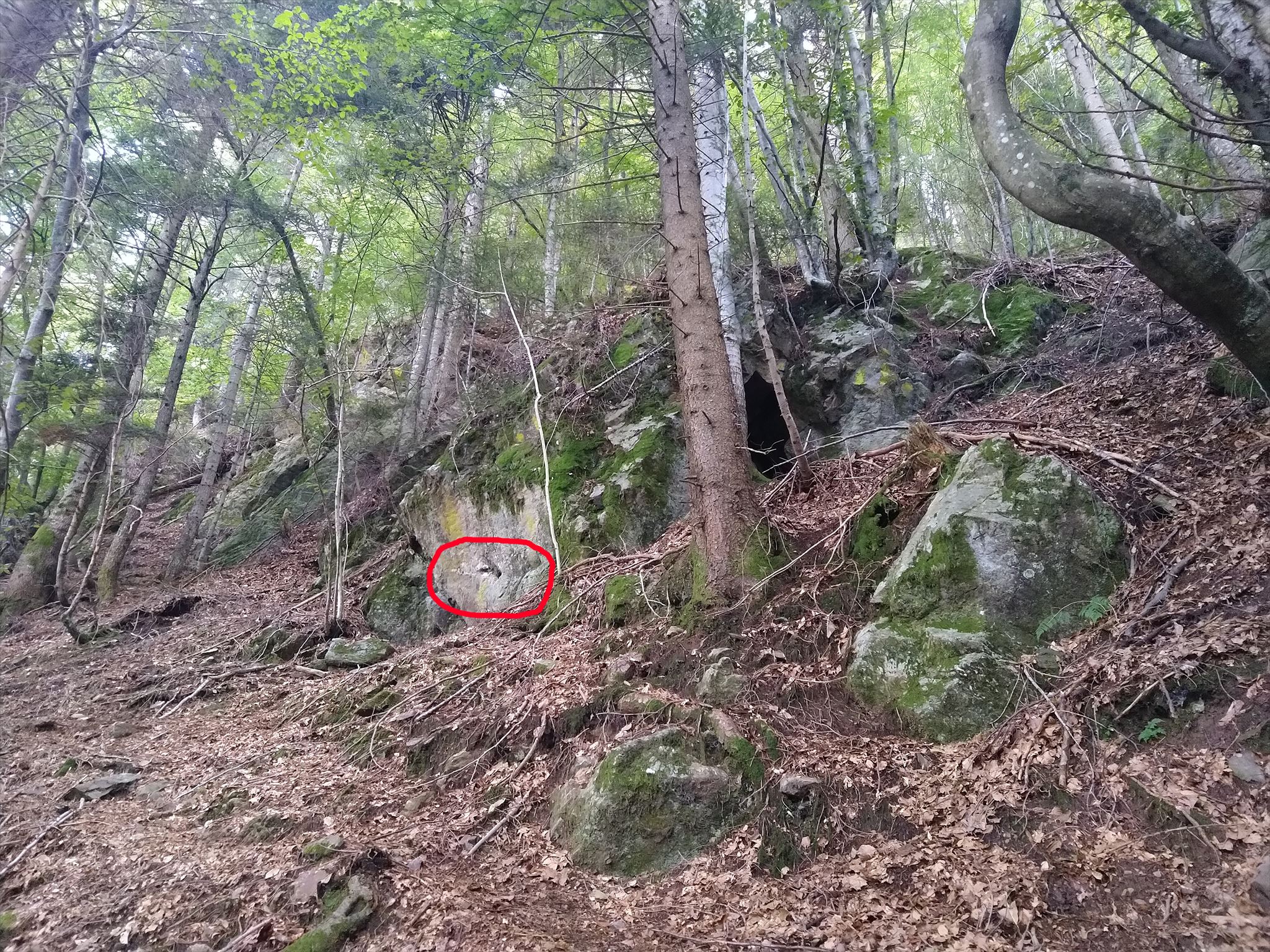
Osservando il punto della foto noterai un ulteriore venatura.
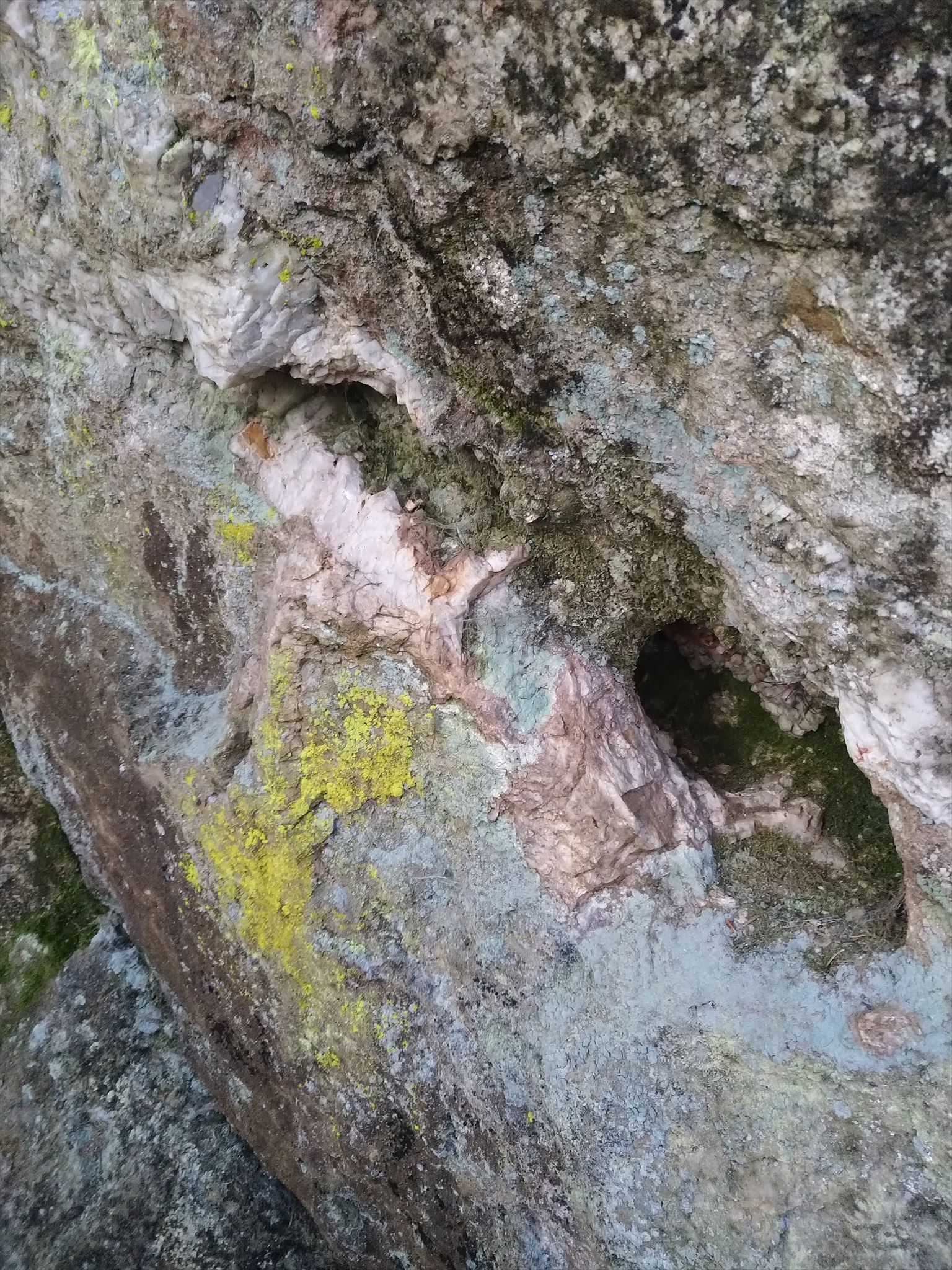
Usando il coltellino prova a rigare l'affioramento di minerale: di che minerale pensi si tratti?
3. OBBLIGATORIO
Fatti una foto o falla al tuo GPS/smartphone/nickname (a scelta) sul posto.
Si prega di non scrivere le risposte nel log, ma di inviarle attraverso il mio profilo su geocaching.com.
Puoi fare il log DOPO AVER INVIATO LE RISPOSTE, senza aspettare la mia conferma.
Se le tue risposte sono sbagliate ti contatterò.
La mancanza della foto comporterà la cancellazione del log; lo stesso la mancanza di risposte.
With this Earthcache we find ourselves beyond the northern edge of the Valle dei Mulini (already discussed in the nearby cache GC9007W) in a very particular area: the point of certain tectonic contact between two faults, that is the tectonic surface along which two distinct geological bodies have met (see: Ispra map database).
Here the collision and deformation of the two bodies led to the very evident outcrop of imposing rocky structures, which characterize the whole surrounding area.
Looking more carefully, among the rocks sometimes covered with moss and lichens, you can see the presence of large whitish veins, which indicate the presence of a particular mineral.
Which you will discover once there, of course, because this is the theme of the Earthcache!
Quartz and calcite are very different from each other, starting from the chemical composition: infusible and almost insoluble silicon dioxide for quartz, fusible and soluble in many acid solutions calcium carbonate for calcite.
QUARTZ
Ghost quartz (Lord Yoruno coll.) - Brasil (Minas de Gerais)
Quartz (SiO2) is a silicate characterized by a unique crystalline structure with helical chains of silicon tetrahedra..
Quartz can vary from place to place based on color, transparency, amount of silicon dioxide and can be colorless, pink, red, black, blue, orange, brown, yellow, purple.
Some quartz minerals can be transparent, others more or less translucent and very rarely opaque. It is considered a semi-precious stone and used in jewelry.
Second most abundant mineral on the earth's surface, it has a wide distribution worldwide and a component of all three types of rocks: igneous, sedimentary and metamorphic.
It can have magmatic, sedimentary and metamorphic origin, even if the primary magmatic one is the most abundant: it is in fact one of the fundamental constituent minerals of granite rocks.
In sedimentary rocks it is very frequent as it is a mineral resistant to chemical-physical alteration and in metamorphic rocks it can transform into polymorphs of high temperature and pressure silicon (Tridymite and Cristobalite, the latter present almost exclusively in meteorite impact craters , given the very high pressure at which it forms).
The typical "habitus" (shape) is that of a hexagonal prism with the faces of two rhombohedra at the vertices arranged in such a way as to simulate a hexagonal bipyramid. If free from impurities, the crystal is called "Hyaline Quartz".
Quartz is only one of the 19 crystalline phases of silica and crystallizes according to two distinct atomic scaffolds, known as quartz-α and quartz-β. The one commonly found is always alpha quartz because at room temperature and pressure also beta quartz transforms into alpha.
Sinistra: Quarzo di fuoco (coll. Lord Yoruno) - Marocco / Destra: Quarzo affumicato (coll. Rob Lavinsky ) - Saranpaul, Russia
CALCITE
Calcite with Calcopirite (coll. Lord Yoruno) - Mexico (Santa Barbara)
Calcite (CaCO3) is a carbonate characterized by a unique crystal structure with helical chains of silicon tetrahedra..
Calcite is typically colorless or white. If it has impurities it can give rise to a multitude of different shades, from red, pink, orange, brown, yellow, green, gray, black and others.
Typical mineral of sedimentary origin, both by direct chemical precipitation from evaporation of supersaturated solutions, and by sedimentation of organic remains of marine organisms that use calcium carbonate as a constituent of their shell. It can also originate in metamorphic and magmatic rocks. In a geothermal environment, the hot fluids circulating among the rocks can contain considerable quantities of dissolved clacius carbonate which precipitates giving rise to limestone encrustations as soon as the conditions of surface pressure and ambient temperature are reached.
The typical "habitus" (shape) is rhombohedral, scalenohedral, prismatic, hexagonal and various combinations between these, always respecting the symmetry of the trigonal system. There are frequent cases of twinning. However, calcite is found in many other microcrystalline forms due to the multiple environments in which it can form (in particular sedimentary and as precipitated by "travertine" hydrothermal fluids which can give massive or vacuolar forms., Stalactite and stalagmite). Other sedimentary environments can give fibrous, nodular, oolytic, dendritic, granular forms, in layers and in a thousand other ways.
Left: Calcite "Dog's tooth" (coll. Lord Yoruno) - Italy (San Giovanni mine, Sardinia) / Right: Calcite (coll. Rob Lavinsky) - Wenshan, Yunnan Prov., China
QUARTZ OR CALCITE?
Left: quartz vein / Right: calcite vein
Other substantial differences between the two minerals relate to the type of cleavage and fracture and, most of all, to hardness.
As for the fracture, calcite exhibits a rhombic neckline, which means that it breaks along three planes of weakness that create a rhombic shape for the crystal. Quartz does not have a strong crack but can fracture through the crystal, leaving a rough surface on the broken crystal. Quartz fractures are described as conchoidal when the fractured surface has a turbulence pattern on the stone.
As for hardness, this is the crucial difference between the two minerals.
Quartz is about four times harder than calcite. A piece of quartz can scratch a sample of calcite, but calcite cannot scratch quartz. If you have a sample if each, try scratching one sample against the other to observe the difference in hardness.
To test the hardness of these two minerals, a small knife is generally used: the blade of the knife has a hardness value between calcite and quartz and therefore, the knife can scratch a calcite crystal but not the quartz.
EARTHCACHE
In order to register this earthcache as "found" you must answer the following questions.
Please, you must bring a Swiss Army knife to be able to respond to this EC!
1. Stage A - southern grain
Once at the coordinates of the EC you will be faced with a notable surface outcrop of mineral in the rock.
Observing it more carefully you can see various veins.
Using the small knife, try to scratch the outcrop of ore: what mineral do you think it is?
2. Stage B - next to the cave
From the point where you are, go along the rocky front always keeping to the coast, and follow the path.
A little further on, just north and slightly higher, you will reach another outcrop characterized by a small grotto.
By observing the point of the photo you will notice an additional grain.
Using the small knife, try to scratch the outcrop of ore: what mineral do you think it is?
3. MANDATORY
Take a selfie or a picture of your GPS/smartphone/nickname (of your choice) in the place of the EC with the structures in the background (avoiding sensational spoilers).
Please do not log your responses, but post them through my profile on geocaching.com.
You can log AFTER SENDING THE ANSWERS, without waiting for my confirmation..
If your answers are wrong I will contact you.
The lack of the photo will result in the cancellation of the log; same for the lack of answers.