ENGLISH VERSION
UELHS DETH JOEU (ENG)
At Catalonia, karst systems present a great diversity of forms and configurations, determined both by geological characteristics (lithology, structural, ...) and by geographical, orographic and climatic factors. Hydraulic loading is the essential element for the generation and evolution of karstification processes, and for surface and underground modeling. Given the structural complexity of the Pyrenees, there are a large number of examples of karsts, developed mainly at the Cambroordovicinian and Devonian limestone levels. Within this domain, the karst system of the
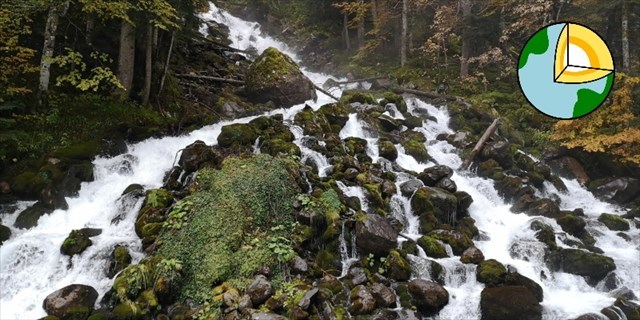
Uelhs deth Joèu represents one of the most interesting and important examples, given the volume of traffic in the system and the great development of the endocarst network.
Through the karst system, the waters that come from the
Aneto area, which should go to the Mediterranean, are captured in the
Forau d’Aigualluts (2074 m.) And transferred to the
Garonne basin. The emergence of the system is located in the
Uelhs deth Joèu (1410 m.), Favored by the complex geological structure of the sector. It is at this point that the waters from the river
Essera join the
Joèu river, as you can see from the coordinates of this earthcache.
Although there are many examples of karst in the Pyrenees, the
Uelhs deth Joèu system is the most important example, given its dynamics, the high volume of traffic in the system and the spectacular catches and surges. The relationship between the loss of the
Forau d'Aigualluts and the emergence of the
Uelhs deth Joèu was discovered in 1931 by
Casteret, based on the use of dyes with dye.
To register this earthcache, you must go to the coordinates and send an email (you can do it from our profile) with the answers to the following questions. We will only contact if there is a problem with any of the answers.
1.- Which of the following statements is correct?
A. Water coming from the Aneto basin plunges underground at
Forau d’Aigualluts (Atlantic watershed) and gushes up again at
Uelhs deth Joèu (Mediterranean watershed).
B. Water coming from the Aneto basin plunges underground at
Forau d’Aigualluts (Mediterranean watershed) and gushes up again at
Uelhs deth Joèu (Atlantic watershed).
C. Water coming from the Aneto basin plunges underground at
Uelhs deth Joèu (Atlantic watershed) and gushes up again at
Forau d’Aigualluts (Mediterranean watershed).
D. Water coming from the Aneto basin plunges underground at
Uelhs deth Joèu (Mediterranean watershed) and gushes up again at
Forau d’Aigualluts (Atlantic watershed).
2.- What type of rocks will we didn't find in this karst system? (if you have any questions, the coordinates poster will help you)
A. Granitic rocks
B. Carbonated rocks
C. Volcanic rocks
D. Shales
3.- Look around you and on the ground. What types of rocks predominate in the area?
4.- Take a PHOTO with your GPS and/or your nickname with the Uelhs deth Joèu in the background. Remember that photography is obligatory.
If we do not receive the answers, the log will be deleted without prior notice.
All logs that do not include the photo of the question 4 may be deleted (from the update of the 2019 guidelines, photography may be obligatory to demonstrate that the site has been visited).