Bienvenue sur les chemins du massif du Lingas
Welcome to paths of the mountain of Lingas
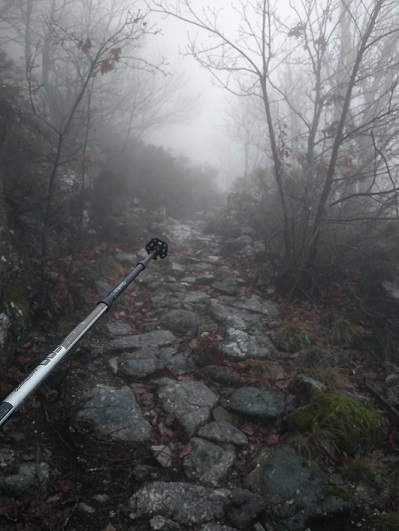

Le granite, ça pourrit au Lingas!
Le granite du massif du Lingas au Nord d'Aumessas
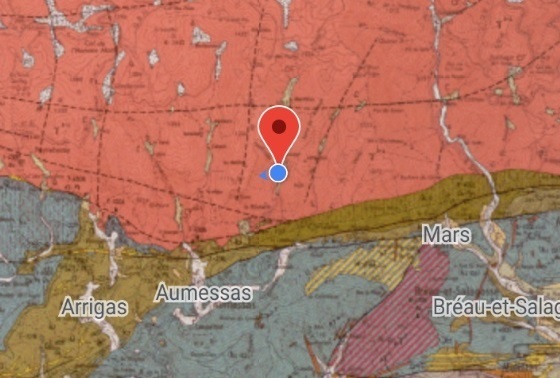
Sur cette carte, on peut voir que le massif du Lingas est presque exclusivement composé de GRANITE (rose sur la carte) contrairement aux communes situées au Sud. Le granite est une roche magmatique plutonique, formée par le refroidissement lent, en profondeur, d'un magma issu de la fusion partielle de la croûte continentale. Le granite est formé de minéraux en grains tous visibles à l'œil nu, il s'agit principalement des micas, des feldspaths et des quartz. C'est une roche dure et résistante mais pas indestructible.
Le granite est le résultat du refroidissement lent, en profondeur, de grandes masses de magma intrusif qui formeront le plus souvent des plutons, ces derniers affleurant finalement par le jeu de l'érosion qui décape les roches sus-jacentes.
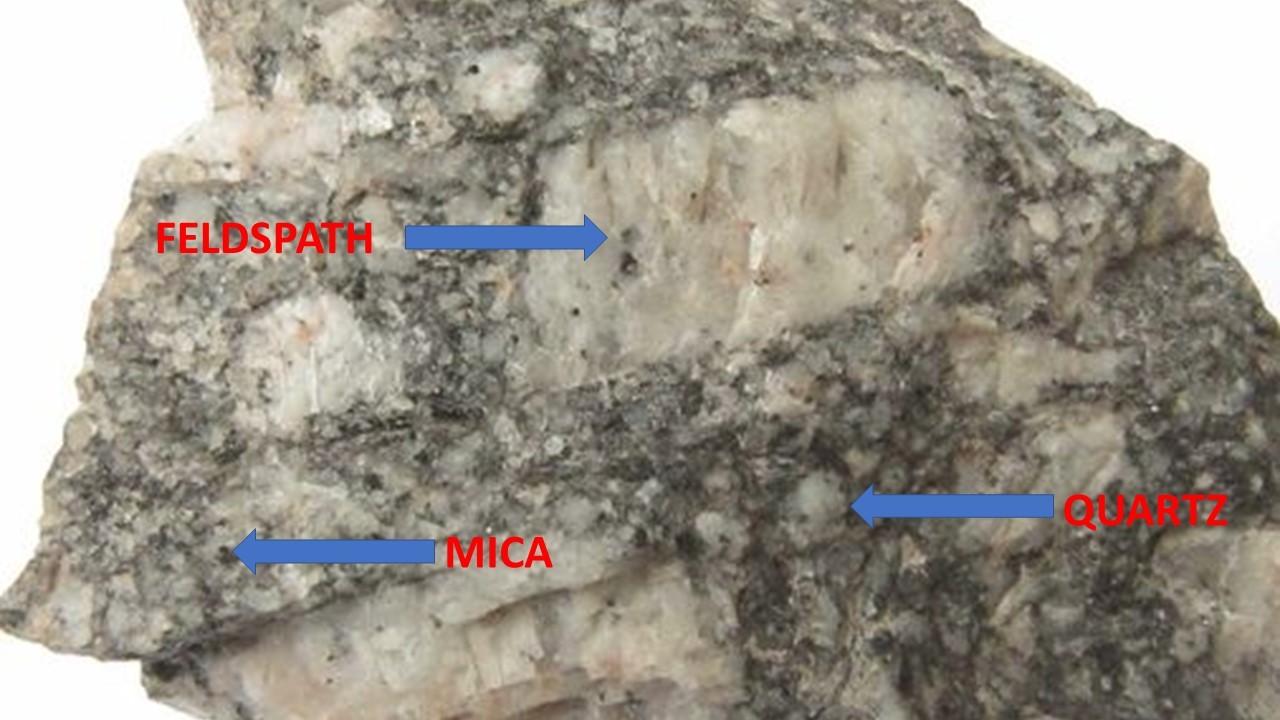
Le granite du Lingas comme sur la photo ci-dessus est un granite porphyroïde avec des feldspaths imposants. Il a aussi la particularité d'avoir du mica blanc (muscovite) et non noir (biotite, comme sur la photo).
L'altération du granite
Le granite est une roche dure et résistante. Cependant, son manque de souplesse provoque des fractures ou diaclases. Celles-ci permettent à l'eau de rentrer dans la roche, ce qui augmente les surfaces d'attaque.
L'eau agit de deux façons différentes :
-
par hydratation : l'eau s'additionne à certains composés du granite qui finissent par gonfler puis par se désolidariser de la roche. Vous pourrez voir un résultat probant de cette altération plus en altitude en étudiant la cache géologique GC8YMG8 Le granite du Lingas. Attention, l'hydrolyse entre aussi souvent en action durant ce procédé.
-
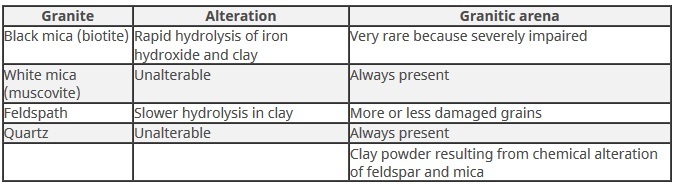
par hydrolyse : l'eau solubilise certains cristaux du granite :
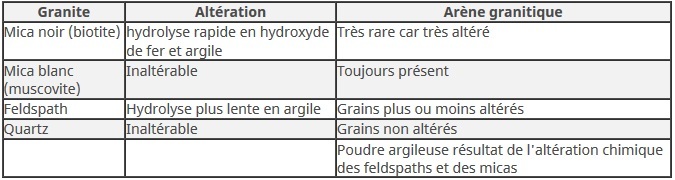
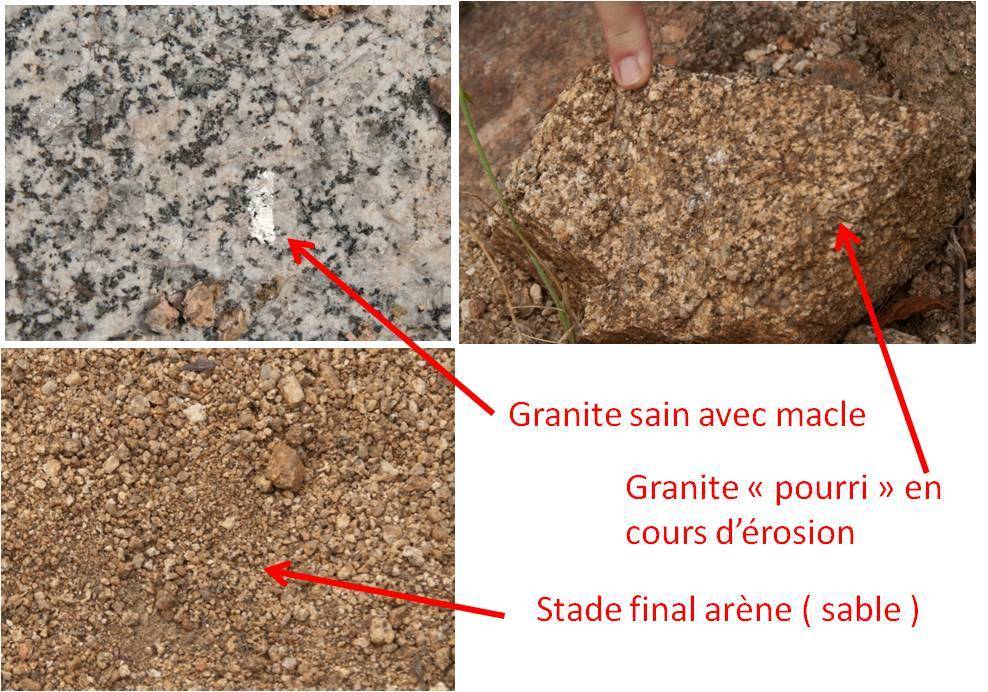
Un granite altéré est appelé un "granite pourri", mais l'altération se poursuit et le granite pourri va se transformer en sable grossier pour donner "l'arène granitique"
Rappel concernant les Earthcaches :
Il n'y a pas de conteneur à rechercher ni de logbook à signer. Après avoir été sur les lieux pour chercher les réponses aux questions, loguez cette cache "Found it" et envoyez-moi vos propositions de réponses, en précisant le code GC de la cache, soit via mon profil, soit via la messagerie geocaching.com (Message Center), et je vous contacterai en cas de problème.
Questions :
Q1 - Quelles sont les trois principaux cristaux du granite ?
Q2 - Pourquoi le granite pourri prend-il une couleur majoritairement orange?
PZ :
PHOTO - Obligatoire: photographiez-vous ou une partie de votre corps au niveau du virage avec l'affleurement de granite au sol. Cette photo doit être jointe à votre log.
Etape 1 :
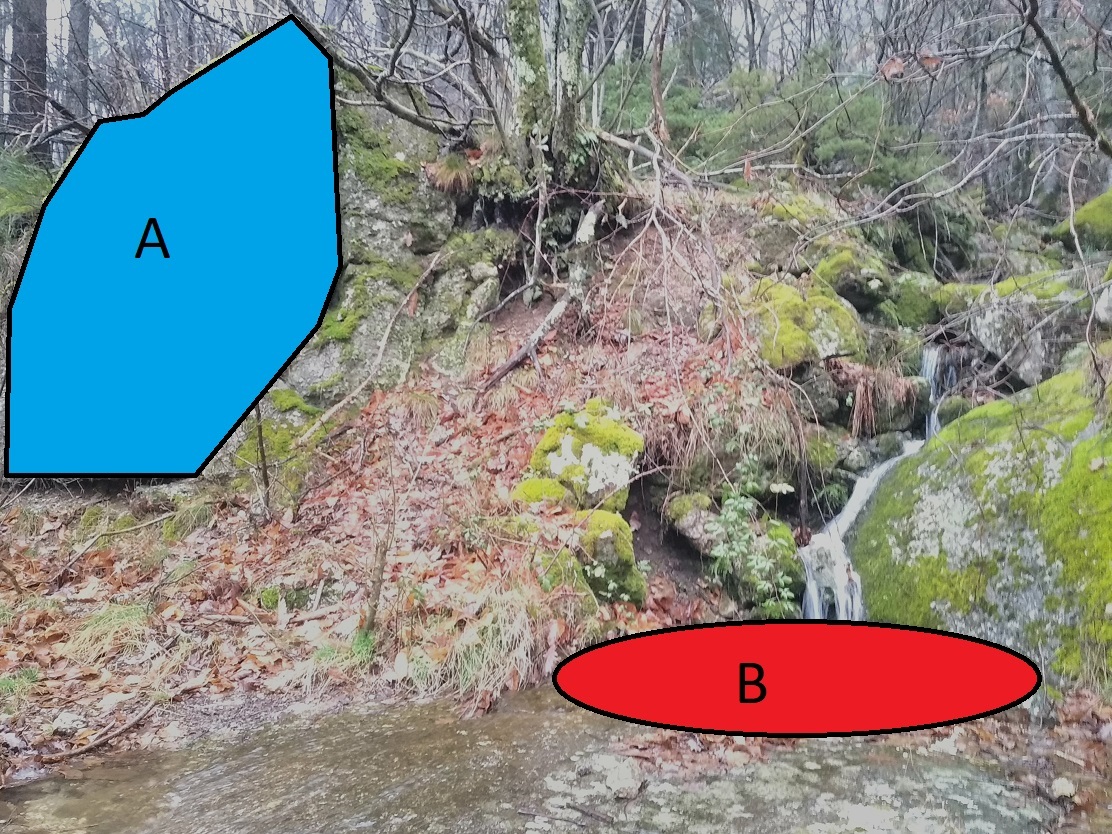
QA - Décrivez précisément l'aspect du bloc rocheux sous l'encadré A (dureté, rugosité, présence de cristaux, couleur). Correspond-il au granite du Lingas ?
QB - Que voyez-vous au pied de la cascade (attention elle peut être à sec) ? Décrivez-le. Est-ce logique de le trouver ici ? Pourquoi ?
Etape 2 :
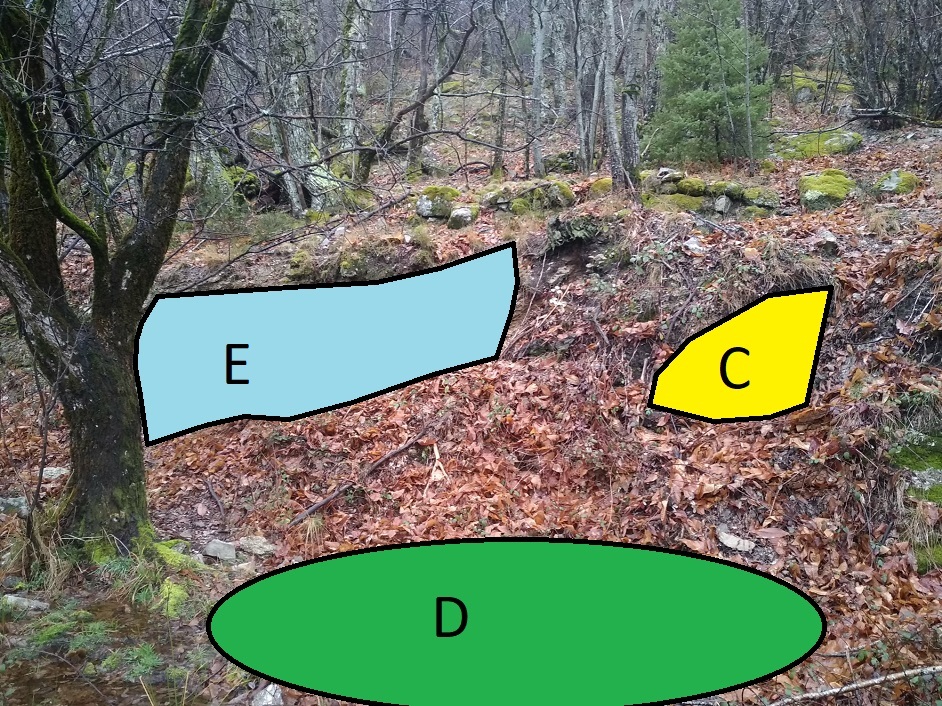
QC - Décrivez l'aspect du bloc rocheux sous l'encadré C (dureté, rugosité, présence de cristaux, couleur). Est-il altéré ? Si oui, à quel stade?
QD - Décrivez l'aspect des pierres sous l'encadré D (dureté, rugosité, présence de cristaux, couleur). Sont-elles altérées ? Si oui, à quel stade?
QE - Décrivez l'aspect bloc rocheux sous l'encadré E (dureté, rugosité, présence de cristaux, couleur). Est-il altéré ? Si oui, à quel stade?
Q3 - Là où l'altération était la plus évoluée, avez-vous encore observé des feldspath et des biotites? Pourquoi?
----------------------------------------------------------------------------------------------------/p>

Granite rots at Lingas!
The granite of the Lingas massif north of Aumessas
On this map, we can see that the Lingas massif is almost exclusively composed of GRANITE (pink on the map) unlike the communes located in the South. Granite is a plutonic magmatic rock, formed by the slow, deep cooling of a magma from the partial melting of the continental crust. Granite is made up of grain minerals, all visible to the naked eye, mainly micas, feldspar and quartz. It is a hard and resistant rock but not indestructible.
The granite is the result of the slow, deep cooling of large masses of intrusive magma that will most often form plutons, which eventually outcrop by the play of erosion that decays the overlying rocks.
The Lingas granite as shown above is a porphyroid granite with towering feldspar. It also has the particularity of having white mica (muscovite) and not black mica (biotite, as in the photo).
The alteration of granite
Granite is a hard and resistant rock. However, its lack of flexibility causes fractures or diaclases. These allow water to enter the rock, which increases the attack surfaces.
Water acts in two different ways:
-
by hydration: the water is added to certain granite compounds which eventually swell and then break away from the rock. You will be able to see a convincing result of this alteration more in altitude by studying the earthcache GC8YMG8 Le granite du Lingas. Be careful, hydrolysis also often enters into action during this process.
-
by hydrolysis: water solubilizes some granite crystals :
An altered granite is called a "rotten granite", but the alteration continues and the rotten granite will turn into coarse sand to give "the granite arena"
Earthcache Reminder:
There is no container to search or logbook to sign. After you have been on site to search for the answers to the questions, log in this "Found it" cache and send me your suggested answers, specifying the GC code of the cache, either via my profile or via the geocaching.com messaging service (Message Center), and I will contact you if there is a problem.
Questions :
Q1 - What are the three main crystals of granite?
Q2 - Why does the decayed granite take on a predominantly orange colour?
PZ :
PHOTO - Mandatory: Photograph yourself or part of your body at the bend with the granite outcrop on the ground. This photo must be attached to your log.
Stage 1 :
QA - Describe precisely the appearance of the boulder under Box A (hardness, roughness, presence of crystals, colour). Does it match the granite of Lingas?
QB - What do you see at the foot of the waterfall (careful it can be dry)? Describe it. Is it logical to find it here? Why?
Stage 2 :
QC - Describe the appearance of the boulder under Box C (hardness, roughness, presence of crystals, colour). Is it altered? If so, at what stage?
QD - Describe the appearance of the stones under Box D (hardness, roughness, presence of crystals, colour). Are they altered? If so, at what stage?
QE - Describe the boulder appearance under Box E (hardness, roughness, presence of crystals, colour). Is it altered? If so, at what stage?
Q3 - Where alteration was most advanced, did you still observe feldspath and biotites? Why?
Source :
https://fr.wikipedia.org/wiki/Granite
http://infoterre.brgm.fr/viewer/MainTileForward.do
Et merci à Vulka et GeoAwareFra1 pour leur aide à la rédaction de cette earthcache.