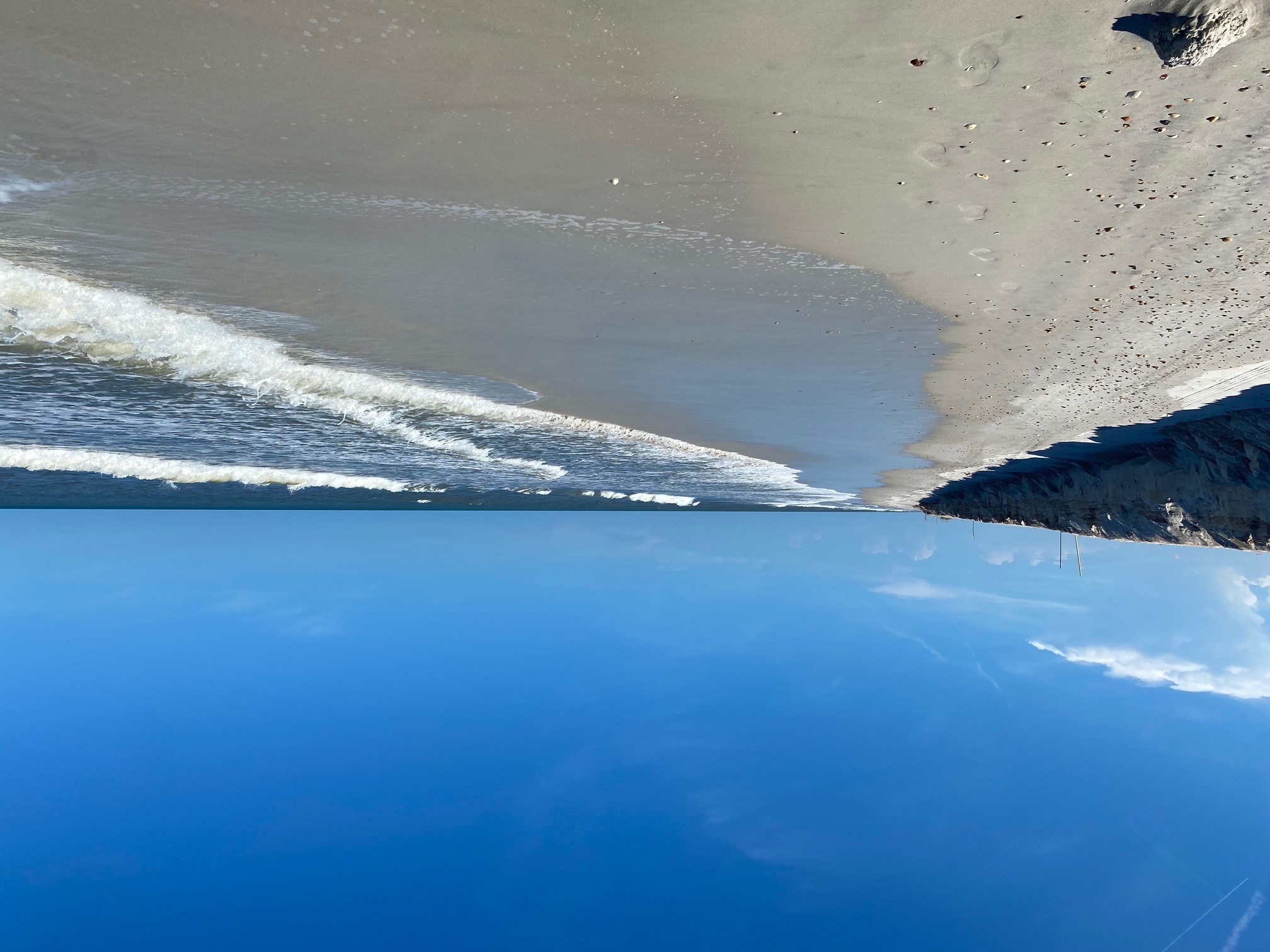
Anastasia State Park is located near Saint Augustine, which is the oldest city in the country, founded in 1565. The park contains more than 1,600 acres of beaches, tidal marshes, and sand dunes. While Florida may have 663 miles of beaches, each beach is different and unique in its own ways.
Tides are created by the gravitational force of the sun and moon pulling on the Earth. As a result, there is a slight bulge in the ocean, what this means is that while one location is experiencing high tide (the side of the bulge), the area on the opposite side of the planet will have a low tide. Tides are responsible for 50% of marine energy delivered to the coast. The force of the tide pounding on the coastline can form ripple marks in the sand, which can be best viewed at low tide. Because Jenness Beach has a very slight and gentle slope, they can be observed at practically any point in the day (except at peak high tide, unless you are willing to get your feet wet).
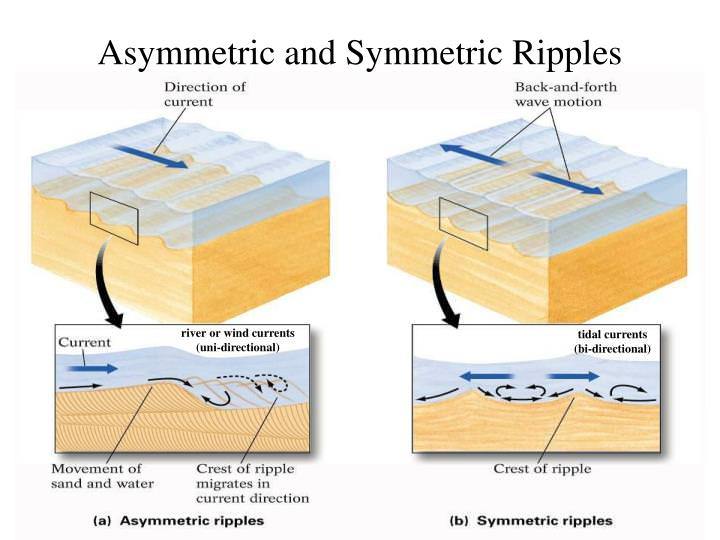
There are two different types of ripple marks, symmetrical and asymmetrical. Symmetrical ripple marks are created by two way currents (wave hits the beach, then retreats). As a result, the crest is pointed and the trough is rounded. The crest refers to the top of the ripple mark while the trough is the bottom (the low point between two crests). What this means is that the ripple mark won't be inclined toward a certain direction. In contrast, asymmetrical ripple marks are created by one way currents. The crests will still be pointed and troughs rounded, but they will be inclined more strongly in direction of the current.
Logging Requirements:
- Observe some of the ripples at the beach. What compass direction do they run?
- Of the two types of ripples listed, which do you think they are?
- How do you think the slope of the beach affects ripple formation?
- Upload a photo taken at or near the beach at Anastasia State Park. You do not need to be in the photo though it is strongly encouraged.