Floodplains:
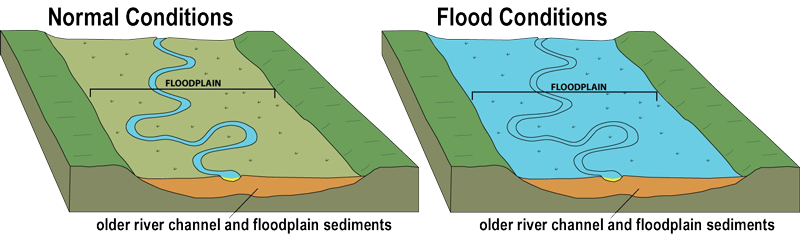
Floodplains are relatively flat areas along streams or rivers that are likely to experience repeated flooding. Over time, a floodplain will naturally form to hold excess water that spills over the banks of the stream or river. Basically, floodplains are designed by nature to flood. Because of this, floodplains are considered to be part of a healthy stream system. As you walk along the greenway here, you will witness evidence of the floodplain.
The floodplain of a stream is a distinct ecosystem. It provides a habitat for the plants and animals that live adjacent to the creek. When the waters of the creek rise during a storm, the floodplain provides an overflow area. This overflow area slows down the water, which reduces the damage that may be caused by the flood. It also allows the plants within the floodplain to filter pollutants from the runoff as the water recedes.
Decades ago, homes and buildings were built over the natural floodplains in the Syracuse area. This was because the floodplain land was often flat and easier to develop. Building on local floodplains has been restricted since the late 1970’s when it was realized that protecting floodplains can reduce flood losses and improve the environment.
The water flowing through this section of the creek can be traveling quite fast at times. Storm water runoff from the area flows into the creek. You may find that some of the area is under water as it is part of the floodplain.
Riffles:
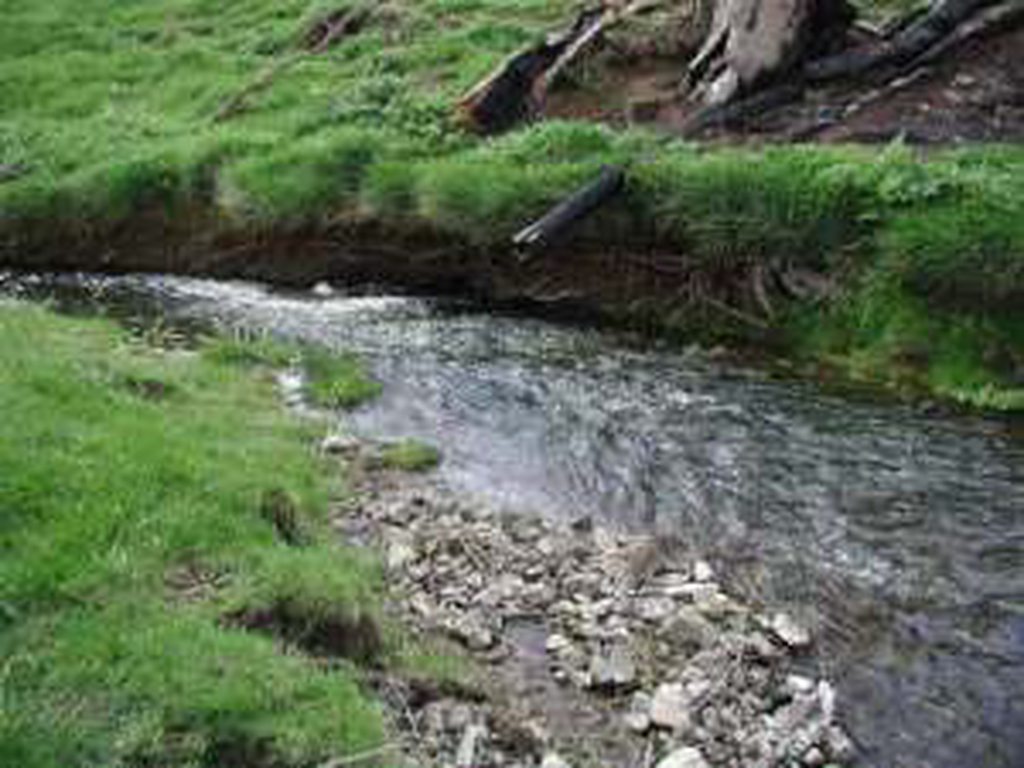
A riffle is a shallow area where fast moving water flows over pebbles and rocks. The flow of water in this area will appear to be disturbed, often looking wavy. Areas of streams with riffles naturally tend to be wider than other in-channel landforms. When an in-channel landform is shallow and narrow, instead of shallow and wide, it is called a nozzle.
Riffles are very important biologically. Many aquatic species rely on them in one way or another. Riffles are the main habitat of stream macroinvertebrates. Macroinvertebrates are small organisms with no backbone that can be seen with the naked eye. Some macroinvertebrates found in riffles include caddisflies, mayflies, midges, and aquatic worms. Caddisfly larvae build nets to catch food flowing through the rocks. Mayfly larvae eat algae off the rocks. Riffles create a safe habitat for macroinvertebrates because of the varying depth, velocity, and substrate found in the riffle.
Riffles are also important to fish habitat. Oxygen is added to the water as it rushes over the rocks. Insects that live in the water need oxygen, so they like to live in riffles. Therefore, riffles are an area that fish are able to find food. Fish also need a clean gravel bottom of the stream to lay their eggs. If the gravel gets filled with sand or dirt, then the eggs will smother. The fast-moving water in this area prevents sediment from gathering in the gravel. Studies have shown that as many as 60% of a fish’s eggs will survive in a clean stream. That number drops to around 5% in a stream with heavy sediment.
Pools:
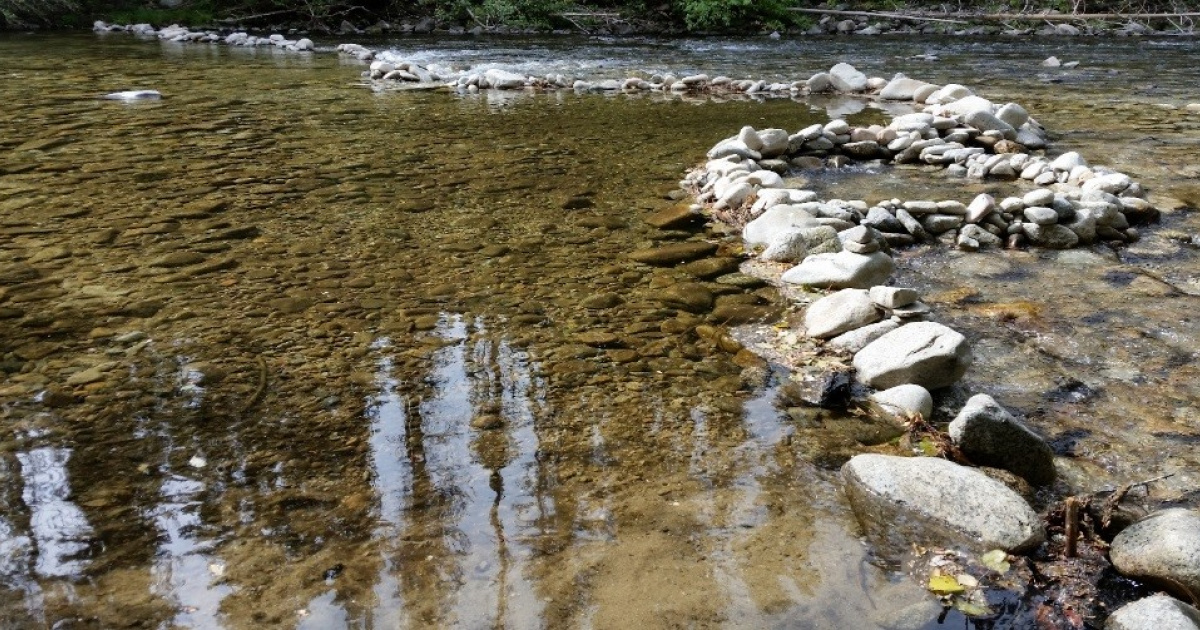
A pool is a deeper area of a stream with a slow current. Pools typically occur in bends of a stream, where erosion is more concentrated on the outside of the bend. They are also created by the vertical force of water falling down from some structure such as rocks or logs. This movement of water carves a deeper indentation in the stream bed. Pools are important because they provide depth and still water, which provides a great habitat for fish and macroinvertebrates that cannot swim in the fast-moving water of a riffle.
As the weather gets warmer and the water temperature rises, the deeper pools gives the fish a cool, dark place to live. The fish also need the macroinvertebrates from the pools to survive. Pools also provide a habitat for wading and diving birds such as herons and ducks. Another advantage of pools is that aquatic life does not have to relocate to another area if the creek level starts to lower.
Logging requirements: Please do not post your answers in your log. Email your answers to the CO.
- During your visit, did the creek appear to be flowing normally or was is it flooding?
- Based on your reading, what are some benefits of a floodplain?
- Looking at the disturbed water flow in this area, would you say it is a riffle or a nozzle? why?
- Are there any pools formed on this portion of the creek? If so how were they formed?
- Please take and post a picture of your GPS device with the creek in the background. Although not required, it would be nice to see you in the picture.
Resources:
Floodplains
Riffles
Riffles and Pools