ENGLISH:
In the olive press here in Corfu they uses millstones to press the finest olive oil.
The following types of stone can be used to make millstones: Sandstone, basalt, porphyry, quartz and granite. Sandstone millstones are the most common, as sandstone is found almost everywhere and could therefore be procured most cheaply. However, because of their particularly strong abrasive tendency, the flour was "sanded".
Basalt millstones, on the other hand, do not "sand" at all and wear down hardly more measurably. Their abrasion is a fine, completely harmless powder with valuable ingredients such as minerals and trace elements.
The traditional technique uses granite mills. The large, round millstone rotates on a granite plate and crushes the freshly harvested olives with its weight. The material of this stone is white granit from corfu island.
If you visit this location here it is possible to watch the process pressing oil olive.
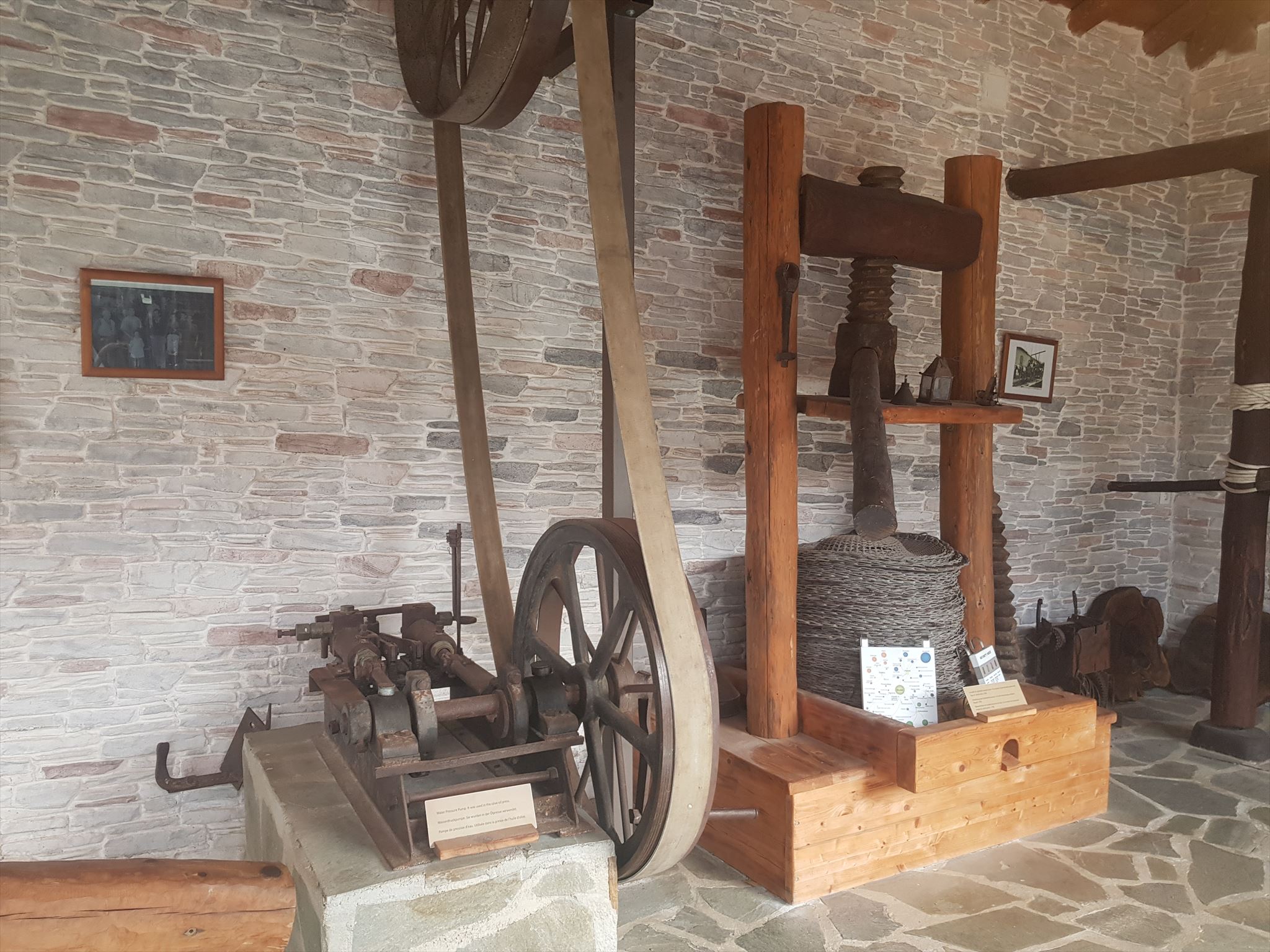
Here you will see modern machines and also old presses for pressing olive oil at the exhibition and a lot of informations.
Please look around and find an old millstone here at the exhibition and check it nearer.
And please answer following questions about the millstone from the exhibition:
- Measure the diameter of the millstone and write it down in cm.
- Have a closer look an the surface of the millstone. How does the surface feel and write something about the abrasion?
- Which color does the millstone has?
- Which year ist he millstone build? (Year of construction)
- How big are the biggest stones from the millstone?
GREEK:
Στο ελαιοτριβείο εδώ στην Κέρκυρα χρησιμοποιούν μυλόπετρες για να πιέσουν το καλύτερο ελαιόλαδο.
Τα ακόλουθα είδη πέτρας μπορούν να χρησιμοποιηθούν για την κατασκευή μυλόπετρας: Πορφύρης, χαλαζίας και γρανίτης. Οι μυλόπετρες από ψαμμίτη είναι οι πιο συνηθισμένες, καθώς ο ψαμμίτης βρίσκεται σχεδόν παντού και επομένως μπορεί να προμηθευτεί πιο φτηνά. Ωστόσο, λόγω της ιδιαίτερα έντονης λειαντικής τους τάσης, το αλεύρι "λειανόταν".
Οι μυλόπετρες από βασάλτη, από την άλλη πλευρά, δεν "τρίβουν" καθόλου και φθείρονται ελάχιστα πιο μετρήσιμα. Η τριβή τους είναι μια λεπτή, εντελώς ακίνδυνη σκόνη με πολύτιμα συστατικά, όπως μέταλλα και ιχνοστοιχεία.
Η παραδοσιακή τεχνική χρησιμοποιεί μύλους από γρανίτη. Η μεγάλη, στρογγυλή μυλόπετρα περιστρέφεται πάνω σε μια γρανιτένια πλάκα και συνθλίβει με το βάρος της τις φρεσκοκομμένες ελιές. Το υλικό αυτής της πέτρας είναι λευκός γρανίτης από το νησί της Κέρκυρας.
Αν επισκεφθείτε αυτή την τοποθεσία εδώ είναι δυνατόν να παρακολουθήσετε τη διαδικασία έκθλιψης του ελαιόλαδου.
Εδώ θα δείτε σύγχρονα μηχανήματα αλλά και παλιά πιεστήρια για την έκθλιψη του ελαιολάδου στην έκθεση και πολλές πληροφορίες.
Παρακαλούμε κοιτάξτε τριγύρω και βρείτε μια παλιά μυλόπετρα εδώ στην έκθεση και ελέγξτε την πιο κοντά.
Και παρακαλούμε απαντήστε στις ακόλουθες ερωτήσεις σχετικά με τη μυλόπετρα από την έκθεση:
1. Μετρήστε τη διάμετρο της μυλόπετρας και γράψτε την σε εκατοστά.
2. Κοιτάξτε προσεκτικά την επιφάνεια της μυλόπετρας. Πώς αισθάνεστε την επιφάνεια και γράψτε κάτι για την τριβή;
3. Τι χρώμα έχει η μυλόπετρα;
4. Ποια χρονιά κατασκευάστηκε η μυλόπετρα;
6. Πόσο μεγάλες είναι οι μεγαλύτερες πέτρες της μυλόπετρας;
DEUTSCH:
In der Olivenpresse hier auf Korfu werden Mühlsteine verwendet, um das feinste Olivenöl zu pressen.
Die folgenden Gesteinsarten können für die Herstellung von Mühlsteinen verwendet werden: Sandstein, Basalt, Porphyr, Quarz und Granit. Sandsteinmühlsteine sind am weitesten verbreitet, da Sandstein fast überall vorkommt und daher am günstigsten zu beschaffen war. Wegen ihrer besonders starken Abrasionsneigung wurde das Mehl jedoch "geschliffen".
Basaltmühlsteine hingegen "schleifen" überhaupt nicht und nutzen sich kaum messbarer ab. Ihr Abrieb ist ein feines, völlig ungefährliches Pulver mit wertvollen Inhaltsstoffen wie Mineralien und Spurenelementen.
Bei der traditionellen Technik werden Granitmühlen verwendet. Der große, runde Mühlstein rotiert auf einer Granitplatte und zermalmt mit seinem Gewicht die frisch geernteten Oliven. Das Material dieses Steins ist weißer Granit von der Insel Korfu.
Wenn Sie diesen Ort besuchen, ist es möglich, den Prozess des Olivenölpressens zu beobachten.
Hier sehen Sie moderne Maschinen und auch alte Pressen zum Pressen von Olivenöl in der Ausstellung und eine Menge Informationen.
Bitte schauen Sie sich um und finden Sie einen alten Mühlstein hier in der Ausstellung und schauen Sie ihn sich näher an.
Und beantworte bitte folgende Fragen zu dem Mühlstein in der Ausstellung:
1. Messen Sie den Durchmesser des Mühlsteins und notieren Sie ihn in cm.
2. Sieh dir die Oberfläche des Mühlsteins genauer an. Wie fühlt sich die Oberfläche an und schreibe etwas über den Abrieb?
3. Welche Farbe hat der Mühlstein?
4. In welchem Jahr wurde der Mühlstein hergestellt? (Baujahr)
5. Wie groß sind die größten Steine des Mühlsteins?
6. Füge ein Foto deinem Logeintrag bei.