I🌎na's Singing Beach EarthCache
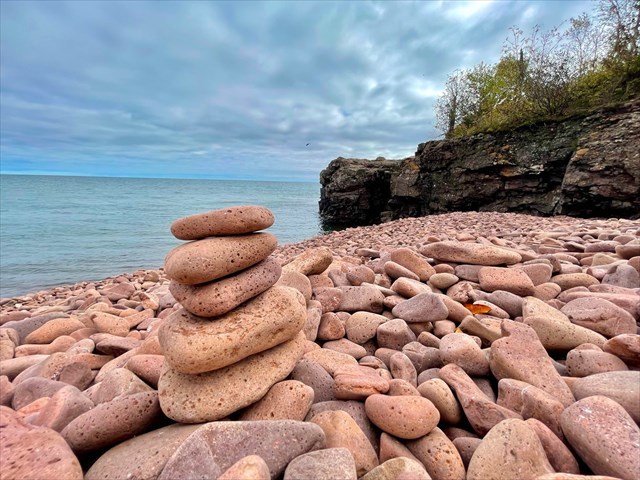
Iona's Beach is located 43 miles Northeast of Duluth and just 3 miles north of Gooseberry Falls State Park, along the shore of Lake Superior. The Minnesota Department of Natural Resources has designated this area as a Scientific and Natural Area, which means visitors are not allowed to collect rocks, plants, animals, and fossils.
Before We Begin:
- To get to this EarthCache: Park in the upper parking lot and find the trailhead. Once on the path, you'll want to take a right at the first fork and follow this along until you arrive at the beach (follow the signs). It's a short walk but here is a map overview for your convenience.
- Minnesota's natural resources are threatened by a number of invasive species; be informed and help keep them from spreading to natural areas. Please brush seeds off and wipe your shoes before entering and leaving this area.
To get credit for this EarthCache, be sure to complete the logging tasks at the bottom of this page.
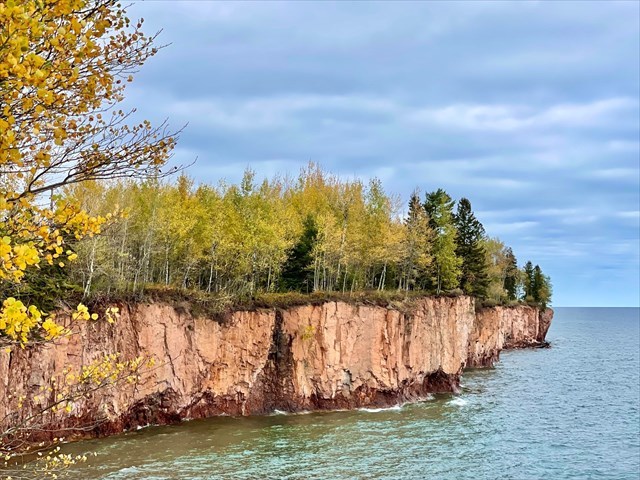
30' Rhyolite Cliffs
How did this beach form?
As you exit the forest and step out onto the beach, you cannot help but feel like you've been transported into another place entirely. Instead of silky, golden sand, this stretch of shore is covered in hundreds of yards of flattened pink rhyolite pebbles, known as "shingles". At the northern edge of this beach, you can see the roughly 30 foot high cliff of pink rhyolite and felsite bedrock. As the waves and storms from Lake Superior erode the cliff away, individual rhyolite shingles are rounded by the waves and transported along the beach. A headland of grey basalt to the south (as seen above) prevents these pebbles from moving beyond the area and effectively traps them in this location.
The area closest to the rhyolite cliff is comprised of fairly angular pebbles, since these materials have not been transported very far and as such, the amount of time they have been weathered is limited. Closer to the southern edge of the beach though, the pebbles are much more rounded and smooth due to weathering that has occurred as they have traveled from the source area with the assistance of longshore drift in the lake.
Why is it called a singing beach?
Consider that roughly a billion years ago, magma rose here from the earth's mantle and poured out as lava from a fissure in the earth known as the Mid-Continental Rift. As it cooled, it solidified into basalt or rhyolite based on its mineral content. Rhyolite has a very high concentration of silica, which is one of the most abundant minerals on the planet.
One of the uses of silica is in glass making and ceramics, such as bowls and cups. If you were to take a spoon and tap it against a ceramic cup, you would recognize the familiar "tink" sound. It is this sound that gives Iona's beach it's nickname as a "singing" beach. As the waves rhythmically lift and then drop the flattened stones along the shore, the rocks fall together with a ringing chime that listeners have likened to singing!
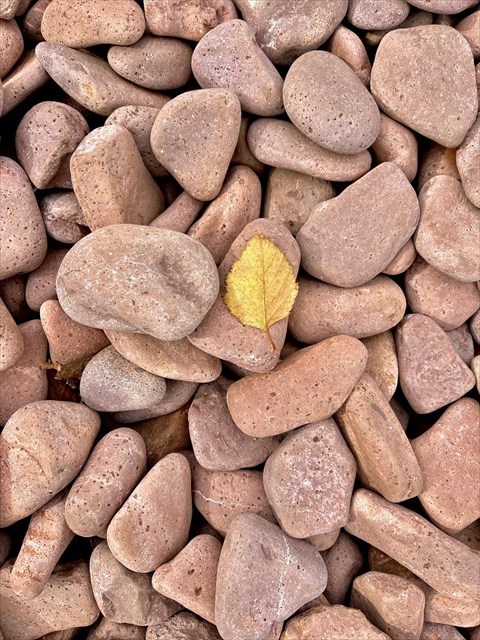
Flattened Rhyolite Pebbles, aka "Shingles"
To Get Credit For This EarthCache
Copy the questions below and send your answers via geocaching messages.
- DO NOT post the answers in your log.
- Group answers are fine, just let me know who all was there.
- Note: The photo task is a requirement for each account claiming a find. See acceptable EarthCache logging tasks effective June 10th, 2019.
- Please send the answers in a timely manner or it may result in the deletion of your log (no offense intended).
Logging Tasks
1| The name of this EarthCache: I🌎na's Singing Beach
2| Walk along the shore closest to the basalt headland. Take a deep breath and close your eyes while you listen to the sounds of the waves coming ashore. Describe the sound you hear as the rocks are lifted and dropped by the waves. Is it a high-pitched or a low-pitched sound?
- Alternatively, if the waves aren't coming ashore fast enough, pick up a couple of the pink rocks and gently tap them together and answer the task above.
3| In your own words, why do you think the rocks here make these sounds when they hit each other?
4| In your log, please provide a photo of yourself at this beach.
- If you prefer, the photo can be of a personal item here instead. Just make the photo unique to you and your visit. Feel free to have fun with this!
*IF YOU ENJOYED THIS EARTHCACHE,
CONSIDER GIVING A FAVORITE POINT!*
Sources:
Permission for this EarthCache placement was granted by Minnesota Department of Natural Resources.