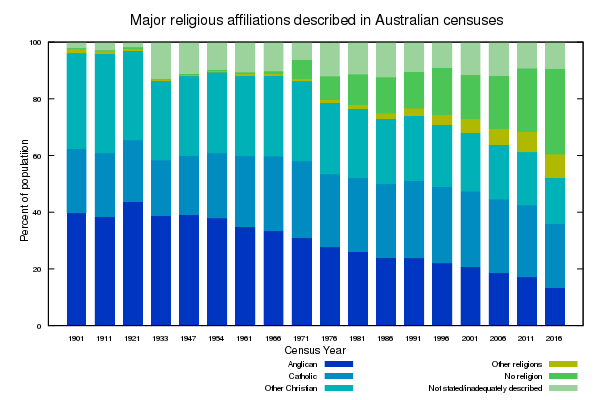
This collection of caches has nothing to do with the Church Micro series in the UK. Given that the Australian 2016 census indicates that No Religion and Jedi Knight are the fastest increasing classifications of the optional religion question "What is the person's religion?" it is not surprising that there is surfeit of empty churches that have been repurposed.
Edmund Bowman of Enfield squatted on land here along the Wakefield River in 1845 with the first pastoral license being granted in 1847 for lands one mile north and four miles south of the River. When Port Henry was established by the government (later Port Wakefield) the copper drays from Burra began carting their loads from Burra along the Wakefield River to the new port. This occurred from 1850 until 1857. The Copper Company established staging places with water for the bullock teams, huts for managers and it also took out some leases. From 1850 some land was thus surveyed and sold freehold along the Wakefield River and Edmund and John Bowman became the first to own land in this entire region in 1850. In 1851 when 14 year leases became available for the first time Bowmans got a leasehold on 105 square miles land along the lower Wakefield. Their leased land stretched from what is now Balaklava to the head of the Gulf and the Hummocks thus covering both Pareora and Werocota. 33,000 acres of this run was resumed by the government in 1865 for closer settlement. In the meantime Edmund Bowman in particular kept buying freehold land as often as he could. When the Hundred of Balaklava was surveyed and offered for sale in 1856 Edmund Bowman purchased 95 of the 112 sections (usually about 80 acres) offered for sale. He also purchased 36 of the 83 sections offered south of the Wakefield River in the Hundred of Inkerman. Also in 1856 the Saint family from Virginia and the Angel family purchased freehold land here. What a Godly place! It was near their properties that the town of Bowmans was created in 1922 although a Methodist Church had been built earlier in 1909.
The town of Bowmans was created in 1922 because of the imminent arrival of the new railway line from Mallala to Snowtown. There was already a rail siding here from 1878 when the railway line from Port Wakefield to Balaklava completed a link between Moonta and Adelaide via Hamley Bridge. The new 1923 railway line created a direct route from Salisbury to Snowtown and Redhill via Bowmans. Eventually in 1936 that line was extended from Redhill to Port Pirie. In 1923 all the railway workers houses were erected in Bowmans and the earlier school which had been held in the Methodist Church was moved to a purpose built state school. That closed around 1950. Bowmans had a general store and Post Office (which still remain) when it was a thriving town in the 1920s and 1930s. Once the railway line was extended to Redhill a major refreshment rooms was established at Bowmans. Even in the 1940s it employed 15 local women to run the service. It was at Bowmans that passengers changed trains for connecting services between Moonta and Redhill and later Moonta and Port Pirie. Today the Bowmans railway station and refreshment rooms are gone as is the track which ran from Port Wakefield to Balaklava. Only the north south line to Port Pirie, Perth and Darwin remains. But the name commemorates the importance of those early Bowman pastoralists.
On the front of the chruch is a white plaque. To calculate GZ (which is a short drive away)
The year on the plaque = ABCD
GZ: S 34 09.(A+4)(B-1)(D-3) E 138 15.(C+5)(A+5)(D-2)
Check Sum: 19 & 18